




Crimson Silk Wall Hanging
A crimson silk wall hanging brings rich texture and deep colour to a room, spanning periods from the seventeenth century to nineteen hundred.
Crimson Silk Wall Hanging
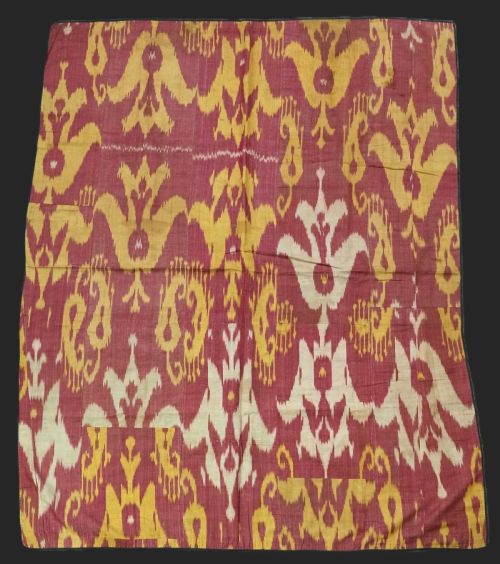
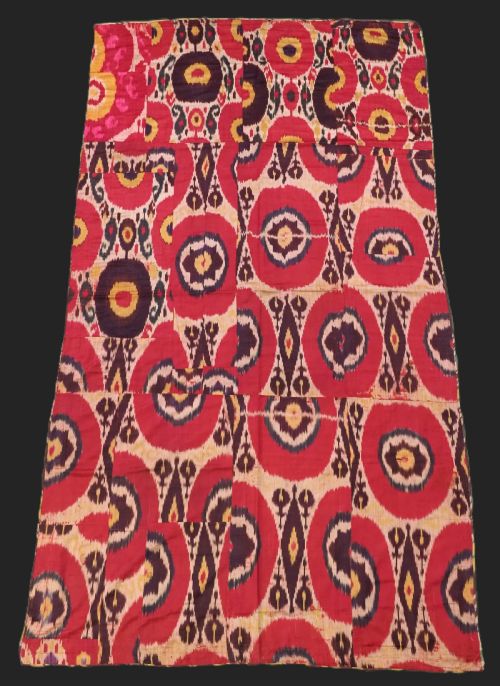
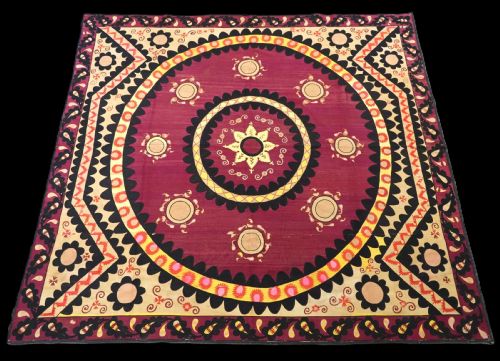
A crimson silk wall hanging encompasses textile panels, embroidered Suzanis, bell pulls, and velvet hangings found within this selection.
Buyers will encounter Central Asian ikat panels and Suzani embroideries alongside European seventeenth and eighteenth century ciselé silk velvet pilaster hangings.
The assortment includes works from regions such as Uzbekistan and Turkey, featuring traditional designs executed in silk, velvet, and cotton.
How they were made
Materials recorded across the listings include silk, cotton, velvet, wool, glass beads, brass, silk thread, and gold thread.
Construction techniques range from hand embroidery and ikat dyeing to woven ciselé silk velvet and decorative beadwork.
The listings feature textiles utilising silk, cotton, velvet, wool, glass beads, and brass across multiple centuries.
What varies in quality
Quality reveals itself through the intricacy of the embroidery, the handling of silk and gold threads, and the richness of the velvet pile.
The precision of traditional Central Asian motifs or European baroque and rococo patterns distinguishes finer textile panels from simpler examples.
The Crimson Silk Wall Hanging Glossary
- Suzani
- An embroidered textile panel originating from Central Asia, often worked in silk on a cotton or silk foundation.
- Ikat
- A dyeing technique where yarns are tie-dyed before weaving to create distinctive feathered patterns on fabric panels.
- Ciselé velvet
- A velvet fabric where the pile is cut in certain areas and left uncut in others to form a pattern against a ground.
- Bell pull
- A long, narrow hanging once connected to a mechanical bell in country houses, frequently worked in embroidery and beads.
- Pilaster hanging
- A vertical textile panel designed to fit narrow wall spaces or architectural pilasters, often executed in rich velvet.
Crimson Silk Wall Hanging: Frequently Asked Questions
How do I hang a textile panel safely?
Hanging a delicate textile requires distributing the weight evenly across the top edge rather than piercing the fabric directly with fixings.
Professionals often use a fabric sleeve stitched to the reverse or a padded wooden batten to support the piece securely.
Where were Suzanis made?
Suzanis originate primarily from Central Asian regions including Uzbekistan, with distinct styles associated with centres such as Bukhara and Tashkent.
These embroidered covers reflect local traditions and were traditionally created as part of a bride's dowry.
What is a chuval face?
A chuval face is the front portion of a Turkmen tent bag, often featuring traditional guls worked in wool and silk.
These tribal pieces showcase specific regional weaving patterns and detailed colour combinations.
How do I care for antique velvet?
Antique velvet requires protection from direct sunlight and excessive humidity to preserve the delicate pile and rich dyes.
Gentle surface dusting with a soft brush helps maintain the material without causing abrasion to the fibres.