



19th Century Ikat Textile
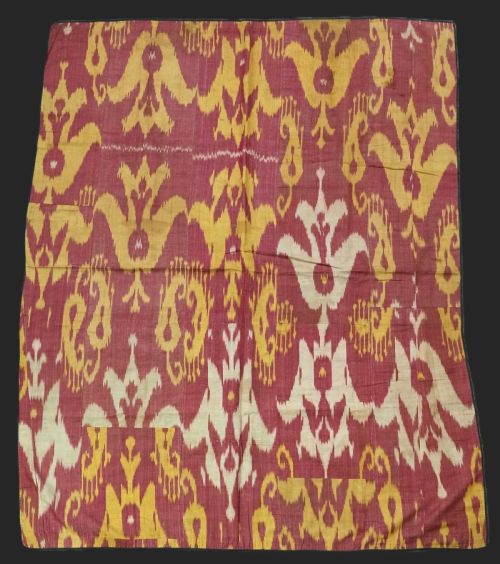
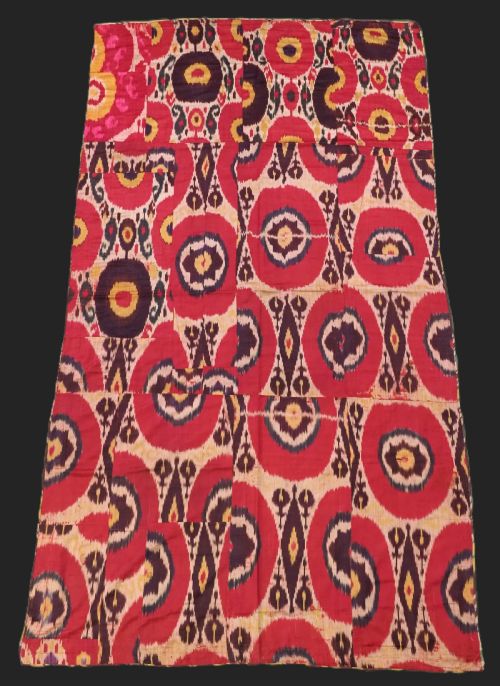
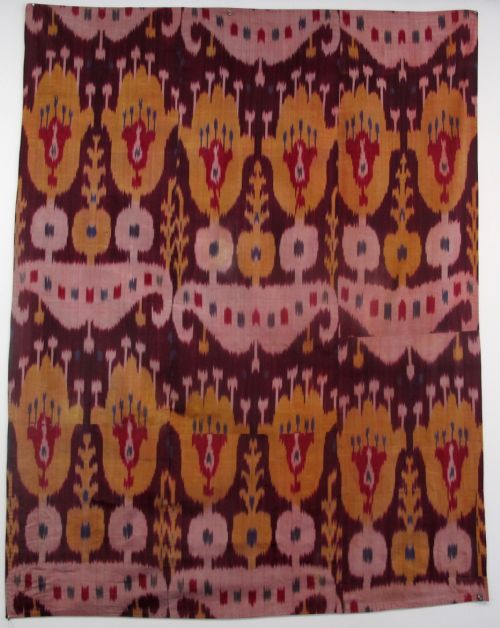
A 19th century ikat textile brings vibrant pattern and rich texture into a room, offering bold colour through resist-dyed threads.
19th Century Ikat Textile
A 19th century ikat textile comprises striking panels, wall hangings, and traditional garments originating from Central Asia, including regions such as Uzbekistan and Samarkand. These pieces showcase the intricate skill of local weavers who bound and dyed warp threads before weaving to create characteristic blurred pattern edges.
Buyers encounter various forms ranging from large decorative panels and fabric lengths to tailored garments such as chapan and khalat coats. Turkmen tribal pieces featuring ikat designs, including torbas and chuval faces, also appear within this category.
The objects date from the late nineteenth century, spanning around 1880 to 1900. They reflect distinct cultural aesthetics through geometric and floral motifs rendered in natural dyes.
How they were made
Artisans produced these textiles using natural dyes applied to hand-spun wool, cotton, and silk, or semi-silk adras blends. The warp threads were tightly bound in specific patterns and dipped in vats of dye before the weaving process began.
Weavers aligned these meticulously dyed threads on the loom, allowing the characteristic slight bleeding of colour at the pattern boundaries to emerge. Certain garments, such as winter coats, received additional quilting and padding for structure and warmth.
Winter coats were heavily quilted and padded so gentlemen could brave the freezing Central Asian chill in absolute style.
What varies in quality
The complexity of the resist-dyeing process and the clarity of the resulting motifs distinguish different examples. Greater precision in binding threads produces sharper pattern definition, while richer natural dye palettes enhance visual depth.
Material composition also plays a role, with fine pure silk panels differing from robust semi-silk adras or heavier woollen tribal trappings. The structural integrity of the weave and the preservation of the original fabric condition complete the assessment.
The 19th Century Ikat Textile Glossary
- Ikat
- A dyeing technique where threads are bound and dyed prior to weaving to create patterns with characteristic feathered edges. This method requires immense precision from the artisan.
- Adras
- A textile fabric woven with a silk warp and a cotton welt, combining lustrous appearance with practical durability. It frequently appears in traditional Central Asian panels and garments.
- Khalat
- A traditional long, loose-fitting gentleman's coat worn across Central Asia. These garments were often fashioned from vibrant silk ikat fabrics.
- Torba
- A small Turkmen wall-pouch or storage bag used within nomadic dwellings. Some examples incorporate striking ikat designs.
- Chuval
- A large Turkmen tent bag face used for storage in tribal households. These woven items display distinctive regional iconography.
19th Century Ikat Textile: Frequently Asked Questions
How were ikat coats worn?
Garments like the chapan and khalat served as outer robes worn by gentlemen in regions such as Bukhara and Samarkand.
Heavier versions were quilted and padded to provide warmth during cold winter months.
Where do these textiles originate?
These pieces originate primarily from Central Asia, with strong representation from Uzbek centres like Bukhara and Samarkand.
Other examples stem from Turkmen tribal groups inhabiting the wider region.
How should I display a panel?
Large textile panels work effectively when mounted on a backing and hung directly on a wall as art.
Proper mounting ensures the delicate silk and cotton fibres remain supported without undue tension.
What materials are used?
Weavers utilised silk, cotton, wool, and hand-spun wool, frequently combining silk and cotton in semi-silk adras fabrics.
Colours derived entirely from natural dye sources applied before weaving.
How do I date these textiles?
Dating relies on stylistic analysis, material assessment, and structural characteristics typical of late nineteenth-century production.
Most surviving pieces originate from the decades around 1880, 1890, and 1900.