




Antique Uzbek Ikat
An antique uzbek ikat brings bold Central Asian colour and pattern into a modern room through rich textiles.
Antique Uzbek Ikat
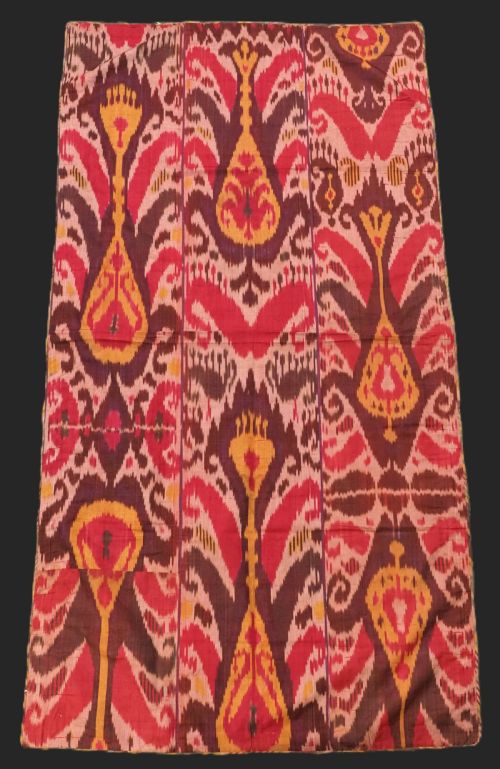
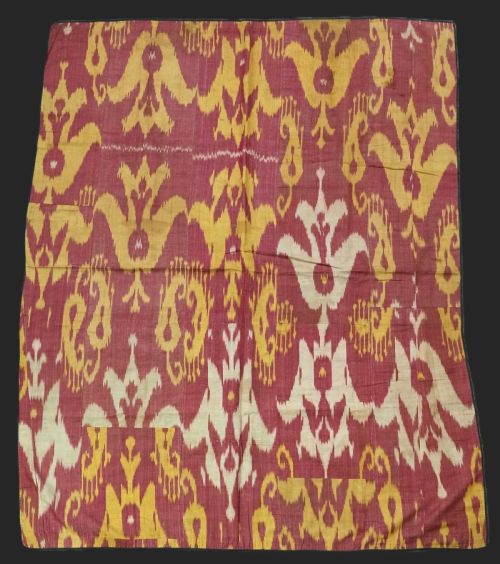
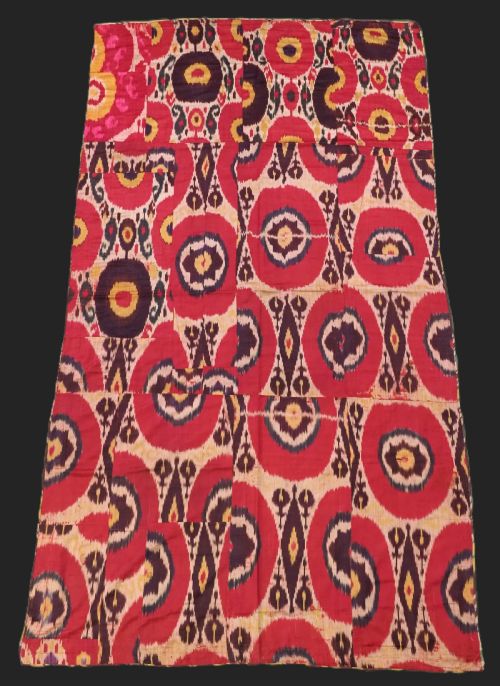
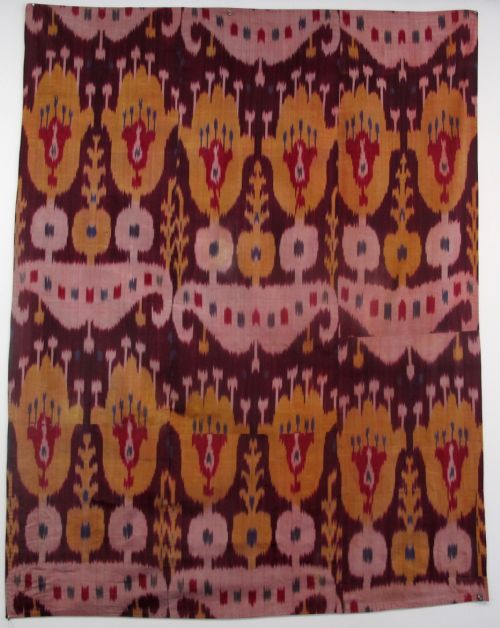
When you search for an antique uzbek ikat, you are looking at vibrant textile panels, wall hangings, and traditional garments originating from Central Asia. These pieces display striking visual impact through patterned cloth made across the region during the late nineteenth and early twentieth centuries.
The selections you meet here span fabric panels, gentleman's coats known as khalats or chapans, and smaller items like purses. They originate from centres such as Bukhara and Samarkand, capturing the traditional aesthetic of nineteenth century Central Asian craft.
Most examples date from the 1880s, 1890s, and around 1900, reflecting the height of traditional textile production in Uzbekistan. Buyers choose these textiles either as decorative wall art or as wearable history preserved in silk and cotton.
Materials and construction
These textiles rely on a foundation of natural silk, cotton, and semi silk adras, combining warp-resist dyeing techniques with meticulous hand weaving. Artisans bound sections of the warp threads before dyeing, creating the characteristic blurred outlines along the pattern edges.
Garments such as winter khalats and chapans incorporate quilted and padded layers for warmth alongside the decorative outer silk ikat faces. Certain specialised items also integrate contrasting elements like glass beads for added texture and detail.
Some winter coats feature quilted padding so thick they could double as wearable duvets for freezing steppe winds.
Assessing quality and depth
Quality in these textiles depends on the complexity of the resist-dyed patterns and the crispness achieved by the weaver despite the natural bleeding of the dye. Superior examples demonstrate intricate geometry, balanced colour distribution, and substantial scale across panels or garments.
The choice of materials further defines the work, with pure silk panels and finely tailored coats representing the more ambitious output of Bukharan and Samarkand workshops. Preservation of the original quilted padding and lining fabrics adds significant substance to wearable pieces.
The Antique Uzbek Ikat Glossary
- Ikat
- A dyeing technique where warp threads are tied and dyed prior to weaving to form intricate patterns. This process creates the characteristic hazy boundaries where colours meet.
- Adras
- A traditional hybrid fabric woven with a silk warp and a cotton weft. It combines the lustrous surface of silk with the practical durability of cotton.
- Khalat
- A traditional long, robe-like gentleman's coat worn across Central Asia. These garments often display bold ikat patterns and tailored structures.
- Chapan
- A padded, quilted outer coat worn during colder winter months. They provide heavy insulation while showcasing elaborate patterned silk exteriors.
- Bukhara
- A historic urban centre in Uzbekistan renowned for producing sophisticated textiles. It stands as a primary source for fine nineteenth-century panels and coats.
Antique Uzbek Ikat: Frequently Asked Questions
How were antique uzbek ikat coats worn?
These garments functioned primarily as outer robes or coats for men in Central Asian society. They served both as everyday dress and status garments depending on the fineness of the silk.
Heavier versions included quilted padding to provide warmth during harsh winters, turning decorative textiles into practical outerwear.
What is the difference between panels and coats?
Fabric panels were produced as decorative hangings or domestic textiles for interiors. They display continuous patterns designed to be viewed flat against a wall.
Coats such as khalats and chapans were tailored garments cut and constructed from patterned lengths of cloth. They incorporate linings and sometimes padding for structure.
How do I care for an antique silk textile?
Keep these fragile items away from direct sunlight to prevent the natural dyes from fading over time. Gentle handling protects the ancient silk and cotton fibres from undue stress.
Mount panels securely without pulling the weave, and avoid hanging heavy garments by thin loops that might tear the historic fabric.
Where were these textiles made?
Production centred on historic cities and surrounding regions in Uzbekistan, notably Bukhara and Samarkand. These locations acted as major hubs for trade and traditional craft.
Master dyers and weavers in these urban workshops developed distinct regional styles that survived into the early twentieth century.
What materials make up an adras fabric?
Adras is a combination textile woven using silk for the warp threads and cotton for the weft. This blend offered a more accessible alternative to pure silk cloth.
It retains the bright sheen of silk on the face while benefiting from the strength and weight of cotton.