


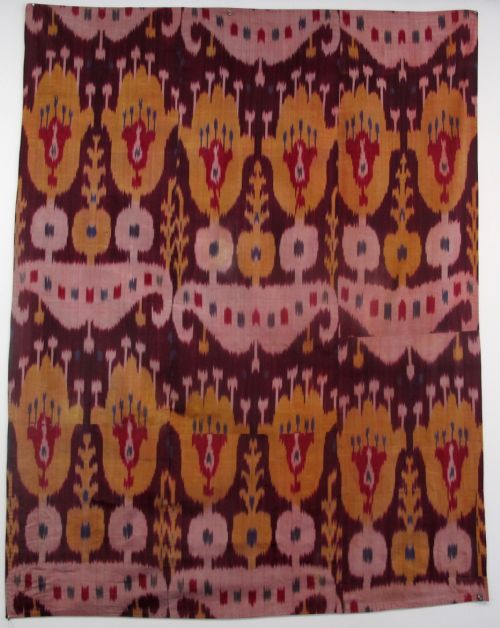

Vintage Ikat Wall Hanging
A vintage ikat wall hanging brings bold Central Asian and Indonesian textile art into a modern interior.
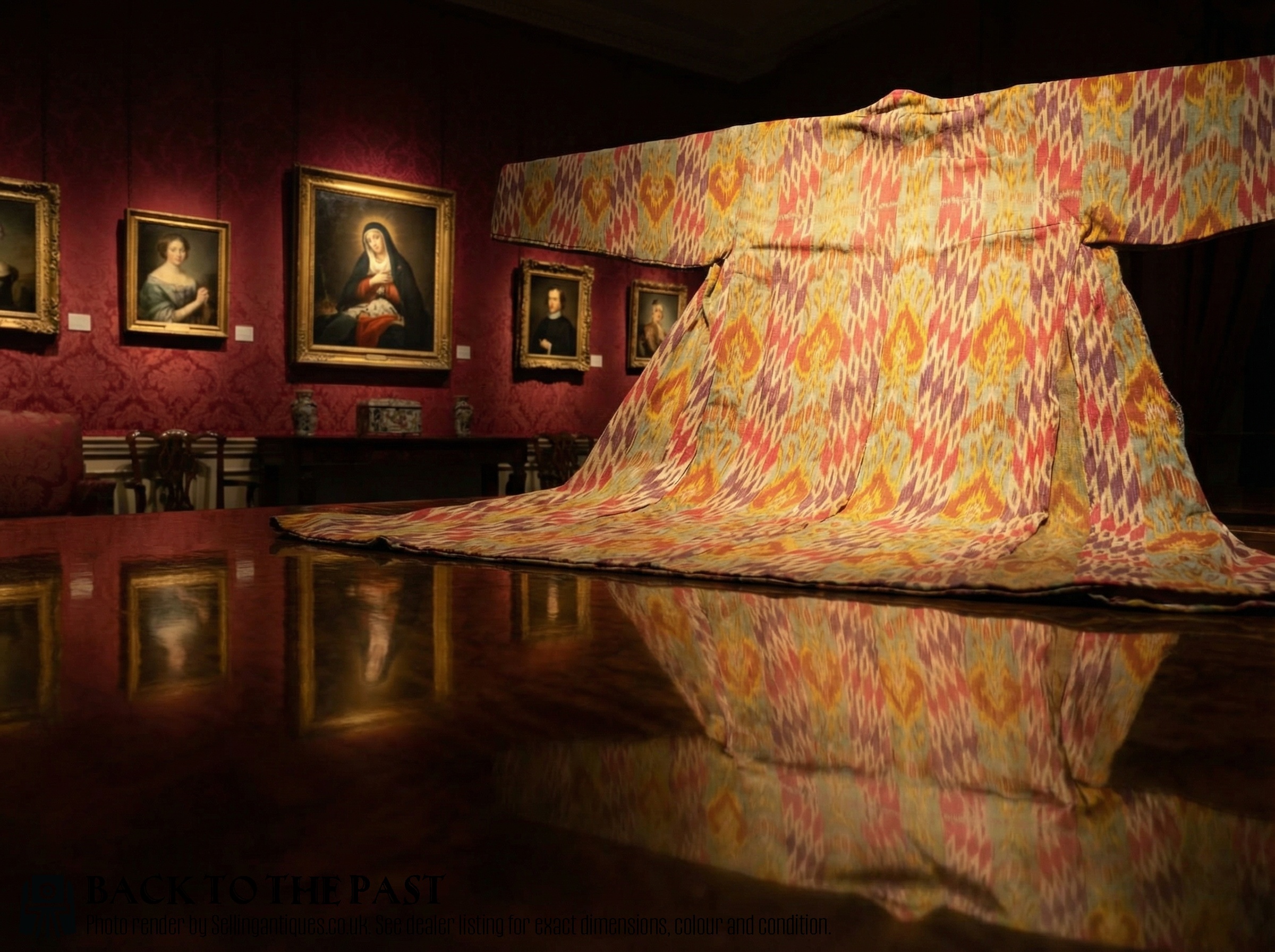
Vintage Ikat Wall Hanging
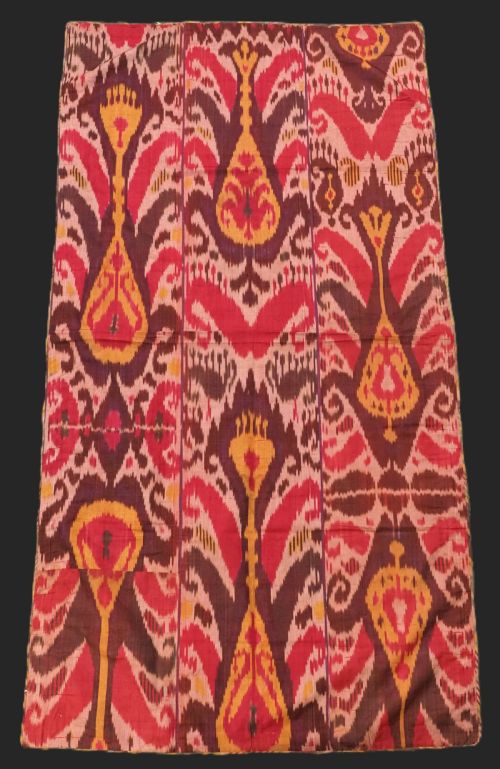
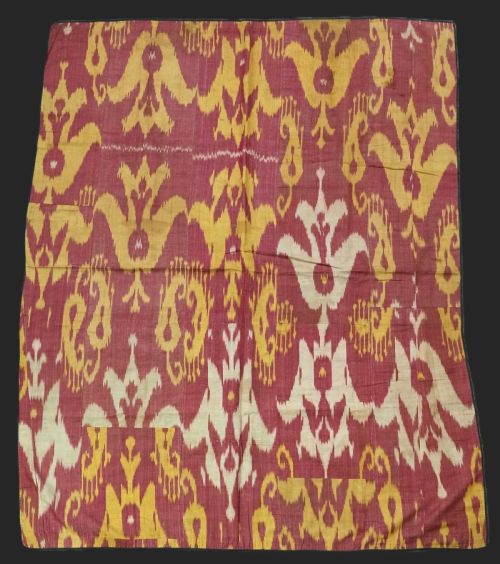
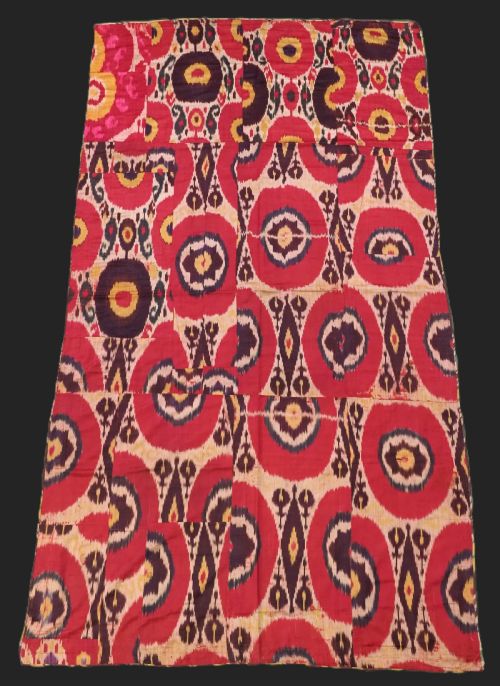
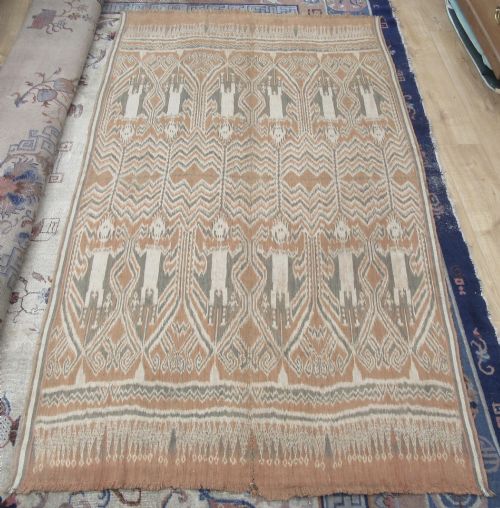
A vintage ikat wall hanging comprises textile panels and garments originating primarily from Central Asia and Indonesia, dating from the late nineteenth and early twentieth centuries. These pieces encompass large decorative fabric panels, woven torbas, and tailored coats such as khalats and chapans that find new life mounted on interior walls.
The dominant examples encountered in this selection hail from Uzbekistan, specifically centres such as Bukhara and Samarkand, alongside tribal Turkmen pieces and Indonesian tribal textiles. Buyers will find both broad decorative wall panels and repurposed garments transformed into striking textile art.
Pieces span the decades from eighteen-eighty to nineteen-hundred, capturing a period of traditional textile production before industrial methods displaced hand-weaving. Each object carries the distinct aesthetic of its regional origin, whether the bold geometric designs of tribal weavers or the sweeping patterns of Bukharan urban workshops.
Assessing quality in ikat textiles
Quality rests upon the precision of the resist-dyeing process and the complexity of the design layout, where sharper pattern definition and richer colour saturation distinguish superior examples. The fineness of the weave, particularly in pure silk or semi-silk adras compositions, dictates the overall integrity and visual depth of the panel.
Condition and scale also define the hierarchy, with larger panels and well-preserved garments retaining greater structural presence for interior display. The sophistication of the regional design, from intricate Uzbek patterns to distinct Turkmen tribal motifs, governs the aesthetic standing of each piece.
Materials recorded across the selection include silk, cotton, wool, and handspun cotton, woven into panels and coats.
The Vintage Ikat Wall Hanging Glossary
- Ikat
- A dyeing and weaving technique where warp threads are tie-dyed before mounting on the loom, producing characteristic feathered pattern edges. This method requires immense foresight from the artisan to ensure the design aligns correctly during weaving.
- Khalat
- A traditional long, loose-fitting gentleman's coat worn across Central Asia, frequently fashioned from richly patterned silk ikat fabrics. These garments are now frequently repurposed as decorative wall hangings.
- Torba
- A small tribal storage bag or wall pouch, often produced by Turkmen groups such as the Ersari, featuring traditional geometric designs. These pieces represent a distinct subset of tribal weaving distinct from urban panel production.
- Chapan
- A quilted and padded outer robe worn in Central Asia for winter use, constructed using layered ikat textiles. The internal padding gives these garments a substantial, sculptural quality when hung.
Vintage Ikat Wall Hanging: Frequently Asked Questions
How do I hang a textile safely?
Mounting requires distributing the weight evenly across the upper edge using a concealed sleeve or specialised archival pins to prevent fibre distortion. Avoid direct sunlight to protect natural dyes from fading over time.
Ensure the hanging method does not puncture or stress the historical fabric structure, particularly when dealing with delicate silk or semi-silk adras panels.
Are these pieces genuine antiques?
The listings comprise items dated from eighteen-eighty through to nineteen-hundred, placing them firmly in the late nineteenth and turn-of-the-century period. Materials such as handspun cotton and traditional natural dyes confirm their age and historical provenance.
Examination of the weave structure and dye saturation helps verify the period origin of each panel or coat.
What is the difference between adras and pure silk?
Adras fabrics combine a silk warp with a cotton weft, offering a robust structure while retaining the characteristic sheen of silk on the surface. Pure silk panels rely entirely on silk threads throughout both warp and weft.
Both variations were produced in centres such as Bukhara and Samarkand during the nineteenth century.
How should I clean a vintage ikat?
Water cleaning is generally avoided due to the risk of dye running or fibre degradation in historical textiles. Gentle surface dusting with a soft brush or professional textile conservation is recommended.
Preventative care remains the best approach for maintaining the condition of silk and cotton wall hangings.
Can coats be used as wall art?
Garments such as khalats and chapans lend themselves well to wall mounting when supported properly by the shoulders or upper hem. This practice showcases the intricate pattern work designed originally for wear.
Displaying a coat transforms a tailored garment into a three-dimensional textile sculpture within a room.