


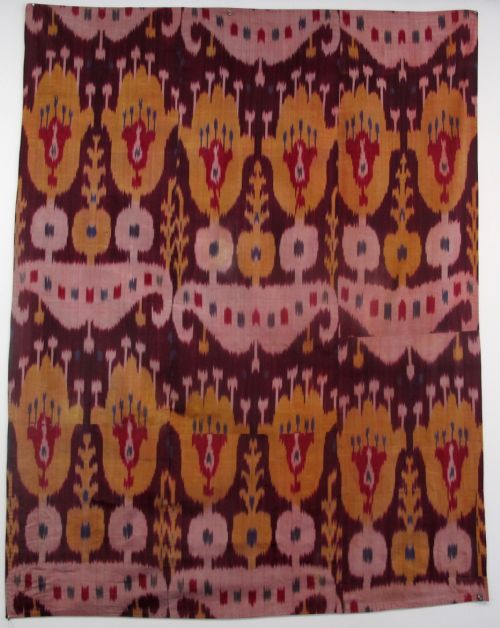

Handwoven Ikat Wall Hanging
These handwoven ikat wall hanging pieces bring rich Central Asian and Indonesian textile traditions into modern interiors.
Handwoven Ikat Wall Hanging
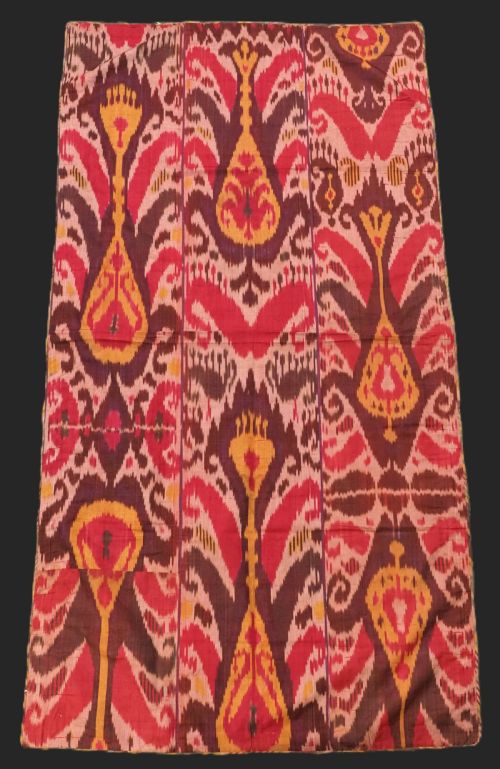
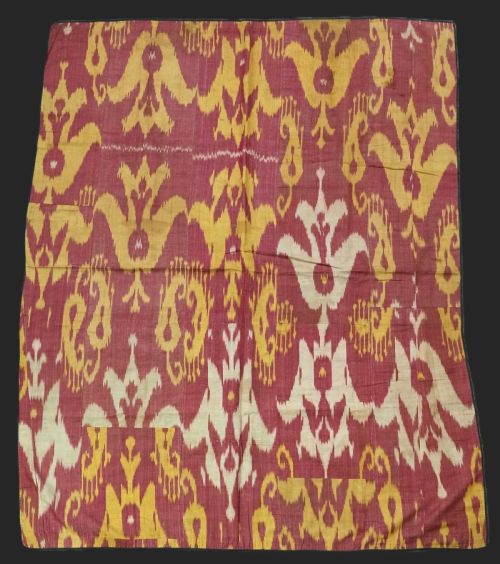
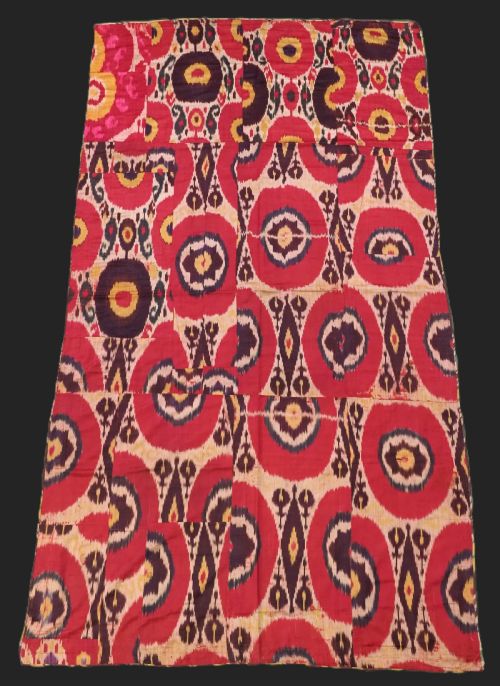
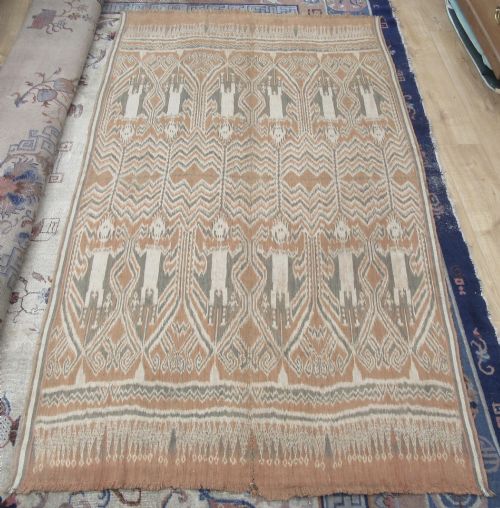
A handwoven ikat wall hanging displays complex patterns created through traditional resist-dyeing methods before the loom. Buyers searching this phrase typically encounter fabric panels, large silk hangings, and repurposed garments originating from Central Asia and Indonesia. These textiles range from nineteenth-century Uzbek adras and silk panels to Turkmen tribal torbas and Borneo hangings.
The selection on this page centres on pieces dating from the late nineteenth century around eighteen eighty up to nineteen hundred. Uzbek examples from regions like Bukhara and Samarkand appear frequently alongside tribal weavings. Alongside flat panels, visitors regularly find traditional coats such as khalats and chapan garments mounted for display.
Materials and Construction
The makers utilised silk, cotton, hand-spun wool, and semi-silk adras blends combining silk warps with cotton wefts. Artisans tied bundles of yarn with tight wrappings to resist dye baths repeatedly, building up intricate geometric and floral motifs before weaving. Natural dyes provided the deep tones seen across these textiles.
Many structural examples incorporate quilting and padding for winter use, particularly within garments designed for warmth. Surviving panels show careful hand-weaving techniques passed down through generations in workshops across Central Asia and the Indonesian archipelago.
Listings feature textiles spanning the late nineteenth century, specifically from eighteen eighty to nineteen hundred.
Assessing the Workmanship
Quality rests in the precision of the resist-dyeing and the clarity of the pattern edges where colours meet. Finer pieces demonstrate greater control over the blurring effect inherent to ikat, maintaining intentional design geometry despite the complexity of the warp threads. The choice of materials, from pure silk to semi-silk adras, further distinguishes the grade of each weaving.
The richness and stability of the natural dyes used across the cotton and silk grounds dictate the visual depth of the hanging. Format and scale also influence distinction, with larger panels requiring exceptional consistency across extended lengths of hand-spun yarn.
The Handwoven Ikat Wall Hanging Glossary
- Ikat
- A dyeing technique where yarn bundles are tightly wrapped and dyed prior to weaving to create patterned fabrics. The slight blur along the pattern edges is a defining characteristic of this textile art.
- Adras
- A traditional semi-silk fabric woven with a silk warp and a cotton weft. This blend provided both lustre and durability in Central Asian garments and decorative panels.
- Khalat
- A traditional long coat worn by men across Central Asia, often fashioned from vibrant silk ikat cloth. These garments are frequently mounted and displayed as wall hangings today.
- Torba
- A small tribal storage bag produced by Turkmen groups, sometimes featuring ikat-inspired designs. They represent the nomadic textile traditions of the region.
- Chapan
- A quilted and padded outer robe worn in Central Asia for winter use. The substantial construction protected wearers against cold continental climates.
Handwoven Ikat Wall Hanging: Frequently Asked Questions
How do I hang a textile securely?
Mounting a textile requires careful distribution of weight to avoid stressing the fragile antique fibres. Professional framers often use a hidden fabric sleeve stitched to the reverse, supporting a thin wooden batten.
Alternatively, conservation-grade Velcro stitching allows the piece to hang flush against a wall without piercing the historic silk or cotton ground.
Where were these textiles made?
The pieces originate primarily from Central Asian workshops in regions such as Bukhara and Samarkand. Other examples stem from Turkmen tribal groups and the Indonesian archipelago.
Each area developed distinct colour palettes and pattern repertoires using local materials like hand-spun wool, cotton, and silk.
How do I date these pieces?
Dating relies on stylistic analysis of the motifs, the chemical composition of the natural dyes, and the type of base yarns used. Nineteenth-century examples often display specific regional colour combinations and looser hand-spun yarn textures.
Comparing structural evidence against documented museum pieces helps narrow the period of origin.