



Ikat Wall Hanging
An ikat wall hanging brings vibrant Central Asian pattern and rich textile history straight to your living space.
Ikat Wall Hanging
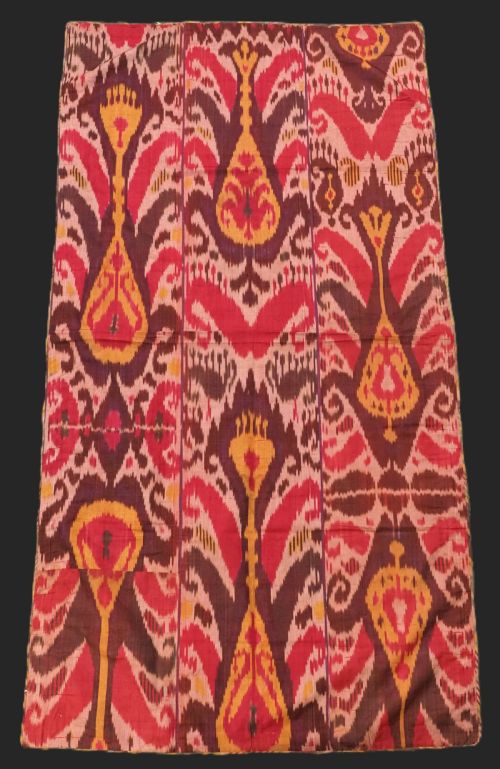
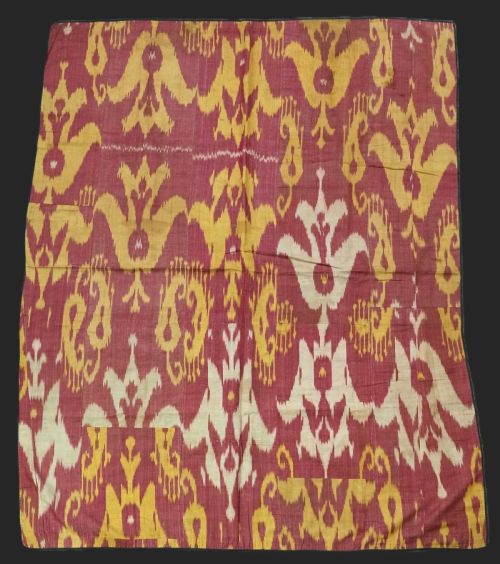
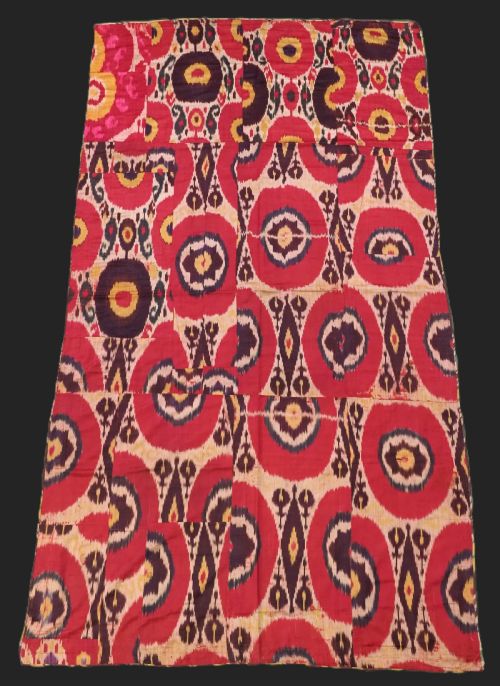
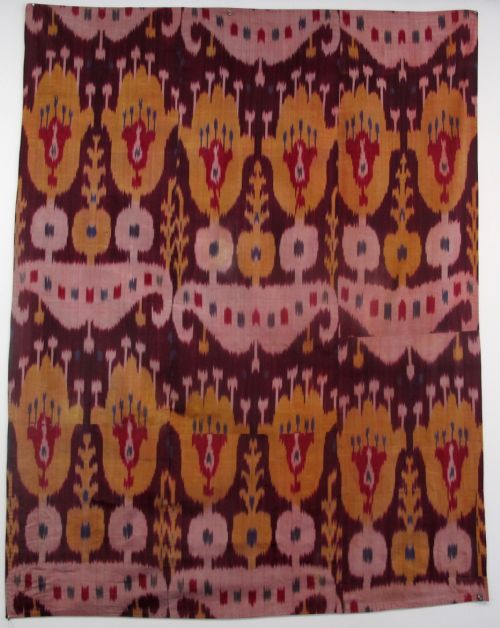
When you search for an ikat wall hanging, you find striking textile panels and garments originating primarily from nineteenth-century Central Asia, specifically Uzbekistan. These pieces take the form of large fabric panels, tribal torbas, and tailored coats like the chapan or khalat, repurposed for display.
The version you are most likely to meet on this page is a silk or semi-silk adras panel from Bukhara or Samarkand, dating from around eighteen-eighty to nineteen-hundred. They carry distinct patterns created through a rigorous resist-dyeing process applied to the threads before weaving begins.
Materials and construction
The pieces rely on natural fibres, combining hand-spun wool, cotton, and pure silk or semi-silk adras. Artisans bind bundles of warp threads according to a predetermined pattern before submerging them in natural dyes to achieve the characteristic feathered outlines.
Weavers then set up the loom with these pre-dyed threads, requiring immense skill to maintain alignment as the cloth takes shape. Some garments, such as winter coats, feature quilted and padded layers for extra structure and warmth.
Listings feature textiles spanning the decades from eighteen-eighty to nineteen-hundred, originating mainly from Uzbekistan and Turkmenistan.
Assessing quality
Quality rests heavily on the complexity of the pattern and the precision of the resist-dyeing process. Finer pieces display minimal bleeding of the natural dyes, keeping the boundaries between distinct colours crisp and deliberate.
The choice of materials also dictates the upper tier of pieces, with dense silk and hand-spun wool offering a superior handle and visual depth compared to simpler cotton blends.
The Ikat Wall Hanging Glossary
- Adras
- A traditional fabric woven with a silk warp and a cotton welt. This hybrid material combines the lustrous sheen of silk with the practical durability of cotton.
- Khalat
- A long, loose-fitting gentleman's coat worn across Central Asia. These garments often utilise bold silk ikat textiles.
- Torba
- A small tribal bag produced by Turkmen groups. They frequently incorporate ikat designs within their wool and silk construction.
- Chapan
- A traditional quilted outer robe worn in Central Asia. Examples adapted for winter use are heavily padded.
Ikat Wall Hanging: Frequently Asked Questions
How do I hang an ikat textile?
Mounting requires careful consideration to protect fragile nineteenth-century fibres from strain. Specialists often recommend a non-invasive sleeve stitched to the reverse or a custom display frame.
Direct pinning damages the silk and cotton structure, so weight must distribute evenly across the entire upper edge.
Where were these textiles made?
Production centres cluster heavily around historical Silk Road cities in Central Asia. Bukhara and Samarkand stand out as primary hubs for sophisticated silk and adras weaving.
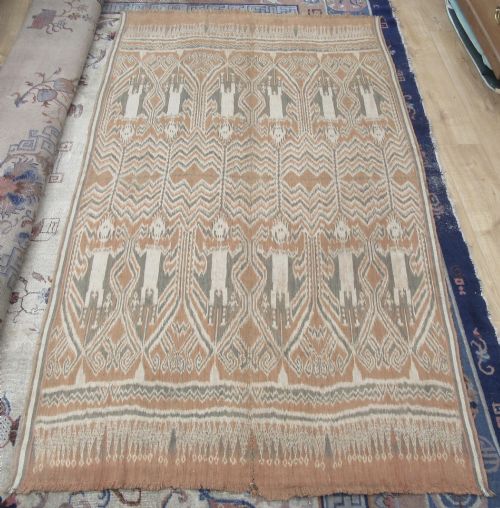
Other regional variations emerge from Turkmen tribal groups and occasionally extend as far as the Indonesian Archipelago.
Are these pieces made of pure silk?
Material composition varies between pure silk and semi-silk adras, which combines silk and cotton threads. Many decorative panels utilise pure silk, while others blend natural fibres for strength.
Hand-spun wool and cotton also appear frequently, particularly in tribal torbas and heavier utility items.
How do I date an antique ikat?
Dating relies on examining the chemical nature of the natural dyes, the tightness of the weave, and the specific regional patterns. Pieces from the late nineteenth century typically show distinct coloration before synthetic aniline dyes became widespread.
Documentation and stylistic comparison with known museum examples help narrow the production window.