




Handwoven Silk Ikat
These handwoven silk ikat textiles bring vibrant Central Asian colour and traditional Uzbek patterns into modern interiors with striking visual depth.
Handwoven Silk Ikat
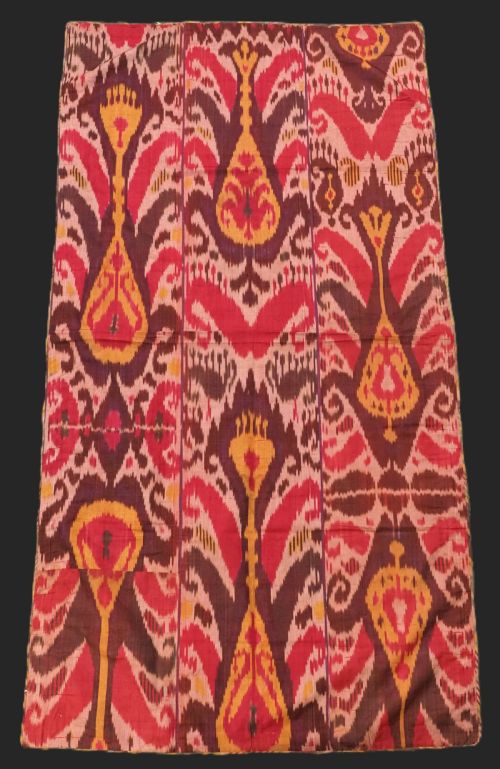
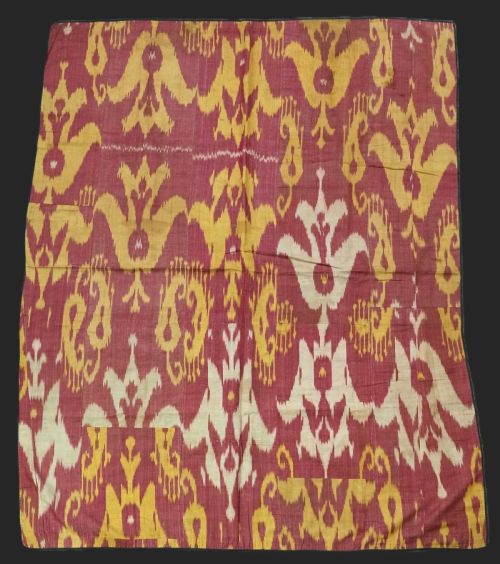
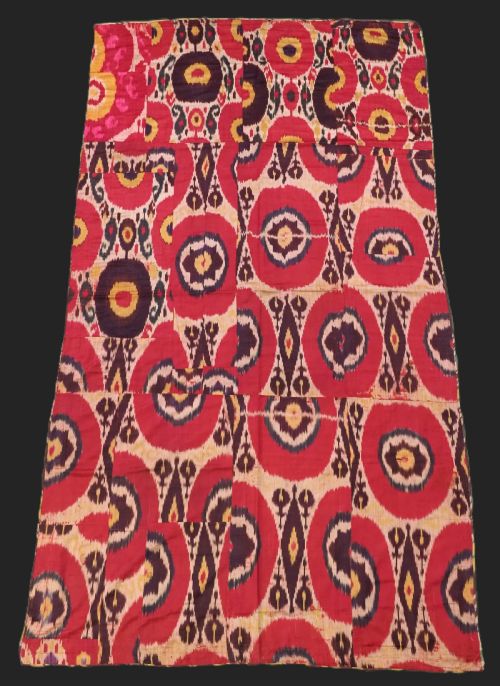
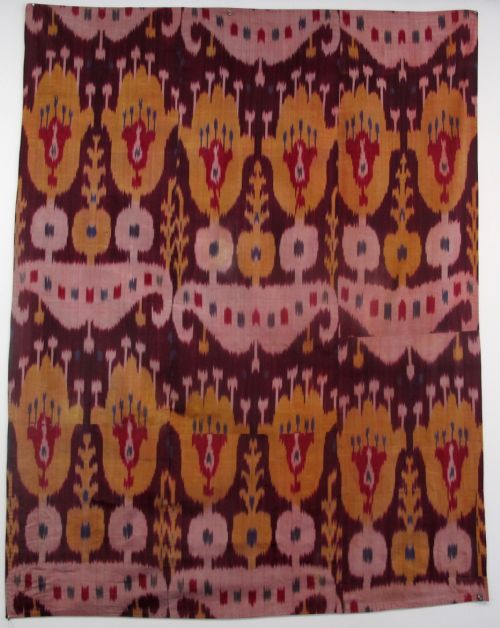
When you search for handwoven silk ikat, you encounter textiles originating from Central Asia, specifically Uzbekistan and regions such as Bukhara and Samarkand. These pieces date from the late nineteenth century, spanning the periods around eighteen eighty, eighteen ninety, and nineteen hundred.
The selections on this page appear primarily as fabric panels, wall hangings, and textile art. Alongside these panels, you find traditional garments including gentleman's coats known as khalats or chapan coats, as well as smaller items like double-sided purses.
The forms reflect traditional Uzbek and Central Asian ethnographic styles. Many panels serve as decorative elements, while the coats demonstrate the wearable application of these complex resist-dyed textiles.
What varies in quality
The distinction between examples rests in the complexity of the dye work and the precision of the resist-dying process. Finer panels display intricate pattern definition and rich saturation across the silk and semi-silk threads.
Condition and scale also differentiate the pieces, with large panels and intact garments like quilted khalats representing significant textile work. The integrity of the weave and the preservation of the fabric determine the standing of each object.
Materials recorded across the inventory include silk, cotton, and glass beads utilised in panels, coats, and purses.
The Handwoven Silk Ikat Glossary
- Ikat
- A dyeing technique where warp threads are tie-dyed before weaving to create intricate patterns with characteristic feathered edges. This method requires immense precision from the artisan.
- Adras
- A traditional fabric woven with a silk face and a cotton backing or weft. This combination provides both the lustrous appearance of silk and increased durability.
- Khalat
- A traditional long, loose-fitting robe or gentleman's coat worn in Central Asia. These garments often feature padded construction and bold ikat designs.
- Chapan
- Another term for a traditional quilted coat or robe from Central Asia. They were frequently padded for winter use.
- Bukhara
- A historic city in Uzbekistan renowned for textile production and craftsmanship. Pieces attributed to this region often display distinct regional colour palettes.
Handwoven Silk Ikat: Frequently Asked Questions
How do I hang a textile panel?
Fabric panels can be mounted using a sleeve attached to the back through which a thin rod is passed. Alternatively, conservation-grade framing protects delicate silk and semi-silk textiles behind glass.
Ensure direct sunlight does not reach the panel to preserve the natural dyes.
Were these coats worn daily?
Gentleman's coats served as practical garments for warmth and status in Central Asian society. Quilted and padded versions provided insulation during harsh winters.
Today, surviving coats function primarily as display pieces rather than everyday wear.
What is semi-silk adras?
Semi-silk adras is a hybrid textile combining a lustrous silk warp with a sturdy cotton weft. This blend offered a practical alternative to pure silk while maintaining visual richness.
Adras fabrics are frequently found in nineteenth-century panels from Bukhara.
How do I date these textiles?
Dating relies on stylistic analysis, material composition, and traditional dyeing methods typical of late nineteenth-century Central Asia. Pieces from this era often trace back to regions like Samarkand and Bukhara.
Comparative study of pattern density helps place items around eighteen eighty to nineteen hundred.