


Vintage Silk Tapestry
A vintage silk tapestry brings rich Central Asian needlework, vibrant ikat panels and historic European textile art directly to interior walls.
Vintage Silk Tapestry
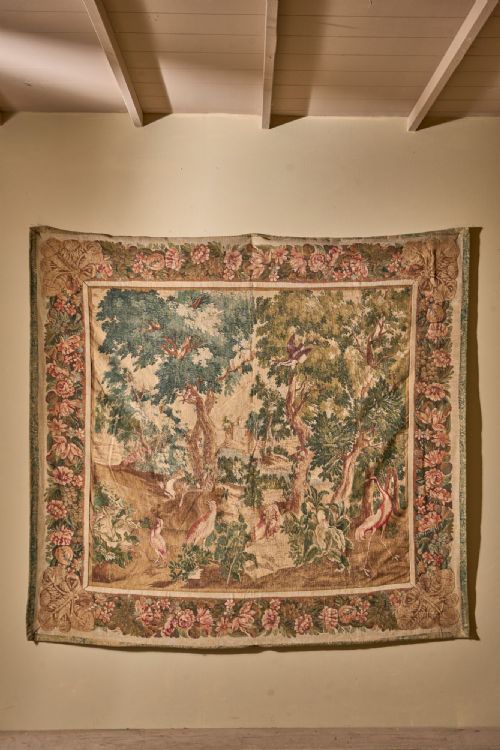
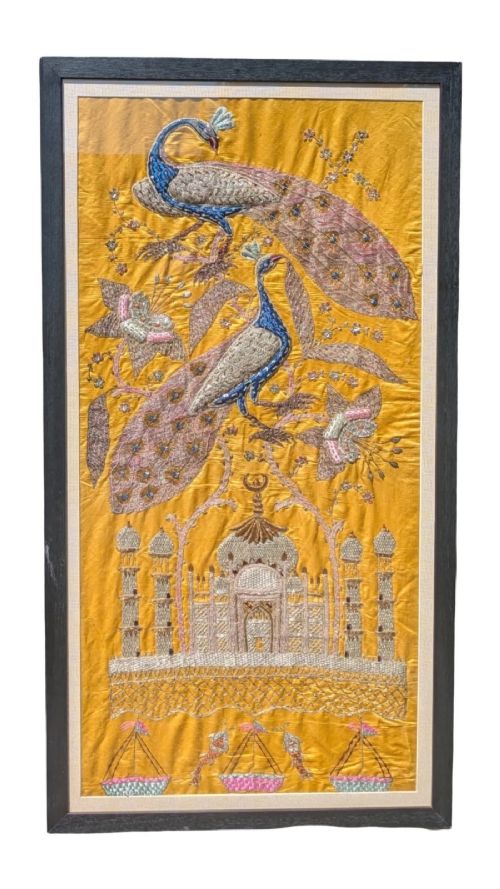
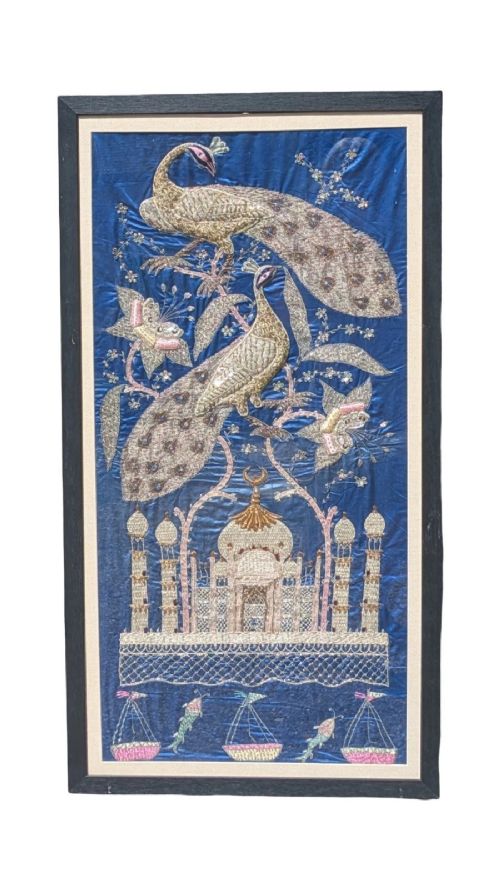
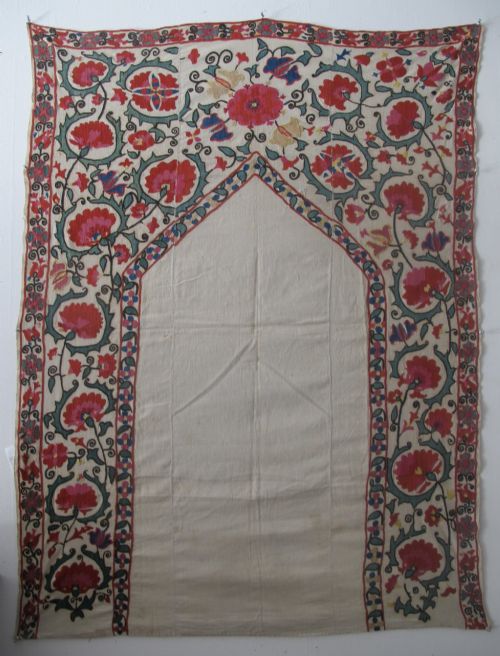
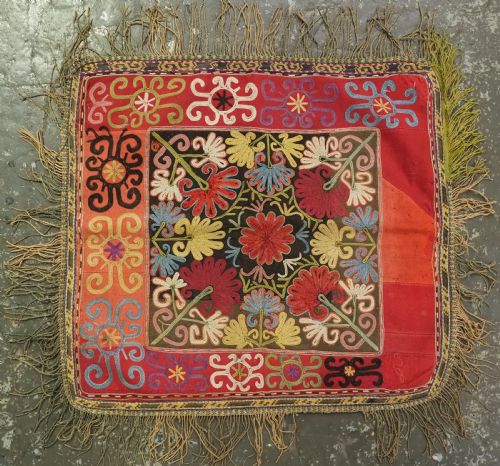
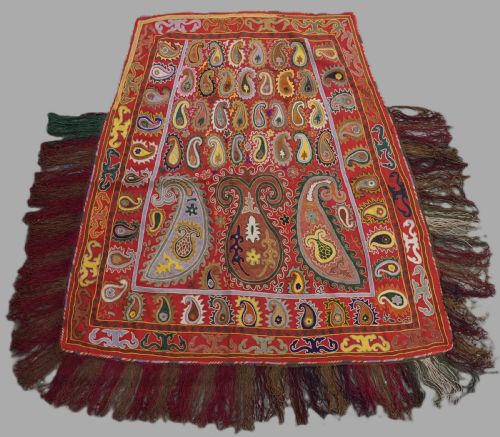
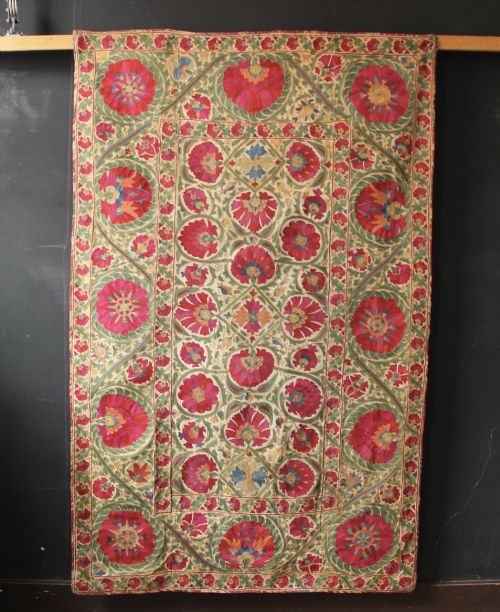
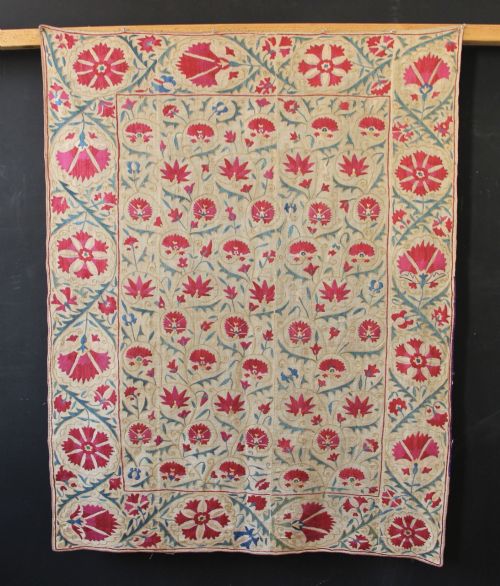
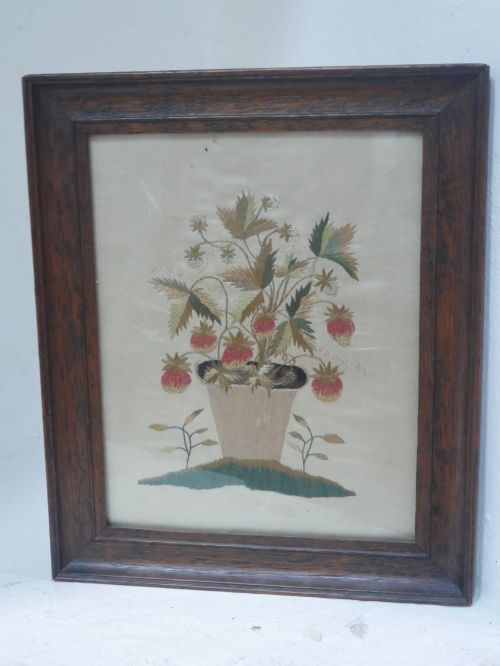
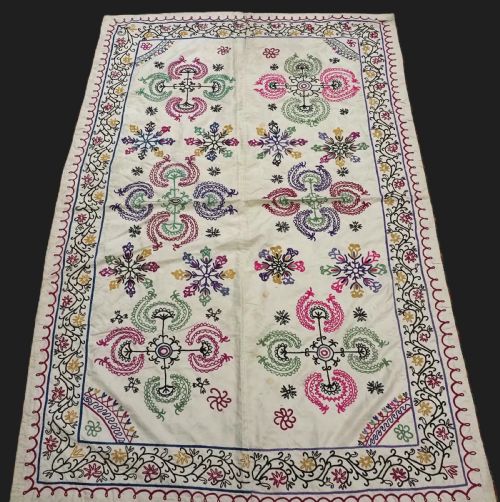
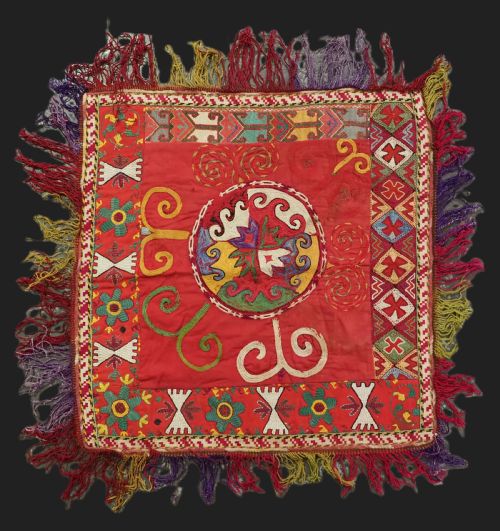
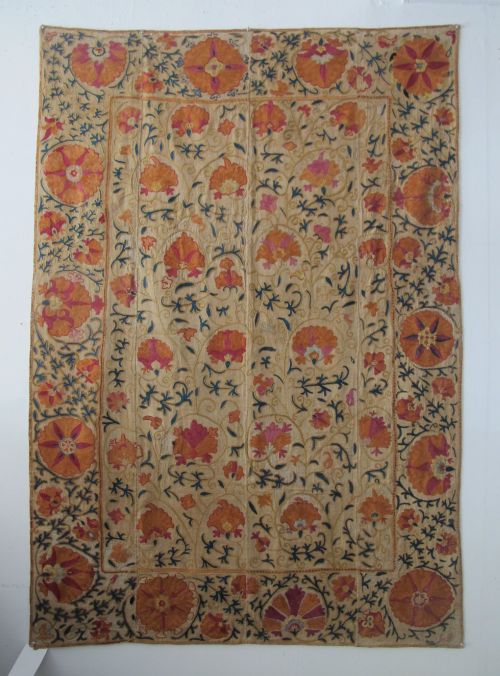
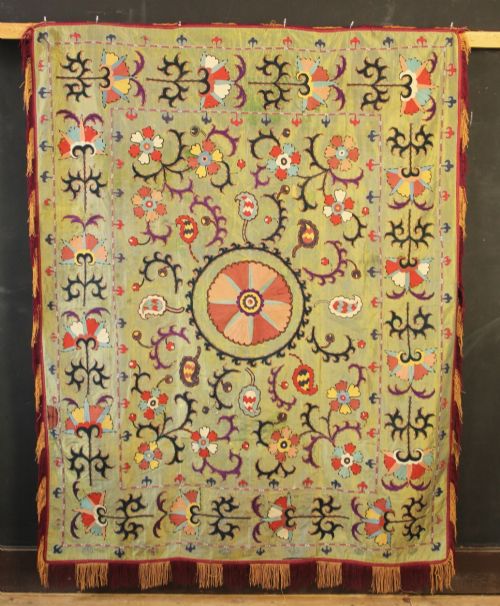
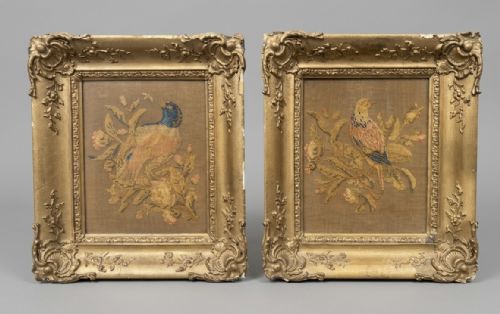
When browsing for a vintage silk tapestry, collectors encounter a diverse range of textile art originating from Central Asian traditions, European workshops, and British needlework from past centuries. The selection spans traditional Uzbek suzanis, Lakai tribal embroideries, Persian Rasht panels, and framed European needlework pictures.
Many examples function as wall hangings, decorative bed covers, or ceremonial horse and saddle covers repurposed for display. These textiles often feature intricate floral motifs, architectural designs, or medallion patterns worked across cotton or wool grounds.
Pieces range in scale from compact nim suzanis to large room-sized panels created across the nineteenth and early twentieth centuries. European fragments from earlier periods also appear, offering contrasting woven structures alongside embroidered needlework.
How they were made
Makers utilised fine silk thread for intricate needlework, stitching detailed motifs onto supportive foundations of woven cotton, linen, or wool. Certain pieces incorporate metallic thread for added lustre or utilise felt applique work alongside silk embroidery.
Central Asian textiles frequently display dense tambour or basma stitchwork worked by hand across regional workshops and nomadic communities. Ikat fabric panels involve resist-dyeing warp threads before weaving to produce characteristic feathered geometric patterns.
The inventory encompasses periods stretching from the seventeenth century through to the 1930s, featuring silk, cotton, wool, and metallic thread.
What varies in quality
The density and precision of the needlework dictate the fineness of a textile, with closely worked stitches creating richer surface textures and more defined pictorial details. The complexity of the regional design layout and the balance of the natural dye palette contribute significantly to visual impact.
Condition plays a role in assessment, particularly the integrity of the ground fabric and the vibrancy of surviving silk threads. Regional variations in tribal execution also influence how specific pieces are categorized by specialists.
The Vintage Silk Tapestry Glossary
- Suzani
- An embroidered tribal textile originating from Uzbekistan and surrounding regions, typically featuring large floral or medallion designs worked in silk on a cotton or linen ground.
- Ikat
- A dyeing technique where yarn is resist-dyed in patterns prior to weaving, producing characteristic blurred edges along the motifs.
- Lakai
- A nomadic Central Asian tribe known for distinctively bold, energetic tribal embroideries used for dowry items and domestic wall hangings.
- Nim suzani
- A smaller half-scale version of a full suzani hanging, traditionally used in Central Asian domestic interiors.
- Applique
- A sewing technique where pieces of fabric, such as felt, are sewn onto a larger ground material to build up a composite design.
Vintage Silk Tapestry: Frequently Asked Questions
What is the difference between a suzani and an ikat panel?
Suzanis are entirely hand-embroidered textiles where silk thread is stitched onto a woven foundation fabric like cotton or linen. The design is built up through stitches after the base cloth is complete.
Ikat panels are woven textiles where the pattern is dyed directly onto the threads before the weaving process takes place on the loom.
How should textile art be hung on walls?
Larger tapestries and suzanis are often mounted by attaching a fabric sleeve to the reverse, allowing a concealed batten or rod to distribute the weight evenly. This prevents undue strain on the historic silk and cotton fibres.
Framed needlework and smaller panels utilise traditional picture hanging hardware secured safely to the wooden frame.
How do you date nineteenth century embroideries?
Dating relies on examining the types of dyes utilised, the consistency of the silk thread, and the specific regional characteristics of the motifs. Earlier nineteenth-century pieces often display distinct tribal palettes and hand-spun ground fabrics.
Comparing structural details with documented examples from regions such as Bukhara or Shahrisabz helps narrow down the period of production.