



Oriental Silk Rug
When you unfold an oriental silk rug on the floor, you hold centuries of regional weaving traditions in your hands.
Oriental Silk Rug
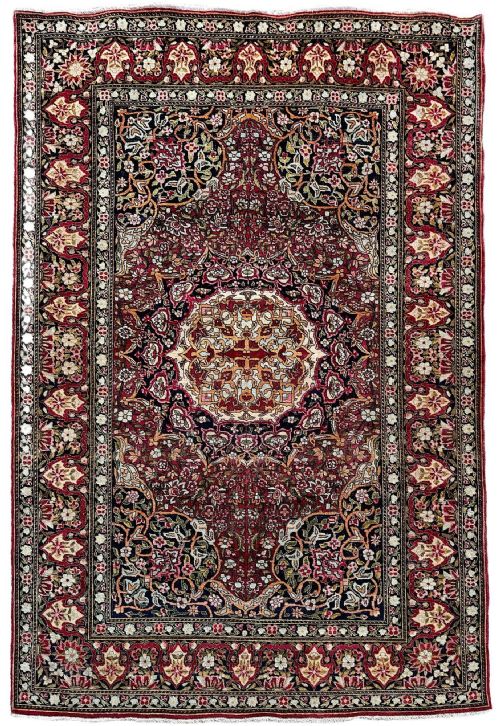
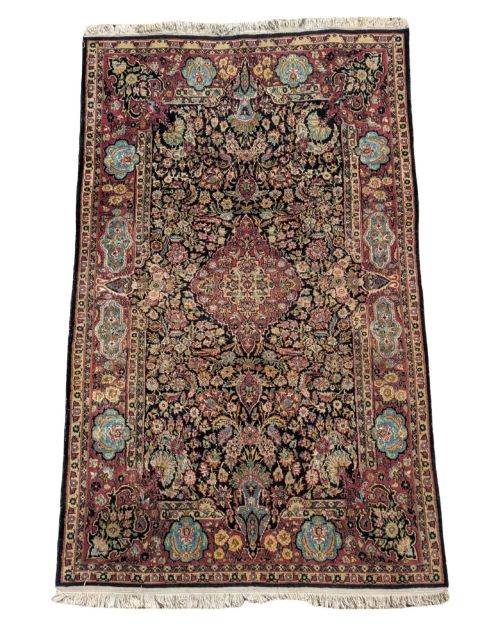
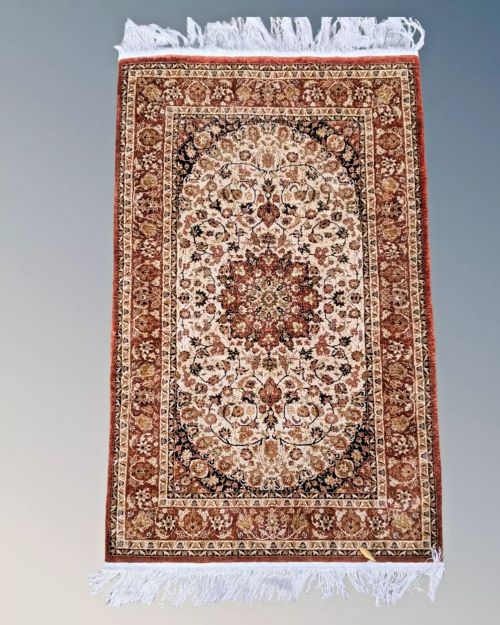
An oriental silk rug encompasses woven floor coverings and textile panels originating from Persia, Turkey, Central Asia, and China. These pieces date primarily from the nineteenth and early twentieth centuries, capturing traditional regional patterns such as Isfahan, Qum, Kashan, and Ushak designs. Buyers searching for an oriental silk rug encounter finely knotted pile carpets alongside embroidered wall hangings and dowry pieces.
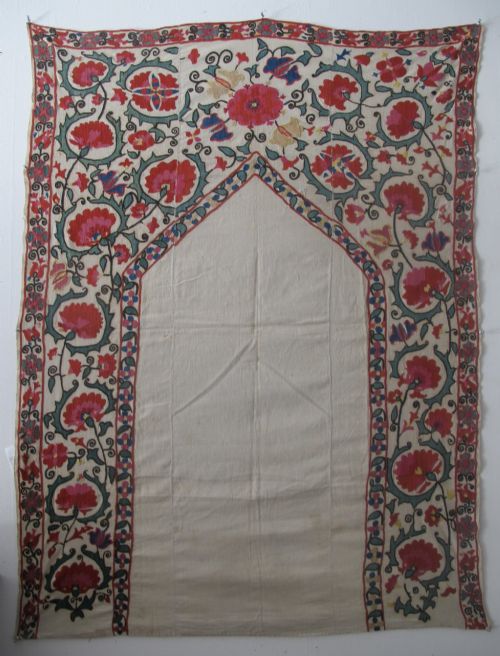
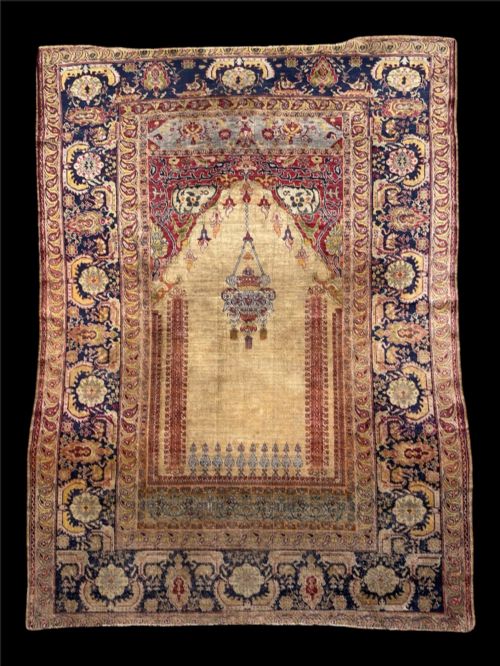
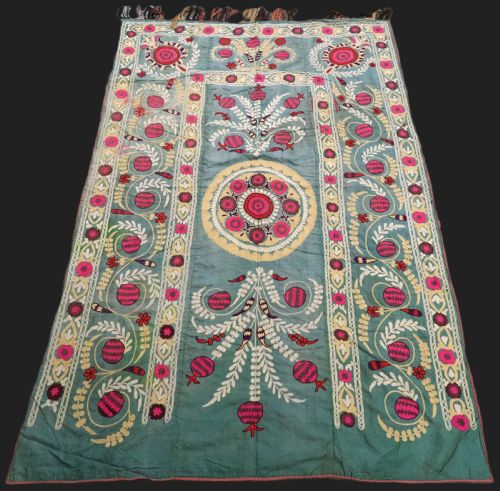
The selection frequently includes Persian town rugs from Isfahan and Qum, alongside Turkish Kayseri prayer rugs and Uzbek suzanis worked in silk on cotton or wool foundations. Formats range from intimate bedside mats to room-sized carpets and mounted fragments. Each piece displays the distinct decorative vocabulary of its specific weaving centre or nomadic tribe.
Materials and construction methods
Weavers constructed these textiles using pure silk thread, occasionally incorporating metallic thread or wool and cotton foundations for structural stability. Certain embroidered pieces utilise silk thread on a felt, linen, or cotton ground, while others employ wool with silk highlights to create texture. The materials dictate the drape and handling qualities of each individual textile.
Traditional looms supported intricate hand-knotting and detailed needlework, such as the tambour embroidery seen in Persian Rasht panels and the multi-layered stitches of Uzbek suzanis. Natural dye stuffs provided the palette for these fibres, yielding deep reds, soft pastels, and rich dark grounds that mellow gracefully over decades of light exposure.
Nomadic weavers occasionally hid small deliberate irregularities in their geometric borders to ward off the evil eye and ensure perfection belonged to God alone.
Assessing quality and execution
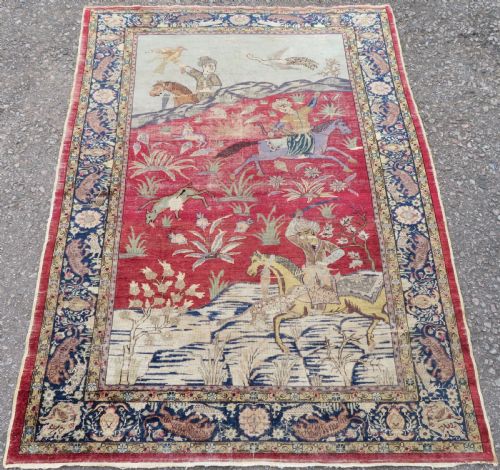
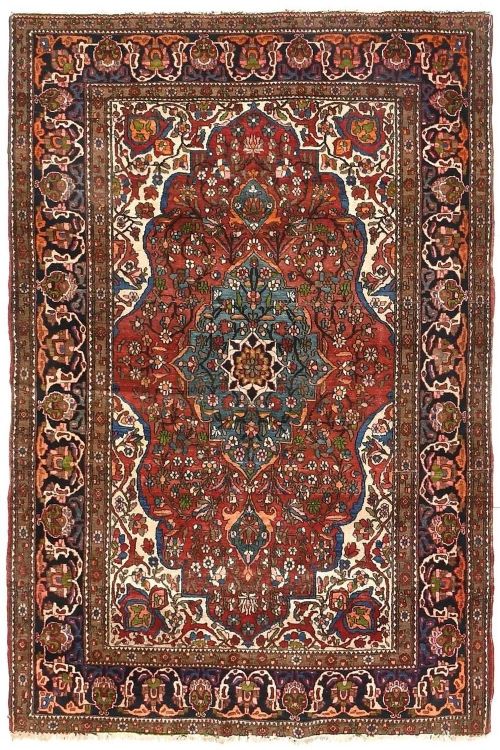
Quality in these textiles rests upon knot density, the precision of the drawn design, and the integrity of the materials. Finely executed pieces maintain uniform tension across the foundation, allowing complex medallion patterns and pictorial hunting scenes to remain sharp and legible from a distance.
The handling of the silk itself reveals the standard of production, as superior fibres retain a fluid drape and a deep, shifting lustre. The harmony and saturation of the palette further distinguish finer workshop carpets and tribal dowry pieces from standard commercial outputs of the early twentieth century.
The Oriental Silk Rug Glossary
- Suzani
- An embroidered tribal hanging from Uzbekistan, traditionally worked in silk thread on a cotton or linen ground by brides as part of their dowry.
- Prayer rug
- A small format rug featuring a mihrab or niche design, historically oriented towards Mecca during daily prayers.
- Isfahan
- A historic Persian weaving centre renowned for master-designed workshop carpets featuring delicate floral motifs and fine silk foundations.
- Jajim
- A flat-woven nomadic textile traditionally used as a cover or bedding band, constructed from narrow strips joined together.
- Chuval
- A large tent bag produced by Turkmen tribes, often featuring distinctive guls and used for storage within a yurt.
Oriental Silk Rug: Frequently Asked Questions
Can I place these rugs on the floor?
Many smaller pieces and flat-woven suzanis function better as wall hangings or decorative textiles rather than floor coverings, due to the delicate nature of pure silk pile under foot traffic. Placing a breathable, high-quality underlay beneath floor carpets reduces friction and prevents slipping against hardwood surfaces.
Heavy furniture legs should be kept off the central field of fine rugs to avoid crushing the pile. Rotating the textile every few months ensures even wear and balanced exposure to natural light.
How do I identify Persian versus Turkish pieces?
Persian workshop carpets from centres like Qum or Kashan typically exhibit curvilinear floral designs, intricate central medallions, and exceptionally high knot counts using fine silk. Turkish examples, particularly from Kayseri or Anatolia, often feature architectural prayer arches, tile patterns, or distinct geometric borders.
Examining the selvedges and fringe construction provides additional clues to regional origin. Comparing the specific palette - such as the soft pastels of Kayseri against the deep blues and reds of Isfahan - helps clarify where the textile was woven.
What causes colour variation in antique silk?
Natural dyes react to decades of ambient light, ultraviolet exposure, and atmospheric conditions, causing certain tones to mellow while others retain their original intensity. Hand-spun silk absorbs dye variations unevenly across a single skein, producing subtle abrash that adds depth to the finished field.
This organic ageing process distinguishes older vegetable-dyed pieces from mid-century synthetics. Embracing these gentle shifts in tone helps appreciate the true age and character of the textile.