


West Anatolian Carpet
These west anatolian carpet pieces are woven textile works from Turkish regions, prized for rich village designs and traditional wool craftsmanship.
West Anatolian Carpet
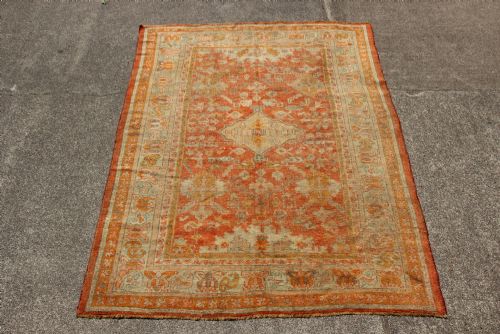
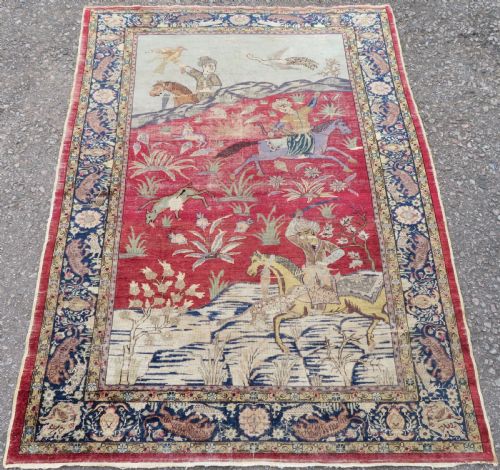
A west anatolian carpet represents centuries of weaving tradition originating from specific Turkish centres like Oushak, Ghiordes, Bergama, Kula, and Milas. Buyers seeking these textiles often encounter distinct village prayer rugs, large format carpets, and pictorial pieces.
The pieces listed on this page span from the early nineteenth century through to the early twentieth century. Most examples show traditional Ottoman or Anatolian tribal designs handed down through generations of weavers.
Village and town workshops produced varying formats, ranging from compact prayer rugs designed for personal devotion to larger carpets intended for substantial rooms. Each format carries specific regional motifs, such as star borders or central mihrab arches.
Judgements of quality
Quality in these woven works rests on the integrity of the materials, the clarity of the regional design, and the fineness of the knotting. Hand-spun wool with well-preserved soft colours tends to indicate superior craftsmanship.
The distinction between standard village production and finer workshop pieces lies in the precision of the execution and the preservation of the original pile. Condition and structural stability remain central to the long-term character of the textile.
Listings span the nineteenth and early twentieth centuries, featuring materials such as hand-spun wool, cotton, silk, and angora wool across various village formats.
The West Anatolian Carpet Glossary
- Prayer rug
- A small rug featuring a mihrab niche design, historically used for individual daily prayers in Islamic tradition.
- Mihrab
- The architectural arch motif depicted on prayer rugs, pointing towards Mecca.
- Pile
- The upright yarn loops forming the soft surface of a carpet, knotted onto the foundation warps and wefts.
- Warp
- The vertical foundation threads stretched tightly on the loom before knotting begins.
- Weft
- The horizontal threads passed alternately through the warps to lock the knots in place.
West Anatolian Carpet: Frequently Asked Questions
How do I care for an old rug?
Keep the textile out of direct sunlight to prevent fading of the natural dyes. Vacuum gently using suction only, avoiding the fringes.
Rotate the rug periodically to ensure even wear across the surface from foot traffic. Professional cleaning by a specialist in antique textiles is recommended when necessary.
Where were these woven?
These pieces originated in the western regions of Anatolia, encompassing historical weaving towns and villages such as Bergama, Ghiordes, Kula, Oushak, and Milas.
Each location developed distinct local patterns, colour palettes, and knotting styles that distinguish its rugs from other parts of Turkey.
Are these rugs suitable for daily use?
Many examples were constructed for everyday floor use in village homes, utilising durable wool pile on sturdy cotton foundations.
Consider the pile depth and overall condition when placing a piece in a high-traffic hallway versus a quieter sitting room.
What defines a prayer rug?
A prayer rug is defined by the inclusion of a pointed arch motif, known as a mihrab, at one end of the field.
This design element directed the user towards Mecca during daily devotions, accompanied by geometric or floral village borders.