
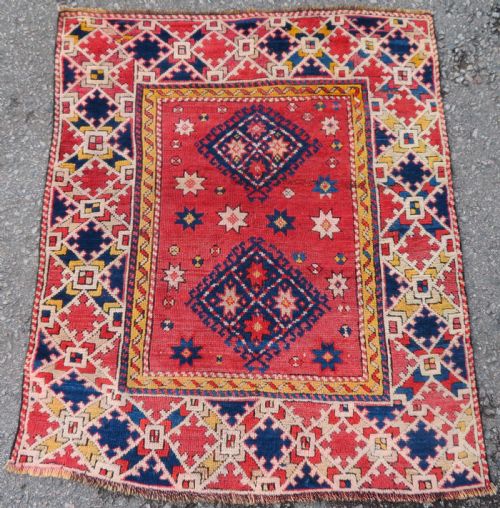
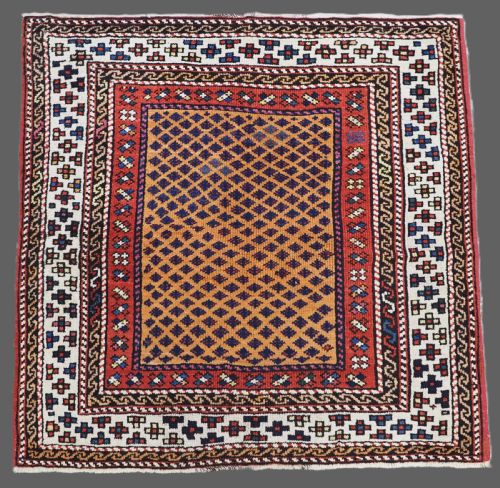


Vintage Bergama Rug
A vintage bergama rug brings authentic Anatolian tribal character to a floor through rich wool geometry and village craftsmanship.
Vintage Bergama Rug
A vintage bergama rug represents traditional weaving from the West Anatolian region, encompassing styles from Anatolian tribal to Ottoman village workshops. Buyers seek these pieces for their geometric patterns, village prayer formats, and distinct lattice or Holbein designs.
The selections available here range from small square sizes and prayer formats to larger carpets. Pieces span periods from the nineteenth century through the early decades of the twentieth century, including specific regional types like the Karakecili kilim and Kiz bergama.
Originating in North West Anatolia, these textiles display the historic design vocabulary of Turkish village weavers. Each rug functions as a practical floor covering that carries centuries of regional weaving heritage.
How They Were Made
These textiles are constructed primarily with wool pile and cotton foundations, utilising hand-knotted and flatwoven techniques characteristic of West Anatolian production. Weavers employed local wool for its durability and resilience under foot traffic.
Certain regional pieces, such as the Karakecili kilim, are woven in two parts and joined down the centre. The structures rely on traditional village looms that permit the dense pile and flatweave formats seen across the inventory.
Current listings feature pieces spanning the nineteenth century through the 1930s, constructed in wool and cotton across Anatolian tribal and village styles.
What Varies in Quality
Quality in a vintage bergama rug rests in the clarity of the Anatolian tribal motifs and the depth of the wool pile. The handling of classic designs, such as the Holbein pattern or lattice arrangements, distinguishes standard village work from finer examples.
The richness of the wool and the integrity of the weave determine how well a carpet holds its structure over generations. Well-preserved village prayer rugs demonstrate careful execution in both border details and central field geometry.
The Vintage Bergama Rug Glossary
- Bergama
- A town in West Anatolia known historically for producing distinctive village rugs and carpets with bold geometric designs. The term identifies pieces originating from this specific rug-weaving district.
- Prayer rug
- A format featuring a mihrab or niche design intended to direct the placement of the rug during daily devotions. These pieces often display specific architectural arches within the central field.
- Kilim
- A flatwoven textile produced without a pile, created by tightly interweaving warp and weft threads. Examples from the Bergama region include two-part constructions by tribal groups.
- Holbein design
- A geometric pattern featuring octagons enclosed in squares, frequently seen in Anatolian carpets and named after the Renaissance painter who recorded them. This layout represents a traditional motif lineage.
- Anatolian
- Pertaining to the geographic region of Asia Minor encompassing modern Turkey and its historical weaving traditions. The term covers various tribal and village styles.
Vintage Bergama Rug: Frequently Asked Questions
How do I clean a vintage bergama rug?
Maintenance requires gentle vacuuming without rotary brushes to protect the wool pile and foundation threads. Professional specialist cleaning is recommended for deep washing to preserve the natural dyes.
Avoid chemical spot treatments or soaking the cotton and wool structure. Regular rotation ensures even wear across high-traffic areas.
Where were these rugs made?
These textiles originate from Bergama and the surrounding West Anatolian region in Turkey. Village weavers and tribal groups produced them using local materials.
Production took place in domestic and regional settings rather than large urban factories. This heritage accounts for the diverse tribal motifs found on individual pieces.
What is a prayer rug?
A prayer rug is a smaller format textile that incorporates a mihrab design, depicting a stylized arch. Historically, users placed these pieces to face toward Mecca during daily prayers.
The design focuses attention on the central niche, often flanked by columns or geometric borders. Collectors value them for their symbolic imagery and careful composition.
How do I date an antique rug?
Dating relies on examining material wear, dye characteristics, structural composition, and stylistic evolution within Anatolian weaving traditions. Nineteenth-century examples often display distinct natural colour variation and hand-spun wool textures.
Comparing knot density and design execution against documented regional types helps narrow the period of manufacture. Construction methods also shift perceptibly from the eighteen-hundreds into the twentieth century.