

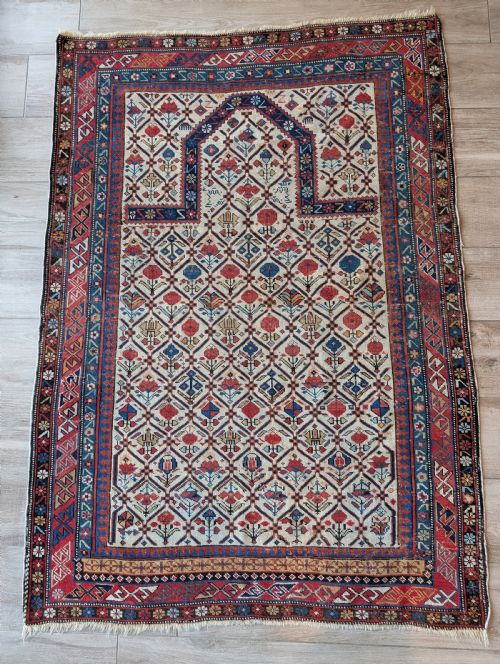
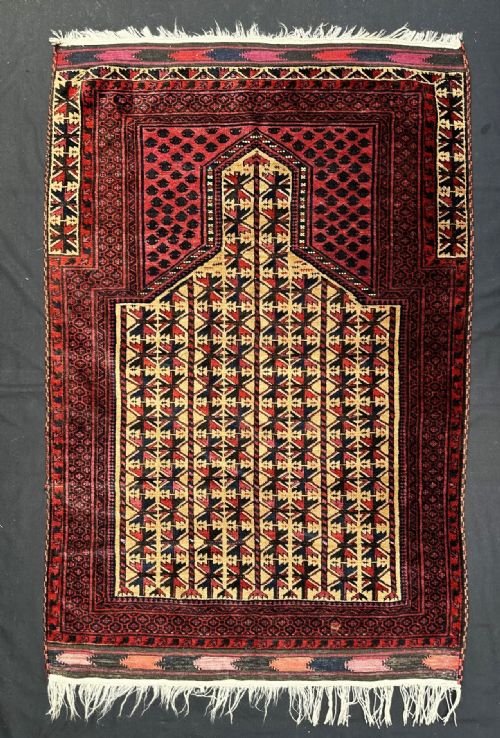
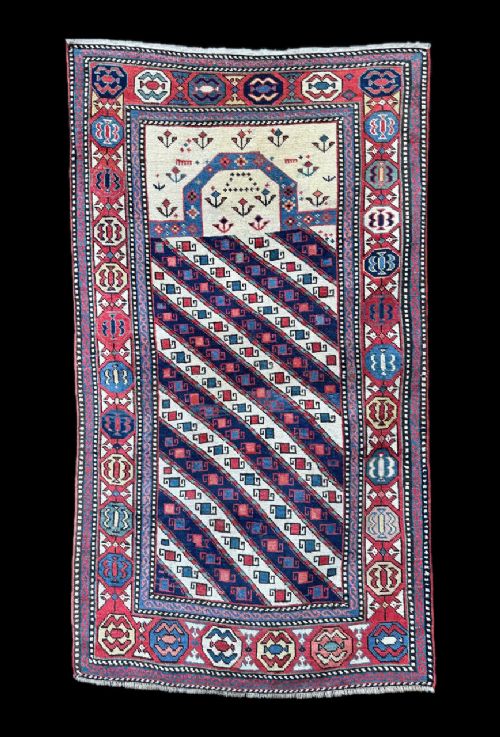
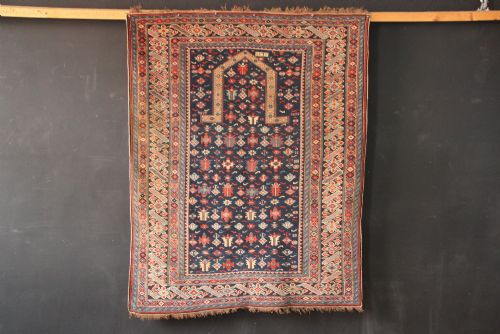

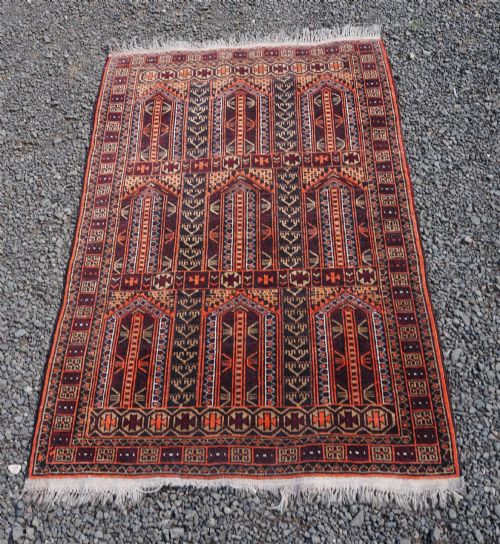
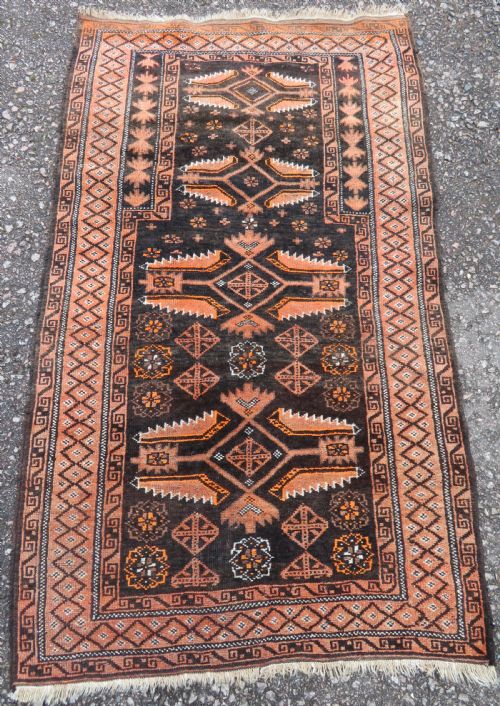

Mihrab Prayer Rug
When choosing a mihrab prayer rug, you are selecting a textile defined by its architectural arch and centuries of weaving tradition.
Mihrab Prayer Rug
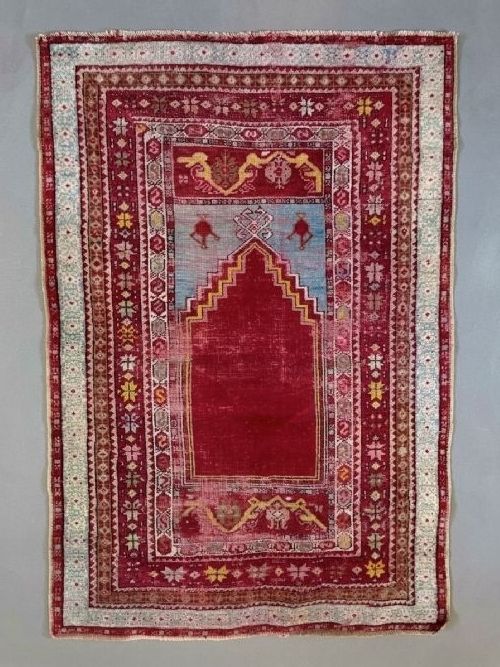
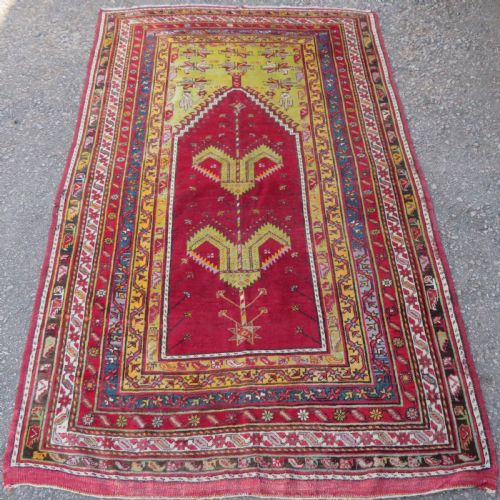
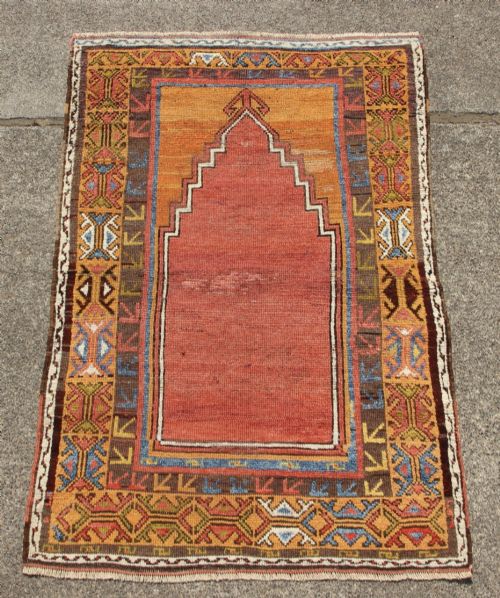
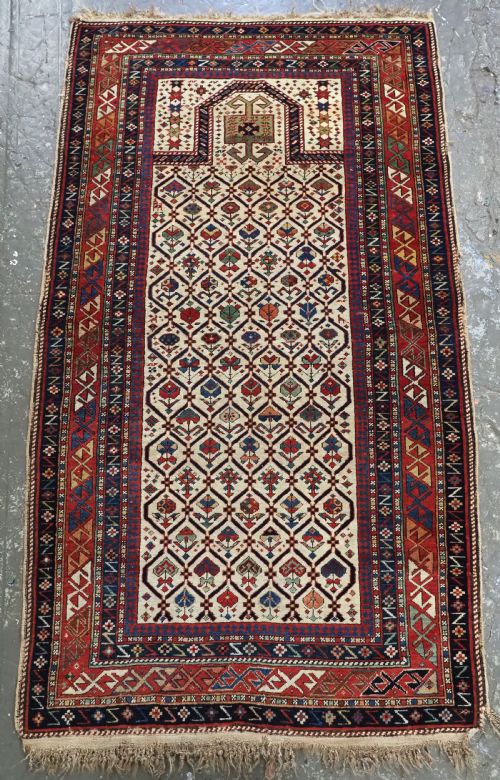
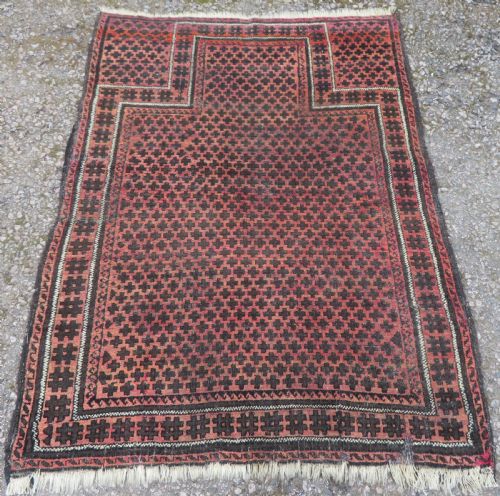
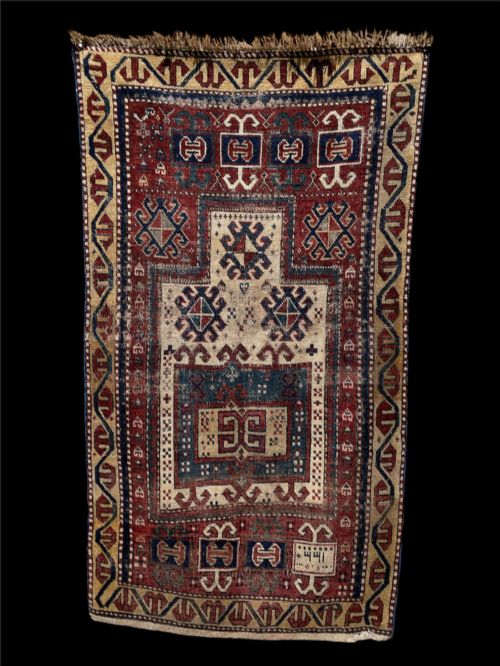
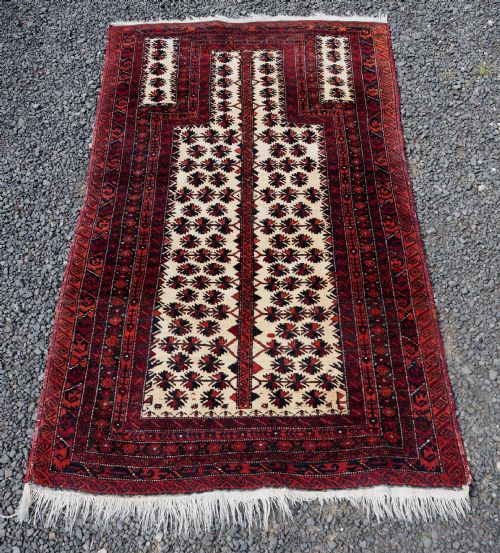
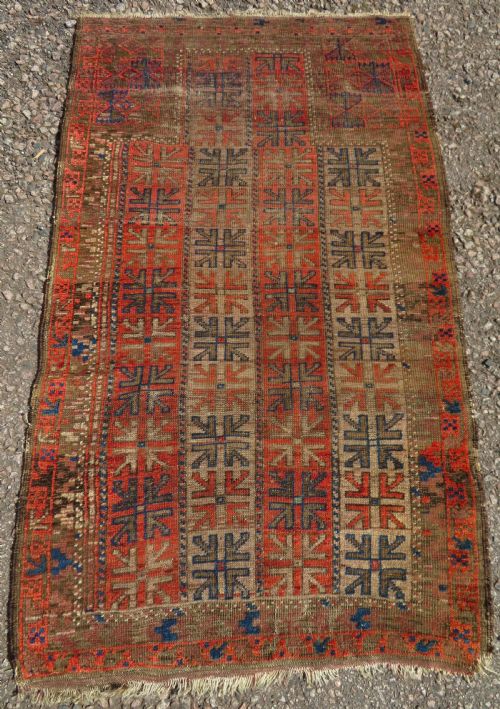
A mihrab prayer rug is characterised by a distinct arched design that mimics the prayer niche found in mosques, pointing the worshipper toward Mecca.
These textiles appear across various regional styles, most notably from Anatolian, Caucasian, Persian, and Afghan tribal workshops.
The version most commonly encountered on this page originates from the late nineteenth and early twentieth centuries, spanning village and nomadic productions.
Materials and Construction
Weavers utilised natural materials including hand-spun wool, cotton foundations, and occasionally silk for finer regional pieces, supplemented by goat hair and camel wool in specific tribal rugs.
Natural dyes provide the characteristic palette of these textiles, yielding deep indigos, madder reds, and earthy tones that age with considerable character.
Construction methods rely on traditional hand-knotting techniques, often finished with kilim ends or woven fringes characteristic of village production.
Mihrab Prayer Rug Retail Price Guide 2026
Typical asking prices for mihrab prayer rug among the pieces listed under this phrase on Sellingantiques today, from the lower quarter to the upper quarter. They describe what is for sale here now, not the wider market.
Listings span periods from the eighteenth century through to the 1930s, featuring wool, cotton, silk, and camel wool.
Evaluating Quality and Execution
The distinction between standard examples and superior pieces rests upon knot density, precision of the arch drawing, and the depth and complexity of the secondary borders.
Purity of the natural dyestuffs and the handling of the wool dictate the tactile appeal and the clarity of the overall design.
The integrity of the foundation and surviving edge finishes contribute significantly to the standing of an individual textile.
The Mihrab Prayer Rug Glossary
- Mihrab
- The architectural arch motif on the rug that denotes the direction of prayer. This design element forms the primary focal point of the field.
- Ghiordes
- A historic weaving centre in Anatolia known for distinct prayer rug designs and knotted pile construction. Pieces attributed to this tradition often show refined floral motifs.
- Baluch
- A tribal grouping spanning borderlands of Persia and Afghanistan, known for producing dark-ground prayer rugs with camel wool and geometric patterns.
- Kilim end
- Flatwoven sections extending beyond the knotted pile at the ends of a rug. These protective webbings often include supplementary wept patterns.
- Natural dyes
- Colourants derived from plants, insects, and minerals prior to the introduction of synthetic alternatives. They produce complex, harmonious patinas over time.
Mihrab Prayer Rug: Frequently Asked Questions
What is a mihrab design?
The mihrab is the pointed arch motif woven into the upper field of the textile. It symbolises the prayer niche found in mosque architecture.
In daily use, this arch was oriented toward Mecca during Islamic prayer rituals.
Where were these rugs made?
These textiles originate from several distinct weaving regions, including Anatolia, the Caucasus, and Persian or Afghan tribal territories. Each area developed characteristic colour palettes and border patterns.
Village weavers and nomadic groups produced the majority of the examples found in this category.
How do I care for an antique rug?
Antique pile rugs require gentle treatment, primarily regular light vacuuming without a rotating brush bar. Professional cleaning should be undertaken sparingly by specialists in historic textiles.
Keeping the rug out of direct, harsh sunlight helps preserve the natural dyes.
How are different regional styles identified?
Regional attribution relies on examining the specific geometry of the arch, the arrangement of secondary borders, and the palette of the natural dyes. Caucasian examples often favour crisp geometric lattices, while Anatolian pieces lean toward floral or columned prayer niches.
Tribal pieces from Afghan or Persian borders display distinctive wool textures and nomadic motifs like rams horns.