



Caucasian Prayer Rug
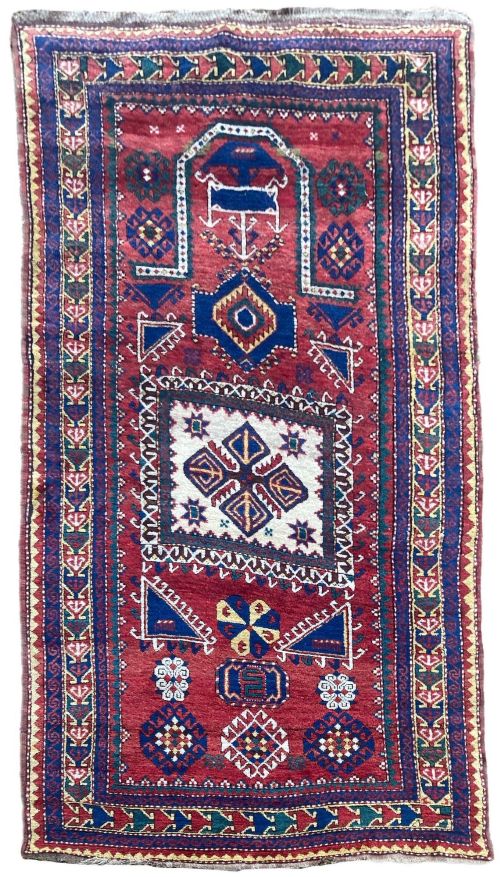
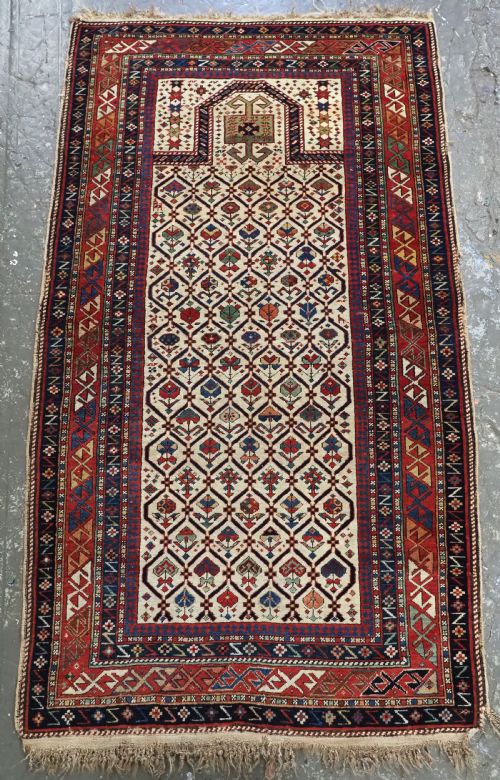
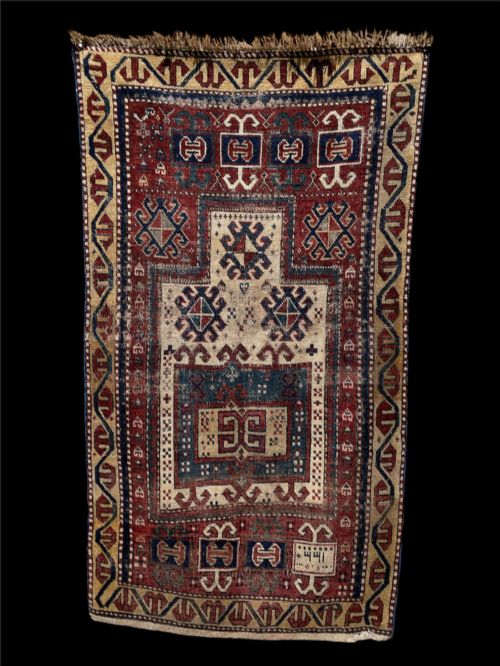
When you examine a caucasian prayer rug, you hold a piece of nineteenth-century tribal weaving designed for personal devotion.
Caucasian Prayer Rug
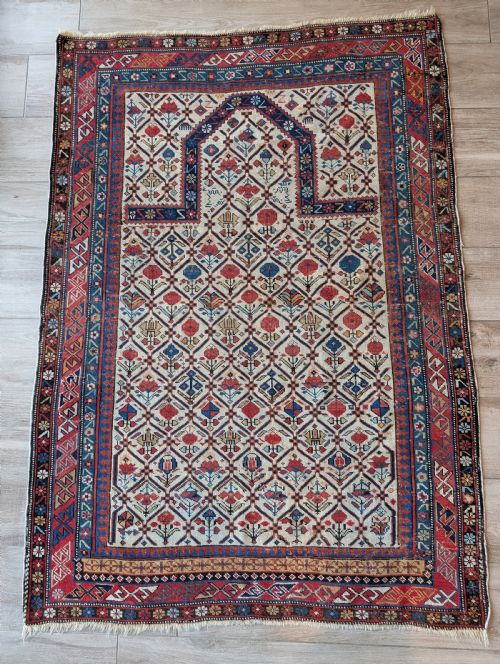
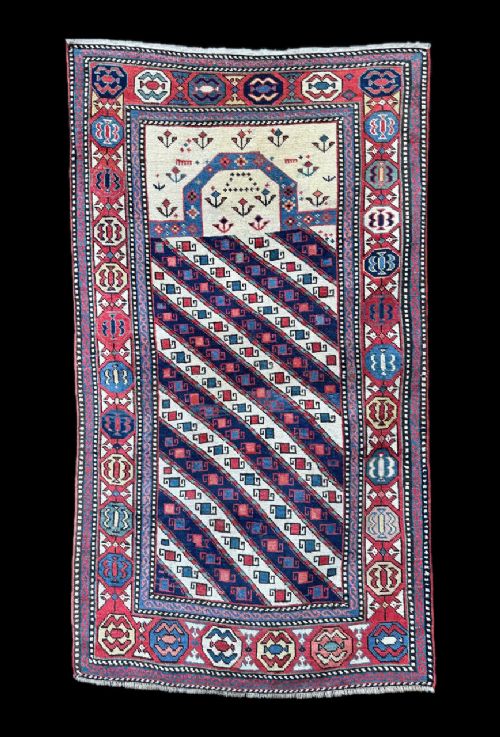
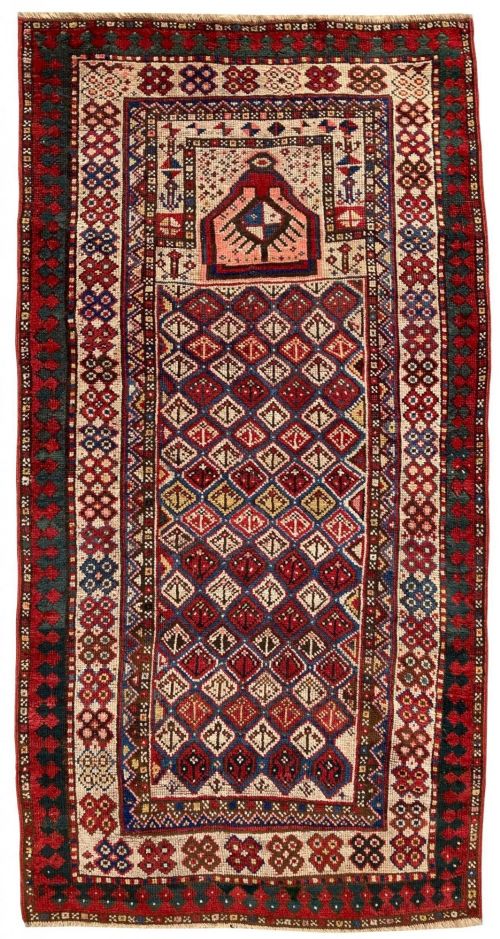
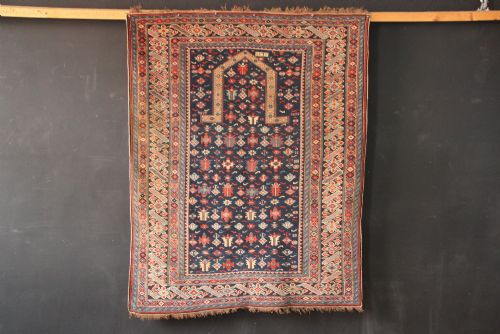
The pieces on this page encompass specific regional styles such as Kazak, Shirvan, Dagestan, Gendje, and Karabagh. Buyers often encounter geometric medallions, floral lattices, and characteristic flaming boteh motifs woven into compact formats.
Most examples date from the mid-nineteenth century through to the early twentieth century, reflecting a period of traditional vegetable dyeing and hand knotting. Their smaller dimensions make them suitable as wall hangings or focused floor accents.
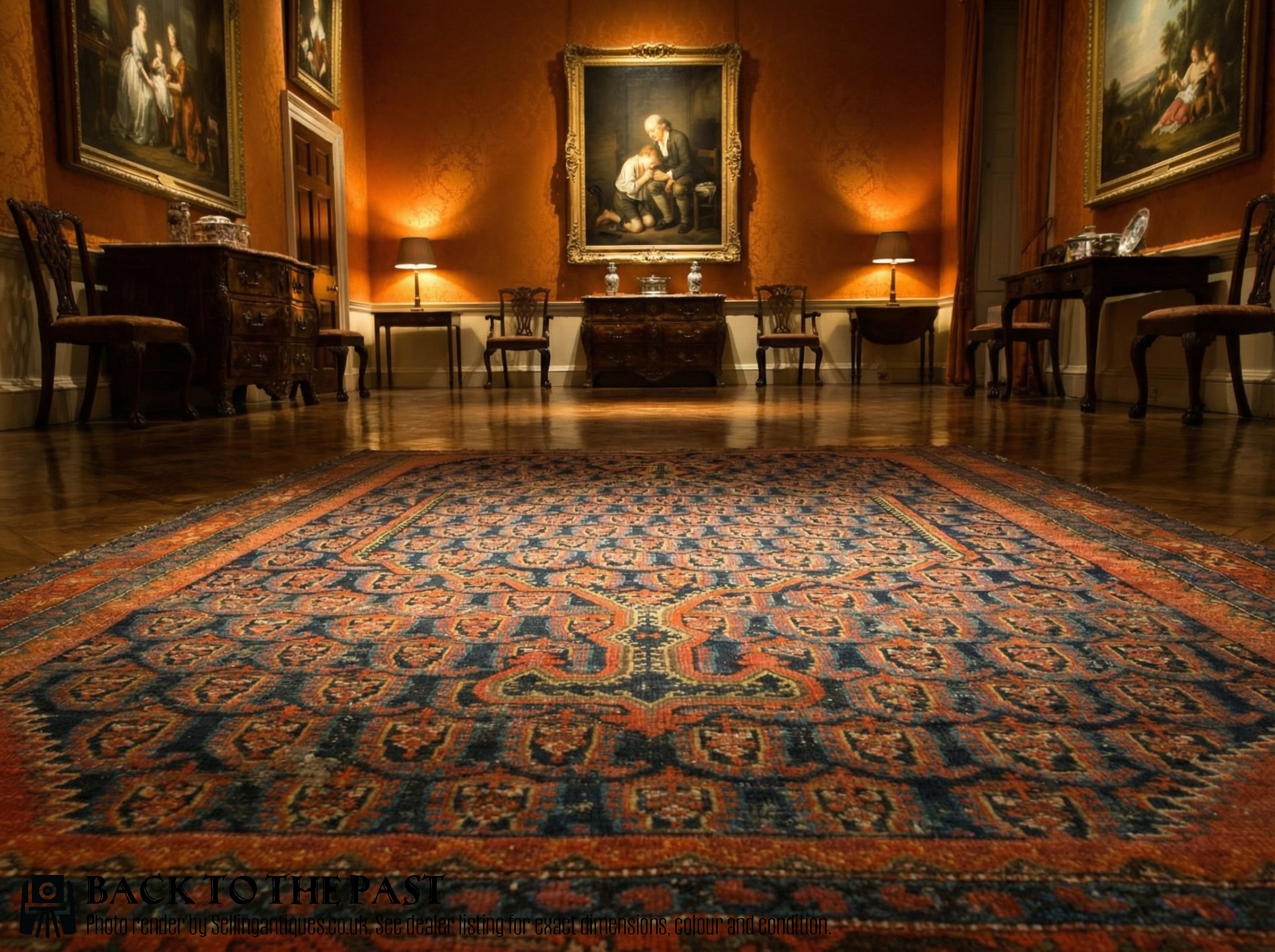
How they were made
These floor coverings rely on natural wool for both the pile and the foundational warps and wefts, occasionally incorporating cotton for structural stability. Weavers tied symmetric or asymmetric knots by hand onto vertical looms, building dense structures that withstand centuries of use.
Colour comes from traditional natural dye sources, yielding rich red, ivory, blue, and yellow grounds that soften gracefully over time. The structural integrity depends on tightly beaten wool wefts binding the rows of knots securely together.
Caucasian Prayer Rug Retail Price Guide 2026
Typical asking prices for caucasian prayer rug among the pieces listed under this phrase on Sellingantiques today, from the lower quarter to the upper quarter. They describe what is for sale here now, not the wider market.
Listings feature nineteenth-century village weaving traditions from the Caucasus, constructed entirely in wool and cotton.
What varies in quality
The standard of a weaving rests upon the clarity of its geometric drawing and the saturation of its dye palette. Superior examples display crisp outlines within the prayer niche and highly individual secondary borders.
Handle and wool quality also dictate standing, with finer pieces possessing a supple, heavy drape rather than stiff rigidity. The complexity of the internal design, such as multi-coloured lattice work or scarce ground hues, separates standard village output from exceptional collectors' items.
The Caucasian Prayer Rug Glossary
- Mihrab
- The arched architectural niche depicted at one end of a prayer rug, representing the direction of prayer. It forms the focal point of the carpet's upper field.
- Boteh
- A stylised almond or pear-shaped motif associated with ancient Persian and Caucasian textile design. These elements often appear in rows or scattered across the central field.
- Kazak
- A robust style of tribal weaving originating from the western Caucasus, known for bold geometric polygons and saturated primary colours. These pieces generally display coarser knots and heavy wool.
- Shirvan
- A northern Caucasian weaving style characterised by fine, precise geometric details and frequent use of ivory grounds. The execution tends to be more delicate than southern tribal counterparts.
- Warp
- The vertical threads stretched tightly on the loom before knotting begins, which ultimately form the fringe at either end of the finished rug.
Caucasian Prayer Rug: Frequently Asked Questions
How do I identify a prayer rug?
Look for the distinct arched mihrab design at one end, which marks the piece for devotional use rather than general domestic flooring. The field beneath the arch often contains directional motifs like trees or lamps.
These formats tend to be smaller than room-sized carpets, making them portable and intimate in scale. The concentration of pattern draws the eye toward the central niche.
Where were these rugs made?
They were woven in various villages and mountainous districts across the Caucasus region, including Shirvan, Dagestan, and Karabagh. Each area developed distinct colour palettes and structural signatures.
Local tribes and village communities passed down these specific geometric and floral repertoires through generations. The geographical diversity accounts for the wide stylistic range found in surviving pieces.
Can I use an antique rug on the floor?
Yes, wool pile woven on sturdy foundations handles light to moderate foot traffic when paired with a quality underlay. Many owners prefer placing them in low-traffic areas to preserve the historic pile.
Alternatively, their compact size and rich iconography make them well-suited for hanging on walls as textile art. Regular gentle rotation helps ensure even wear over the years.
How do I date these textiles?
Dating relies on assessing the wool quality, natural dye characteristics, structural format, and stylistic evolution. Pieces from the mid-nineteenth century often display a deeper, more organic patina and wider abrasche in the colour fields.
Some examples carry woven dates or inscriptions in Arabic numerals or local scripts, providing a direct point of origin. Comparing structure with known examples in museum archives further refines the timeline.