
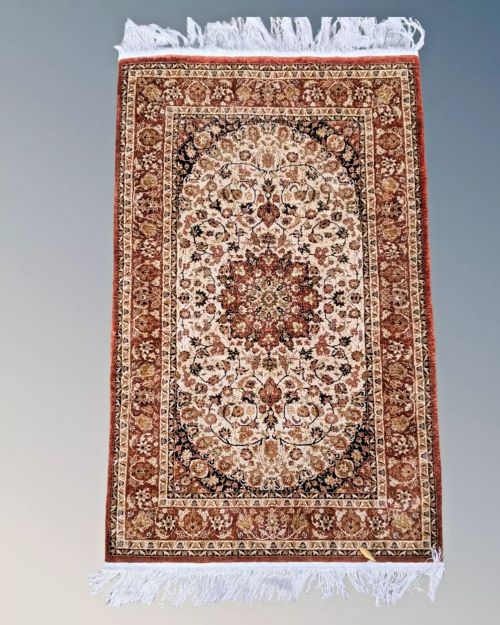


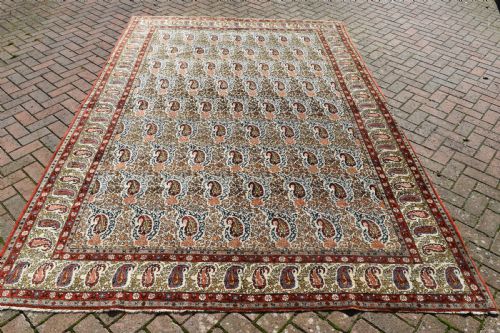
Terracotta Silk Rug
These terracotta silk rug examples bring tactile warmth and intricate pattern to a room through genuine regional craftsmanship.
Terracotta Silk Rug
A terracotta silk rug brings traditional regional weaving into modern spaces through enduring forms such as carpets, prayer formats, and fragments. The pieces available span origins from Kashmir and Tabriz to Bursa, Khotan, and Turkey, reflecting centuries of textile heritage.
Buyers seeking a terracotta silk rug will encounter diverse regional traditions, including Persian designs, Central Asian Uzbek suzanis, Ottoman Turkish aesthetics, and Kashmiri oriental patterns. These textiles serve as functional floor coverings or decorative wall hangings that anchor an interior scheme.
The selection ranges from early nineteenth-century fragments to twentieth-century examples, each displaying distinct motifs like repeat floral designs. Understanding these varied origins helps buyers identify the specific regional style that suits their home.
How they were made
The construction of these textiles relies on natural materials such as silk, wool, and cotton, often utilising silk thread or mercerised cotton alongside art silk variants. Weavers employed traditional hand-knotting and embroidery techniques suited to each regional workshop.
Makers integrated structural foundations in cotton and wool to support the lustrous silk pile and intricate surface embroidery seen in pieces like the Bokhara suzani. This combination of fibre and technique ensures both visual depth and structural integrity.
Some nineteenth-century fragments spent their lives travelling the Silk Road before finally resting on a modern floor.
What varies in quality
Quality in these textiles rests upon the fineness of the knotting or embroidery density and the precise handling of materials like pure silk versus art silk. Superior examples exhibit tightly packed foundations and crisp delineation of traditional motifs.
The handling of colour and dye consistency distinguishes finer pieces, where terracotta tones and secondary hues retain their vibrancy and depth. Condition also plays a role, separating intact carpets from early nineteenth-century fragments.
The Terracotta Silk Rug Glossary
- Suzani
- An embroidered textile from Central Asia, traditionally worked with silk thread on a cotton or linen ground. These pieces often feature bold floral motifs and were historically made as part of a bride's dowry.
- Mercerised cotton
- Cotton yarn that has been treated with sodium hydroxide to give it a lustrous, silk-like sheen. This material offers increased strength and dye affinity.
- Prayer format
- A rug design featuring a mihrab or arch motif indicating the direction of prayer. This layout is common in traditional Anatolian and Turkish weaving.
- Art silk
- A synthetic fibre, often viscose or rayon, used to imitate the appearance and texture of natural silk. It provides a similar lustre at a different cost point.
- Pile
- The upright loops or cut strands of yarn that form the usable surface of a carpet. The density and material of the pile determine how the textile wears over time.
Terracotta Silk Rug: Frequently Asked Questions
Where were these rugs made?
The pieces originate from traditional weaving centres across Persia, Turkey, Central Asia, and Kashmir. Each region developed distinct patterns and structural techniques.
Buyers will find specific styles ranging from Tabriz carpets to Uzbek suzanis and Anatolian designs.
How do I care for a silk rug?
Silk textiles require gentle handling and protection from direct sunlight to preserve their delicate fibres and dye colours. Professional cleaning is essential for maintaining the pile.
Regular light vacuuming without a beater bar helps remove surface dust without damaging the weave.
What is an art silk rug?
An art silk rug uses manufactured fibres like mercerised cotton or rayon to replicate the sheen and soft handle of genuine silk. These materials provide a similar decorative impact.
They appear in twentieth-century production alongside pieces woven entirely from natural silk.
How do I date an antique rug?
Dating relies on examining the materials, dye types, structural wear patterns, and stylistic conventions characteristic of specific periods. Nineteenth-century fragments show distinct ageing compared to twentieth-century productions.
Comparing the knotting style and regional motifs provides further clues to a piece's age.
Can these rugs be used on the floor?
Many of these textiles function well as floor coverings, though delicate silk piles and antique fragments are better suited to low-traffic areas or wall display. Using a quality underlay prevents slipping and cushions the fibres.
Consider the traffic level in the room when deciding where to place each rug.