




Patterned Silk Carpet
A patterned silk carpet brings remarkable texture and intricate design to a room, offering centuries of weaving tradition in luxurious materials.
Patterned Silk Carpet
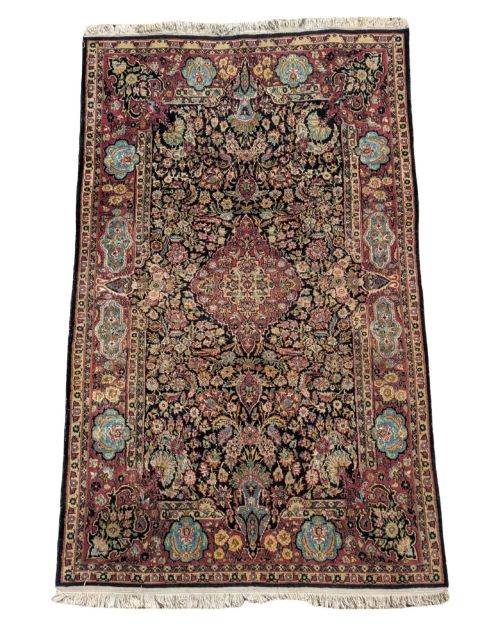
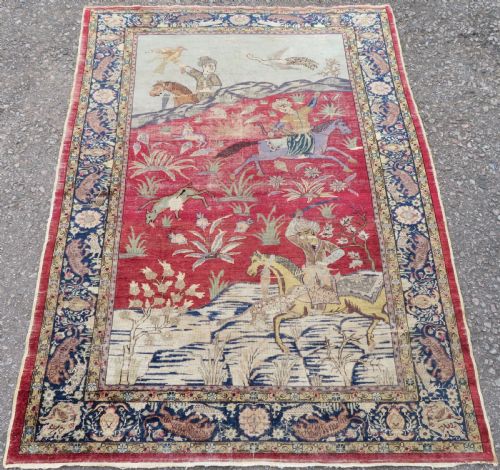
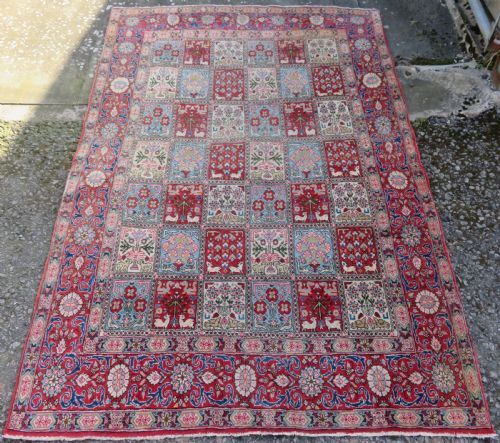
When you search for a patterned silk carpet, you examine fine floor coverings that span Persian and Turkish origins, including classical idioms from Isfahan, Qum, Kayseri, Bursa and West Anatolia. These works range from large carpets to smaller prayer rugs, area rugs and pictorial pieces depicting hunting scenes or tile patterns.
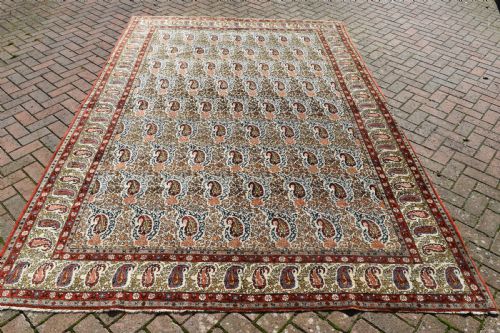
The examples available here stretch across several periods, from the nineteenth century into the twentieth century, specifically featuring dates around 1800, 1890, 1910, 1920 and 1930. Buyers encounter both traditional formats and vintage interpretations incorporating repeat floral designs.
Most pieces rely on specific regional aesthetics, notably traditional Persian compositions and Ottoman Turkish motifs, executed in dense pile formations. The selection balances room-sized carpets with compact area rugs suitable for focused spaces.
How they were made
Makers constructed these textiles using silk alongside foundational elements of cotton and wool, occasionally employing art silk or mercerised cotton to achieve distinct sheens. The interplay of these fibres provides both structural durability in the foundation and lustrous definition across the pile.
Weavers deployed traditional knotting techniques characteristic of Anatolian and Persian workshops, building up elaborate pictorial narratives, tile geometries and floral repeats. The precision of the weave allows complex hunting scenes and intricate border systems to remain crisp over generations.
Listings span five decades from 1800 to 1930, uniting Persian and Ottoman Turkish traditions.
What varies in quality
The distinction between standard examples and the finest works rests upon the density of the knotting and the crispness of the drafted design. Superior pieces maintain sharply defined tile patterns and pictorial elements without blurring in the transitions.
Material selection also dictates overall grade, where pure silk highlights or full silk piles create a depth of light reflection absent in simpler cotton blends. The sophistication of the regional palette, whether found in a Kayseri prayer rug or an Isfahan carpet, governs the visual success of the piece.
The Patterned Silk Carpet Glossary
- Silk
- A natural protein fibre spun by silkworms, prized for its inherent sheen and tensile strength. It forms the primary pile or delicate highlights in finer oriental carpets.
- Mercerised cotton
- Cotton treated with sodium hydroxide to increase lustre and affinity for dye, often utilised as an alternative or supplement in vintage weaving.
- Prayer rug
- A small textile featuring a mihrab or niche design, traditionally used for personal devotion and oriented towards Mecca during prayer.
- Art silk
- An artificial silk substitute, commonly viscose or rayon, used in twentieth-century production to simulate the appearance of genuine silk.
- Pictorial
- A descriptive term for rugs and carpets depicting figurative scenes, such as historical events or hunting motifs, rather than purely geometric or floral repeats.
Patterned Silk Carpet: Frequently Asked Questions
How do I clean a silk carpet?
Professional specialist cleaning is essential for these delicate textiles. Water and standard domestic detergents damage the natural fibres and cause dye bleeding.
Gentle surface vacuuming without a beater bar removes loose debris safely between professional maintenance visits.
Can I place these carpets in high-traffic hallways?
Silk and fine mercerised cotton piles suit low-traffic areas or formal rooms where foot traffic remains minimal. Placing them away from heavy boots preserves the delicate pile height.
Using a quality underlay prevents slipping and reduces fibre friction against hard floors.
How do I identify a prayer rug?
Prayer rugs typically display a distinct arched architectural motif known as a mihrab at one end of the field. This design points the worshipper in the correct direction during use.
They generally measure smaller than room-sized carpets for ease of personal placement.
What is the difference between Qum and Kayseri rugs?
Qum rugs originate from central Iran and frequently showcase intricate floral or garden designs executed in pure silk. Kayseri pieces come from Turkey and often incorporate traditional regional prayer motifs or repeat patterns.
Both centres are renowned for exceptional knot density and refined aesthetic standards.