
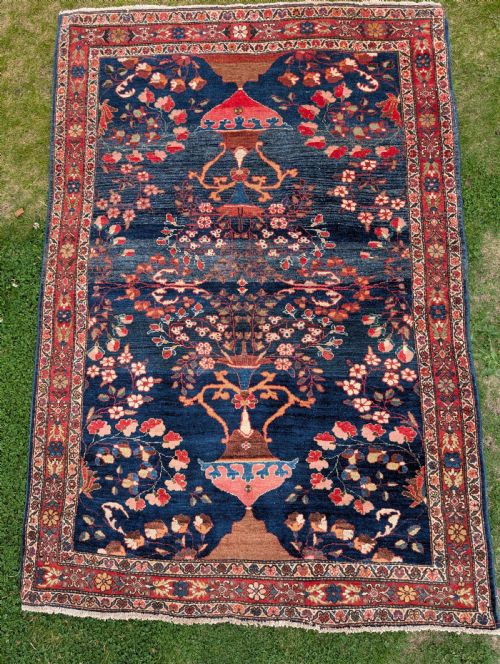


Antique Vase Rug
These antique vase rug examples combine traditional Persian weaving with classic floral motifs, offering enduring decorative appeal for any interior.
Antique Vase Rug
An antique vase rug presents a distinct composition centred on a floral vessel motif, drawing upon historical design traditions from Persia and beyond. Buyers encounter these floor coverings in roomsize carpets, area rugs, and smaller prayer formats.
The pieces on this page span the early decades of the twentieth century, with origins primarily rooted in Persian workshops, tribal groups, and regional centres such as Kashan, Kirman, Isfahan, and Afshar. Variations also extend to Indian production and traditional styles reflecting Safavid inspiration.
Makers utilised specific regional iconography, pairing the central vase with floral sprays, birds, animals, and peacocks. These woven items functioned historically as both portable art and practical floor coverings within domestic spaces.
Materials and construction methods
Weavers constructed these textiles predominantly using wool pile on cotton foundations, occasionally incorporating silk for finer detail and texture. The natural resilience of wool fibre allowed these carpets to withstand generations of daily domestic use.
Regional workshops employed distinct knotting techniques and loom setups, yielding varying pile densities from standard roomsize weaves to exceptionally fine carpets. Natural dye traditions supplied the palette, producing the layered tones seen across the surviving inventory.
Several rugs manage to squeeze peacocks, birds, and floral vases into the same composition.
Factors of distinction
Quality rests upon the density of the weave and the precision with which the floral vase design is articulated across the field. Finer knotting permits sharper rendering of intricate botanical motifs, birds, and animals.
The integrity of the materials and the preservation of the original pile height dictate the visual strength of the piece. Examples retaining crisp coloration and balanced proportions stand apart from heavily worn or simpler commercial outputs.
The Antique Vase Rug Glossary
- Prayer rug
- A small format textile featuring a mihrab or niche design, traditionally used for personal devotion. These rugs often incorporate vase and floral elements within the arch.
- Knot density
- The number of knots per square unit of carpet, which determines the fineness of the weave and the clarity of the pattern. Higher densities typically indicate greater workshop labour.
- Foundation
- The underlying structure of warp and weft threads that support the knotted pile. Cotton and wool serve as the primary structural materials.
- Field
- The central background area of the rug enclosed by the border. This space usually displays the prominent vase and floral arrangement.
- Mihrab
- The pointed arch design element characteristic of prayer rugs, symbolising a doorway or sanctuary.
Antique Vase Rug: Frequently Asked Questions
How do I clean an antique vase rug?
Maintenance requires gentle surface care such as light vacuuming without a beater bar to protect the wool pile and cotton foundations. Professional textile cleaning is necessary for deep washing.
Harsh chemical detergents or excessive moisture will damage the natural fibres and alter the historic dyes. Keeping the carpet out of direct, prolonged sunlight prevents fading of the dyes.
Where were these rugs made?
Production centres include various regions of Persia, such as Kashan, Kirman, Isfahan, and areas worked by tribal groups like the Afshar and Bakhtiari. Additional pieces originate from Indian looms.
Each region developed distinct palettes, knotting styles, and variations of the vase motif. These local characteristics help identify the geographic origin of individual textiles.
Can I place these rugs in high traffic areas?
Wool and cotton construction provides natural durability that suits moderate domestic foot traffic in living spaces and hallways. Placing a quality rug underlay beneath the piece prevents slipping and reduces friction against the floor.
Placing fragile silk examples or heavily worn historical pieces in busy entryways should be avoided to preserve the remaining pile. Regular rotation distributes wear evenly across the surface.
What does the vase motif represent?
The vase motif symbolises a vessel of life, abundance, and paradise within traditional Middle Eastern and Persian art. Artists arranged floral sprays, trees of life, and birds emerging from the container.
This imagery connects early twentieth-century weaving to classical Safavid design traditions. The symbol adds narrative depth to the geometric and botanical framework of the carpet.