




Silk Turkish Carpet
These silk turkish carpet examples bring intricate Anatolian craftsmanship into a room, offering detailed floral and pictorial designs.
Silk Turkish Carpet
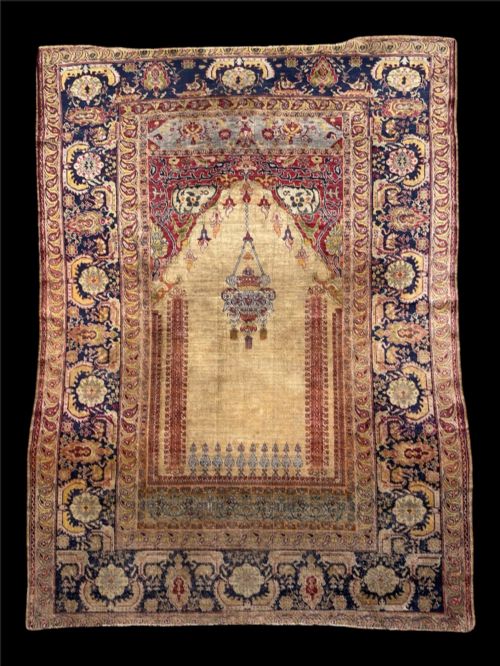
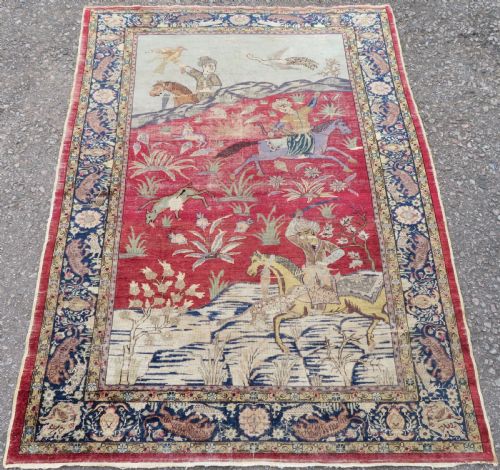
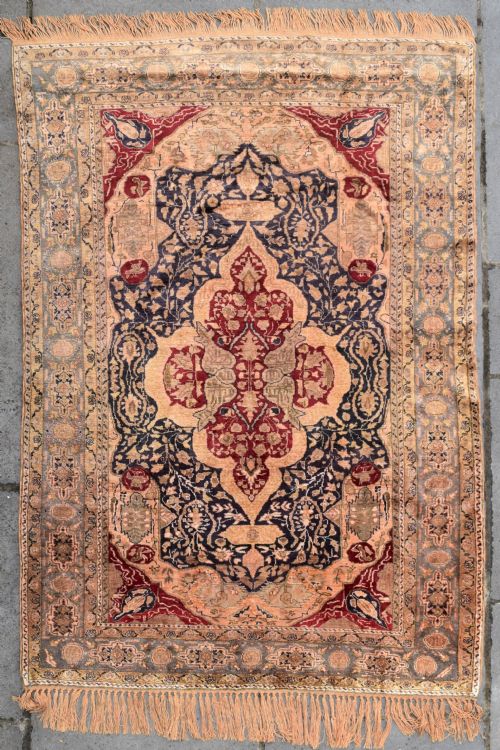
A silk turkish carpet brings together traditional Anatolian designs and fine textile work, often seen in prayer rugs and pictorial formats. Buyers looking at this selection encounter pieces originating from centres such as Kayseri, Bursa, Sivas, and West Anatolia.
The objects span from the nineteenth century into the mid-twentieth century, including nineteenth-century examples and vintage items from the nineteen-thirties and nineteen-fifties. Many take the form of floor rugs and area rugs, while certain miniature pieces appear framed as wall art.
Designs draw upon Ottoman traditions and revival styles, featuring repeat floral motifs and hunting scenes. Buyers frequently meet Kayseri prayer rugs and carpets knotted in floss silk or art silk.
How they were made
These textiles are hand woven using natural and alternative fibres, primarily silk, floss silk, and art silk or mercerised cotton. Foundations frequently incorporate cotton alongside the silk pile to provide structural stability.
Weavers employed traditional knotting techniques across various Anatolian regions, incorporating materials like wood and glass in associated display mountings for framed wall art.
One miniature Hereke silk rug arrives tucked behind glass inside a frame, proving that a carpet can sometimes be a picture.
What varies in quality
The fineness of the knotting and the complexity of the pictorial or floral composition determine the distinction of each piece. Kayseri and Hereke examples demonstrate varying degrees of intricacy in their repeat designs and prayer niches.
Material composition ranges from pure silk and floss silk to art silk and mercerised cotton variants. The depth of the palette and the precision of the Anatolian design influence the character of the carpet.
The Silk Turkish Carpet Glossary
- Kayseri
- A central Turkish city renowned for producing woven carpets and prayer rugs with detailed floral patterns. Kayseri pieces often utilise fine silk piles.
- Prayer Rug
- A rug featuring a mihrab or niche design used historically for devotion. These pieces are frequently woven in smaller formats.
- Floss Silk
- Unspun or loosely twisted silk fibre utilised in specific regional knots. This material gives a distinct texture and sheen to the pile.
- Art Silk
- Artificial silk or mercerised cotton used as a substitute for natural filament. It appears in vintage twentieth-century weaving.
- Hereke
- A coastal town famous for small-scale pictorial weaving. Hereke pieces occasionally feature artist signatures.
Silk Turkish Carpet: Frequently Asked Questions
Where were these rugs made?
Production centres include Kayseri, Bursa, Sivas, and West Anatolia. Each region developed distinct stylistic characteristics.
Weavers in these areas applied traditional Ottoman motifs and pictorial scenes using local materials.
How do I care for a silk rug?
These textiles require gentle maintenance to preserve the delicate pile and fibres. Professional cleaning suited to silk is recommended.
Avoid excessive moisture and direct sunlight to protect the natural and art silk materials over time.
What is a prayer rug design?
Prayer rugs feature a prominent arch or niche motif known as a mihrab. This design element directs the orientation of the textile.
They appear frequently among nineteenth-century Anatolian pieces.
Are all these rugs pure silk?
The selection includes pieces made from pure silk alongside examples utilising floss silk, art silk, and mercerised cotton.
Foundations often incorporate cotton to support the woven structure.