




Fine Silk Floor Carpet
A fine silk floor carpet brings remarkable lustre and intricate knotting to a room, offering both traditional Persian and Turkish design underfoot.
Fine Silk Floor Carpet
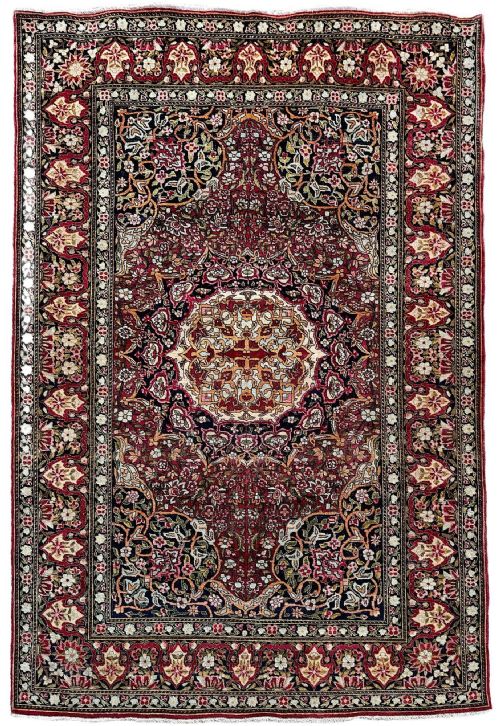
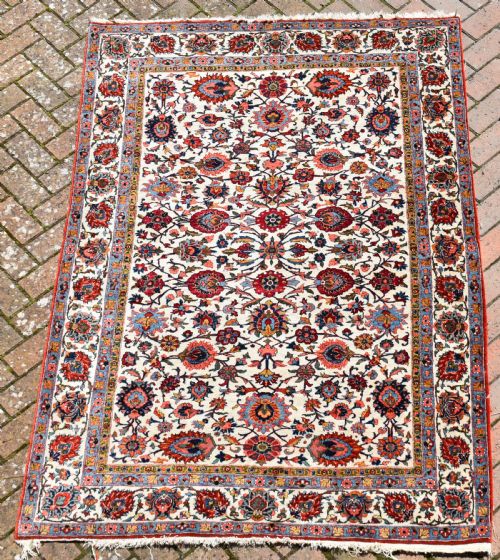
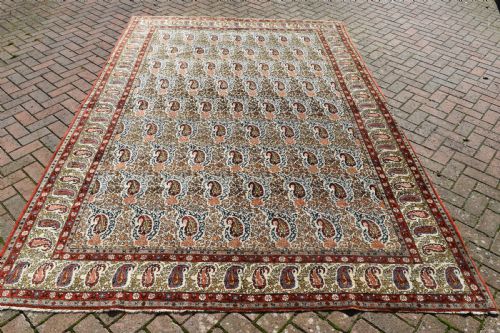
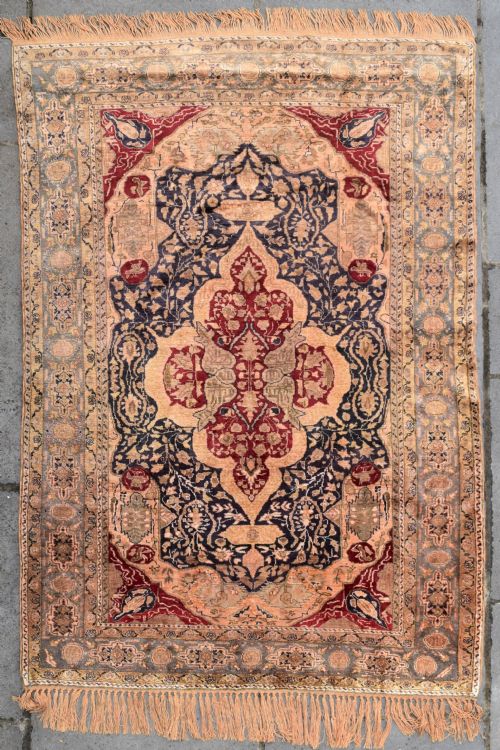
When you search for a fine silk floor carpet, you encounter woven floor coverings originating from Persia and Turkey during the early decades of the twentieth century. These pieces encompass regional types such as Isfahan, Qum, Tabriz, Kashan, Kayseri, and Sivas rugs and carpets.
The items listed on this page range in format from smaller area rugs measuring around two metres in length to larger carpets exceeding four metres. They typically display traditional Persian or Anatolian motifs woven during the period spanning from 1900 to 1930.
How they were made
Makers constructed these floor coverings using silk, floss silk, wool, and cotton materials. The use of pure silk and floss silk allows for intricate detail and a reflective surface quality.
Weavers knotted the pile onto supportive foundations, often employing traditional techniques associated with historic weaving centres in Persia and Anatolia.
Listings span four decades from 1900 to 1930, featuring materials such as silk, floss silk, wool, and cotton across Persian and Anatolian styles.
What varies in quality
Quality in these carpets rests upon the density of the knotting and the fineness of the materials utilised. Pieces knotted entirely in silk or floss silk display greater definition in their traditional patterns.
The precision of the weaving and the complexity of the pictorial or geometric composition distinguish standard examples from the finer productions of Isfahan, Qum, and Tabriz.
The Fine Silk Floor Carpet Glossary
- Isfahan
- A historic Persian city renowned for producing finely knotted carpets with delicate floral and pictorial designs. Pieces from this region often date from the early twentieth century.
- Qum
- A central Persian centre known for sophisticated silk rug and carpet production. These items frequently feature intricate medallion layouts.
- Floss silk
- Unspun or loosely twisted silk fibres that provide a particularly soft texture and high sheen when incorporated into rug knots. It distinguishes certain Turkish Sivas pieces.
- Pile
- The upright yarn loops or cut ends that form the usable surface of the carpet. In these listings, the pile is predominantly silk or wool.
- Medallion
- A central ornamental motif set into the field of a rug or carpet. It forms a focal point in traditional Persian and Anatolian designs.
Fine Silk Floor Carpet: Frequently Asked Questions
Where were these carpets made?
These floor coverings originate from traditional weaving centres in Persia and Turkey. Specific origins include Isfahan, Qum, Tabriz, Kashan, Kayseri, and Sivas.
The regional styles reflect the distinct aesthetic traditions of early twentieth-century Anatolian and Persian workshops.
What materials are used?
The pieces utilise silk, floss silk, wool, and cotton in their construction. Pure silk and floss silk provide a distinctive reflective sheen and soft handle.
Foundation threads typically consist of cotton or silk, supporting the densely knotted pile above.
How do I date these pieces?
Dating relies on stylistic characteristics, regional attribution, and historical records from the early twentieth century. The examples on this page date from 1900 to 1930.
Examining the specific knotting materials and traditional motifs helps place each rug within this thirty-year window.
Are these suitable for floors?
These items function as rugs and carpets designed for interior spaces. Their construction accommodates placement on floors in rooms with appropriate care.
Using a suitable underlay helps protect the silk pile from excessive friction and movement.