
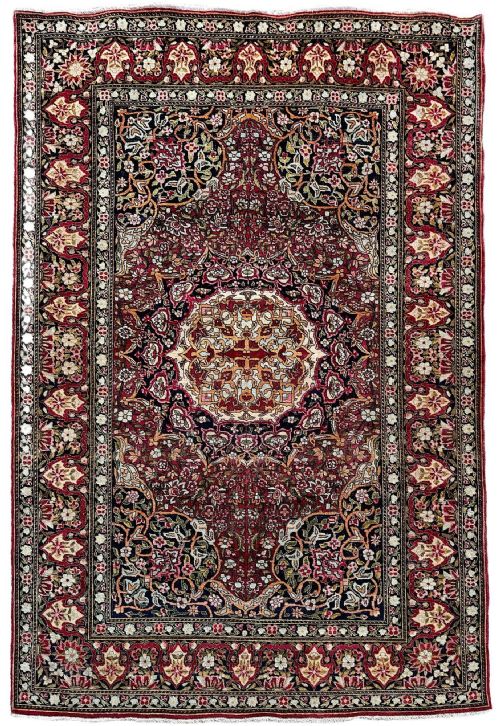
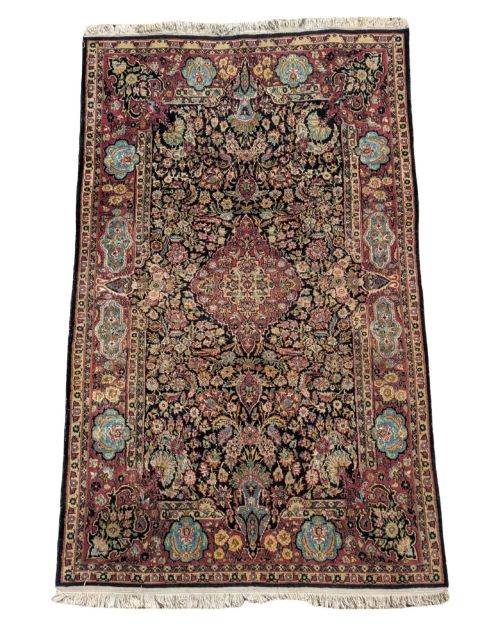
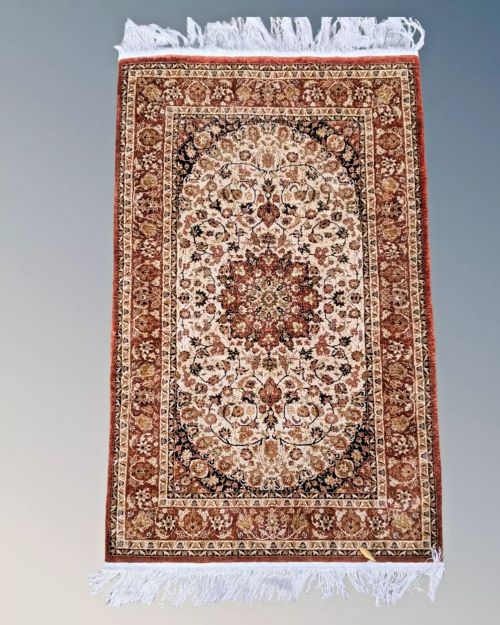
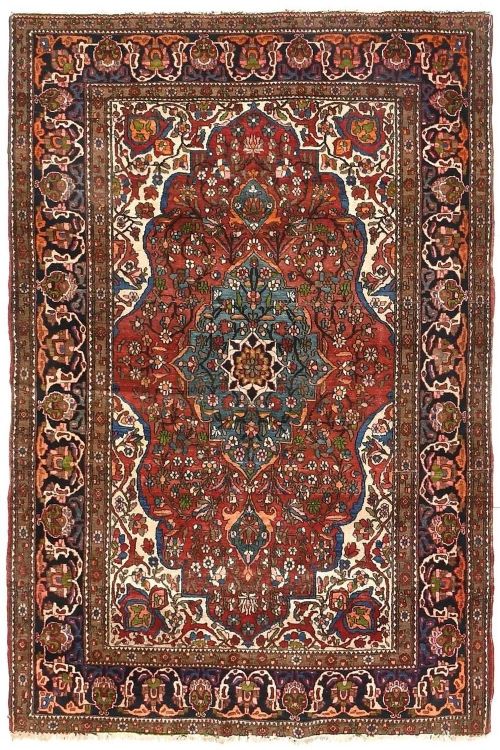


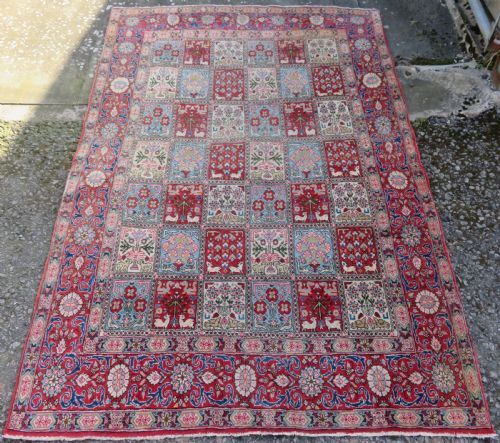


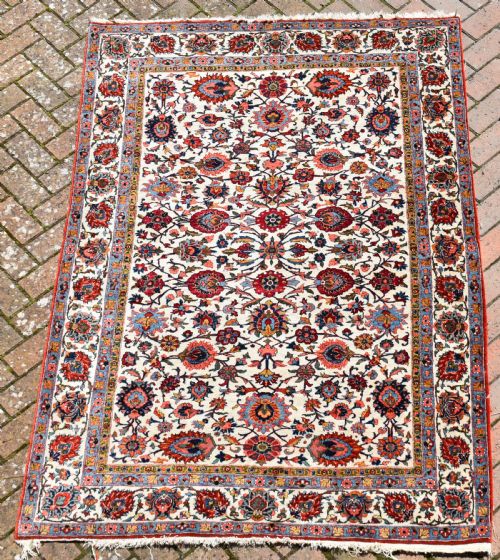

Floral Silk Carpet
A floral silk carpet brings intricate botanic design and lustrous texture into a room, spanning Persian, Turkish, and Chinese origins.
Floral Silk Carpet
A floral silk carpet is a textile floor covering featuring botanical motifs, woven across the early decades of the twentieth century. These pieces encompass regional traditions from Persia, Turkey, China, and Kashmir, reflecting diverse weaving centres and stylistic influences.
Buyers encounter formats ranging from smaller mats to large area rugs and carpets. Many incorporate floral patterns, tile designs, and medallion layouts executed in silk, wool, or blended foundations.
The inventory demonstrates production dates clustered between 1900 and 1930. Origin points include specific towns and regions such as Isfahan, Qum, Nain, and Kayseri.
How they were made
Weavers constructed these carpets using natural fibres including silk, cotton, wool, lambswool, mercerised cotton, and art silk. Foundations often utilised cotton or silk to support intricate knotting and pile work.
Many examples combine materials by employing silk highlights or silk foundations paired with wool piles. Artisans applied traditional dying and knotting techniques characteristic of Persian Safavid, Anatolian, and Oriental workshops.
Some weavers chose to highlight specific petals and borders in gleaming silk, ensuring the flowers catch the room's light as you walk past.
What varies in quality
Quality differentiates through the density of the weave and the selection of foundation materials. Pieces featuring pure silk piles or lambswool on silk foundations represent higher complexity than blended art silk variants.
The precision of the floral repeat pattern and the fineness of the knotting distinguish standard production from exceptional examples. Origin and regional technique further influence the structural integrity and visual depth of each rug.
The Floral Silk Carpet Glossary
- Foundation
- The structural grid of warp and weft threads that supports the pile of the carpet. Cotton and silk are common foundation materials in these pieces.
- Pile
- The vertical or upright surface of the carpet formed by the cut ends of knotted yarn. Materials range from pure silk to wool and mercerised cotton.
- Medallion
- A central decorative ornament placed in the middle of the carpet field. This design element often frames intricate floral patterns.
- Art Silk
- A synthetic substitute or processed textile designed to mimic the appearance and lustre of natural silk. It appears in twentieth-century vintage rug production.
Floral Silk Carpet: Frequently Asked Questions
Where were floral silk carpets made?
Production centres include Isfahan, Qum, Nain, and Kayseri, alongside workshops in China and Kashmir. Each region developed distinct botanical patterns and weaving methods.
Designs draw on traditional Persian Safavid styles, Anatolian motifs, and localized Oriental aesthetics spanning the early twentieth century.
What materials make up these carpets?
Weavers utilised silk, wool, lambswool, cotton, mercerised cotton, and art silk. Many pieces combine a cotton or silk foundation with wool or silk pile.
Highlights in silk are frequently integrated into wool rugs to accentuate specific floral details across the field and borders.
How do I date a silk carpet?
Dating relies on stylistic markers, construction methods, and material usage typical of the early twentieth century. Pieces in the current selection date between 1900 and 1930.
Examining the weave density and foundation type helps contextualise the period of manufacture alongside regional traditions.
How should I live with a silk rug?
Place these rugs in areas with moderate foot traffic to preserve the delicate pile and silk highlights. Regular gentle vacuuming without a beater bar maintains the fibres.
Protecting the textile from direct sunlight prevents fading of the natural and artificial dyes used in the floral designs.