
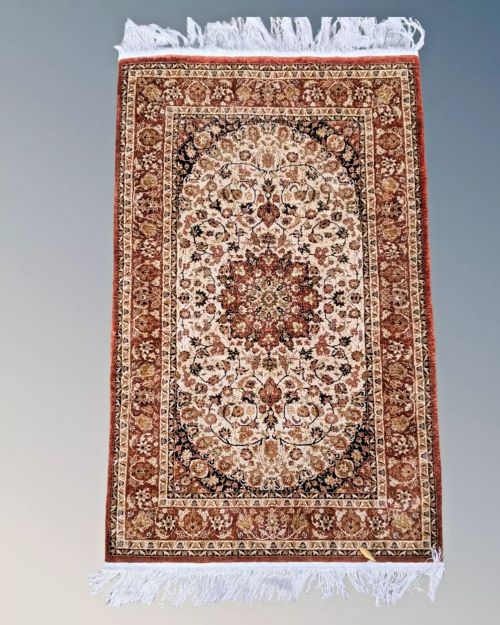


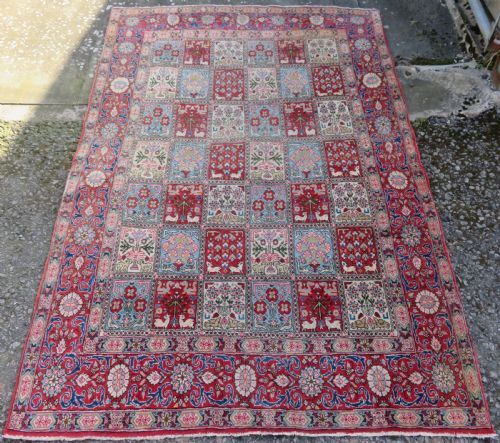


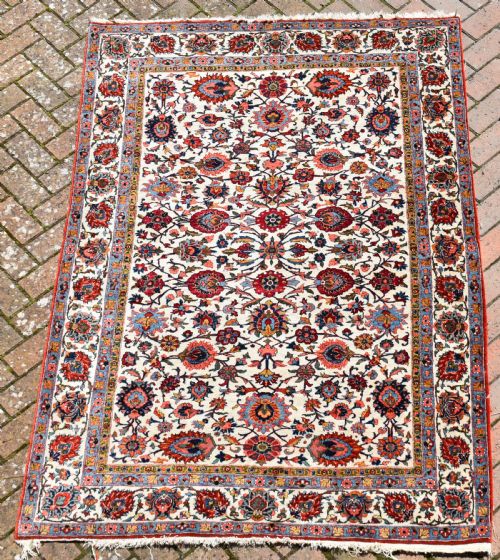
Oriental Silk Runner
These oriental silk runner pieces offer a fine balance of pattern and texture, bringing distinct historical character to a hallway.
Oriental Silk Runner
An oriental silk runner takes the form of an elongated textile, often woven or embroidered in traditional regional styles. These pieces include fragments, prayer rugs, and carpets produced across varied periods from the nineteenth and twentieth centuries.
Makers and workshops across Anatolia, Persia, and Central Asia utilised diverse materials such as silk, cotton, wool, and metallic thread. The format naturally suits corridors and narrow spaces where length defines the composition.
How they were made
Weavers constructed these textiles by hand, utilising traditional knotted pile or flat woven techniques on vertical looms. Natural materials like wool and cotton frequently served as the foundation or warp, providing structural stability for the delicate silk pile.
Many examples incorporate metallic thread alongside silk and mercerised cotton to build intricate repeat floral designs and tile patterns. Artisans also produced embroidered fragments, applying needlework directly onto foundational fabrics.
A good runner hides the fact that you haven't polished the hallway floorboards since last Tuesday.
What varies in quality
The fineness of the knot density and the crispness of the repeat floral or tile pattern dictate the visual success of the piece. Better examples maintain structural integrity across the foundation, even when dealing with older fragments from the nineteenth century.
Material composition shifts between pure silk, part silk, and art silk or mercerised cotton alternatives. The depth of the colour palette and the precision of the traditional weaving style separate standard production from more accomplished regional work.
The Oriental Silk Runner Glossary
- Art silk
- A synthetic substitute often made from mercerised cotton or rayon that mimics the lustre of natural silk. It appears frequently in vintage Kayseri production.
- Kelleh
- A traditional large format carpet style, typically longer than it is wide, associated with Persian and Central Asian weaving. This format suits narrow rooms and hallways.
- Prayer rug
- A textile featuring a Mihrab or niche design used historically for devotion. These pieces often employ fine silk pile and compact dimensions.
- Khotan
- A regional style originating from East Turkestan, known for distinct motifs and colour palettes. Pieces from this area often date to the nineteenth or early twentieth century.
- Fragment
- A surviving portion of an older carpet or textile rather than a complete whole. These historical pieces show the wear of time while retaining their original decorative merit.
Oriental Silk Runner: Frequently Asked Questions
What is an oriental silk runner?
An oriental silk runner is a long, narrow textile hand-woven or embroidered in traditions spanning Persia, Turkey, and Central Asia. They utilise materials like silk, cotton, and wool to create decorative surfaces for hallways.
These pieces range from early nineteenth-century fragments to twentieth-century vintage works. Each incorporates regional motifs such as repeat floral designs and tile patterns.
How do I care for a silk rug?
Silk textiles require gentle handling and protection from direct sunlight to preserve their natural lustre and dye colours. Professional cleaning tailored for delicate pile is essential for long-term maintenance.
Avoid placing these runners in areas with heavy foot traffic or moisture. Using a suitable underlay helps prevent slipping and reduces uneven wear on the foundation.
Are these runners made of pure silk?
The listings include pure silk, part silk, and art silk variations alongside cotton and wool foundations. Some examples utilise mercerised cotton to achieve a similar sheen to natural silk.
Material descriptions vary by origin, spanning Kashmiri productions, Persian Qum weaves, and Turkish Kayseri items. Examining the individual listing details clarifies the specific fibre content.
How do I date an antique runner?
Dating relies on stylistic markers, weaving techniques, and the specific structural materials used in the foundation. Pieces in the record span from the early nineteenth century up to the 1930s.
Natural dyes, regional motifs, and signs of age help differentiate nineteenth-century fragments from later twentieth-century vintage pieces. Comparing the knotting style and pattern complexity offers further context.