
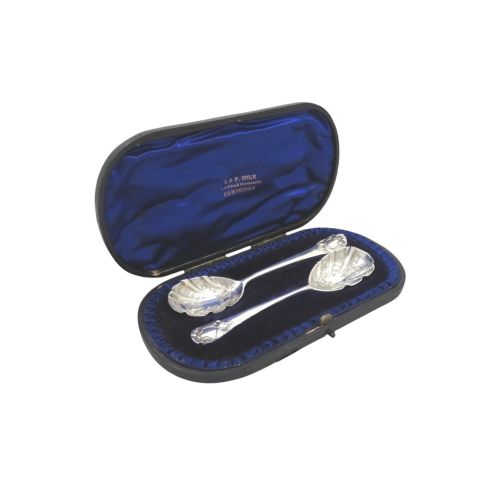
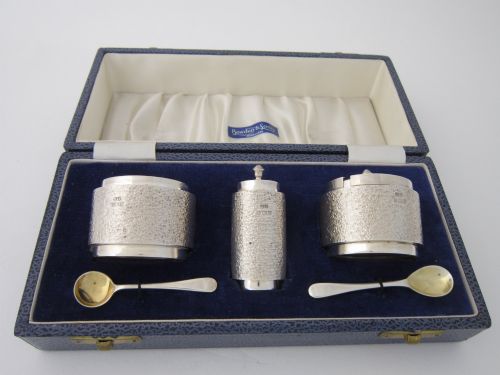


Cased Silver Condiment Set
A cased silver condiment set brings dining table elegance in fitted boxes lined with velvet or silk.
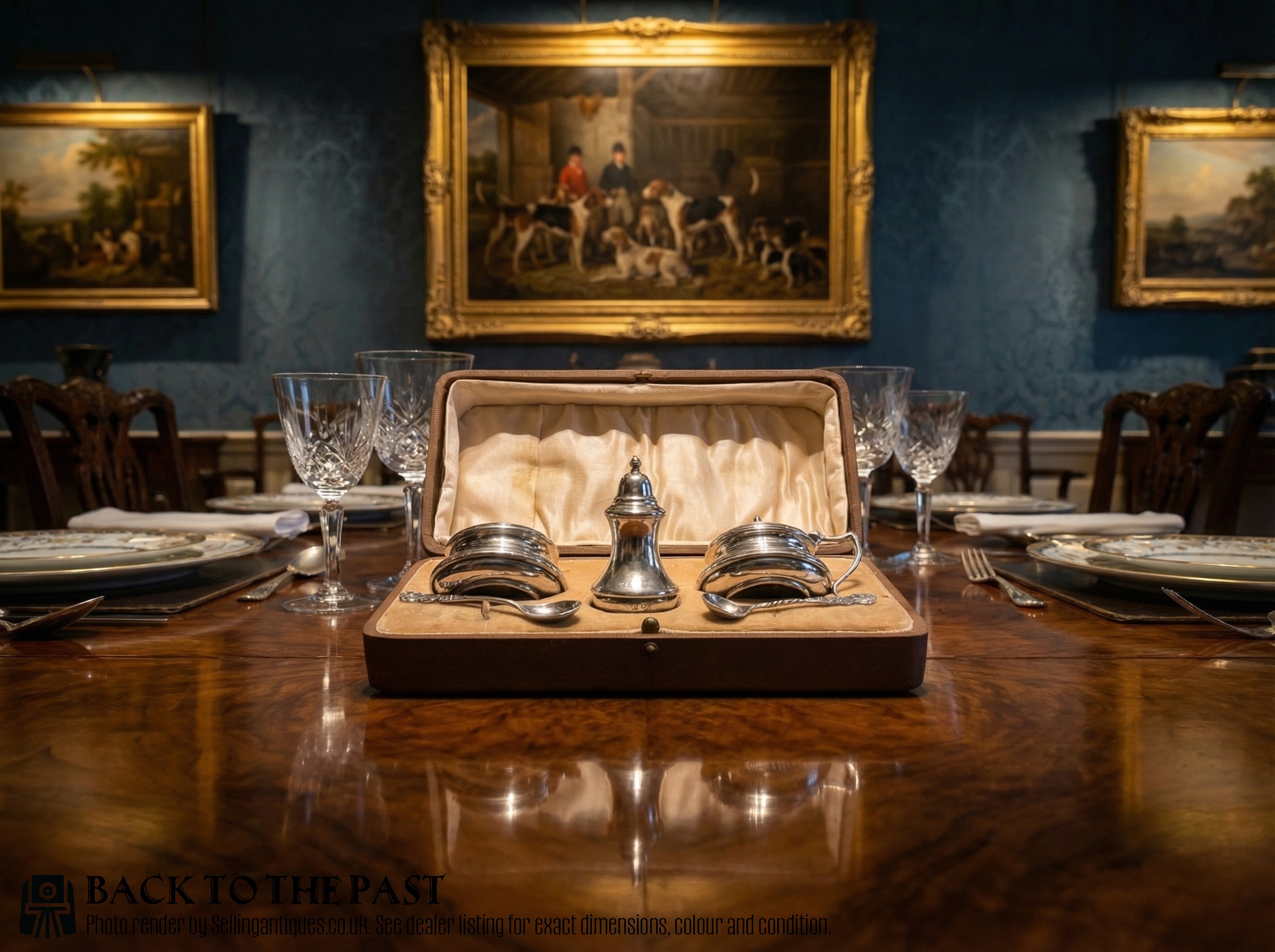
Cased Silver Condiment Set
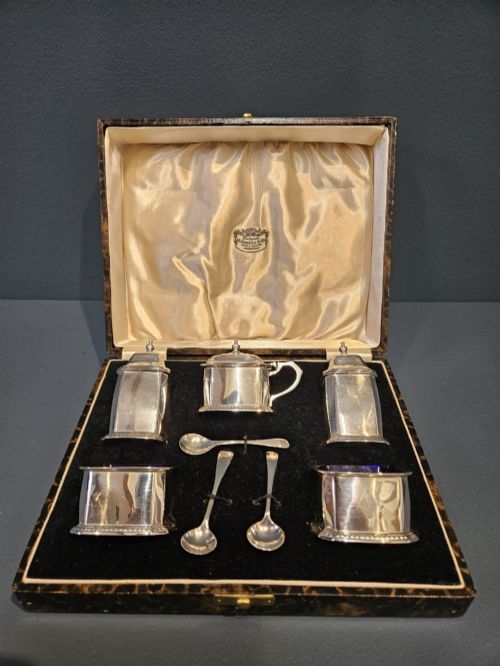
A cased silver condiment set comprises matching vessels for dining table seasonings, presented together in a fitted protective box. These collections typically include salt cellars, pepper shakers and mustard pots alongside small spoons.
The versions most commonly met on this page date from the Victorian, Edwardian and Art Deco periods, spanning the late nineteenth to the mid-twentieth century. Forms range from simple salt bowls with glass liners to elaborate matching cruet stands.
Buyers seek these sets for both practical dining use and historical display. The fitted cases preserve the metal and interior linings from excessive tarnishing and wear over generations.
How they were made
Makers constructed the vessels using sterling silver or silver plate, often shaping them through casting, hammering or stamping techniques. Fitted boxes utilised sturdy wood frames covered in leather, leatherette or smooth cloth.
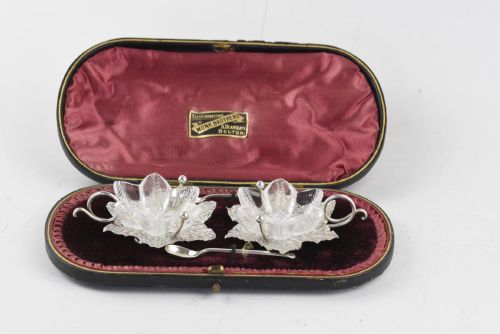
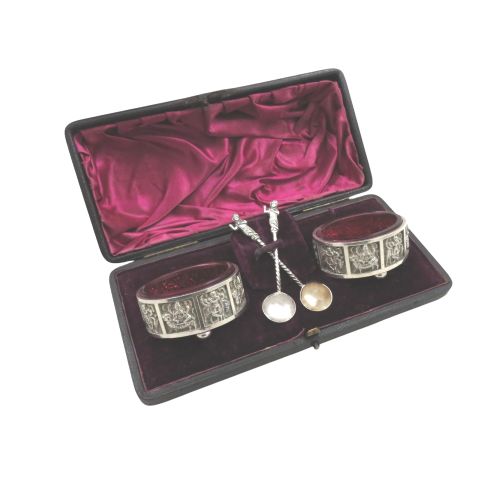
Interiors of the presentation cases feature soft textiles such as velvet, silk or satin to cushion the metal components securely. Many open salts incorporate removable glass liners to protect the silver from corrosive contents.
Listings span from the Victorian era through Edwardian times to Mid-Century Modern designs in sterling silver.
What varies in quality
Quality differences appear in the weight of the silver and the intricacy of the decorative motifs applied to the vessels. Finer examples display crisp hand-chased details, such as figurative designs or geometric Art Deco lines.
The condition and completeness of the fitted presentation case significantly influence overall merit. Sets retaining their original silk or velvet linings and matching spoons command greater interest than assembled groups.
William Neale·Wilmot Manufacturing Co·Viners·Henderson & Sorley
The Cased Silver Condiment Set Glossary
- Sterling silver
- A silver alloy containing 92.5 percent pure silver by mass, with other metals added for durability. This material standard appears across the majority of Victorian and twentieth-century tableware.
- Cruet set
- A matched group of small bottles, jars or open vessels used for holding table condiments like salt, pepper, mustard and vinegar. These collections sit within fitted frames or presentation boxes.
- Salt cellar
- An open bowl used to hold salt at the dining table before the invention of the shaker. They frequently incorporate removable glass liners.
- Hallmark
- An official stamp applied to precious metals indicating the standard of purity, the assay office, and the date of manufacture. These marks help verify the provenance of silver items.
Cased Silver Condiment Set: Frequently Asked Questions
What pieces are in a set?
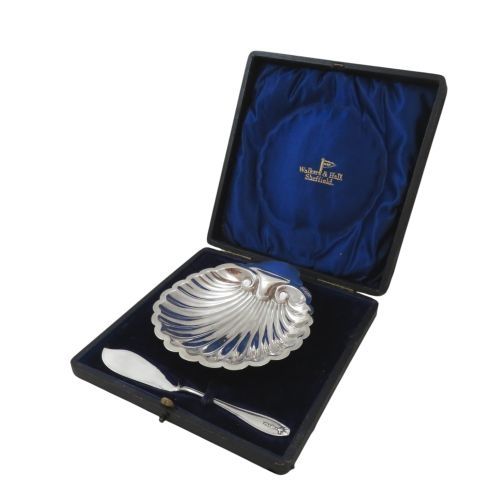
These sets typically contain salt cellars, mustard pots and pepper shakers accompanied by matching spoons. Some examples expand to include butter dishes or preserve spoons.
Larger configurations provide complete table service for multiple seasonings within a single fitted compartment box.
How were they used?
Dinners utilised these vessels to dispense salt, pepper and mustard onto individual plates during meals. The small spoons allowed guests to transfer seasonings cleanly.
Between meals, the complete ensemble rested safely inside its lined wooden presentation case on a sideboard or table.
How do I store silver?
Keep the silver inside its original fitted case in a dry environment away from direct sunlight. The velvet and satin linings help protect the metal from atmospheric moisture.
Avoid storing pieces in damp areas or wrapping them in materials that trap humidity against the silver surface.
How to date a set?
Examine the hallmarks stamped directly onto the silver components to identify the assay office and manufacturing year. Stylistic details like geometric lines or floral chased work also indicate the period.
Victorian pieces show ornate natural motifs while Art Deco sets display clean symmetrical angles from the 1920s and 1930s.