
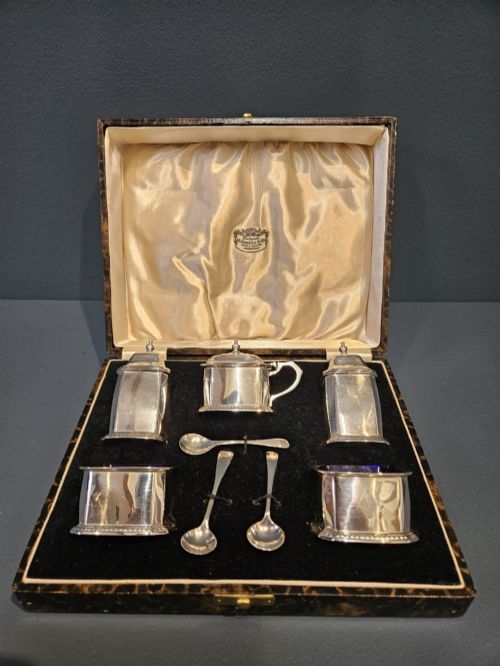


Art Deco Silver Cruet
An art deco silver cruet brings geometric elegance and period dining polish straight to the table.
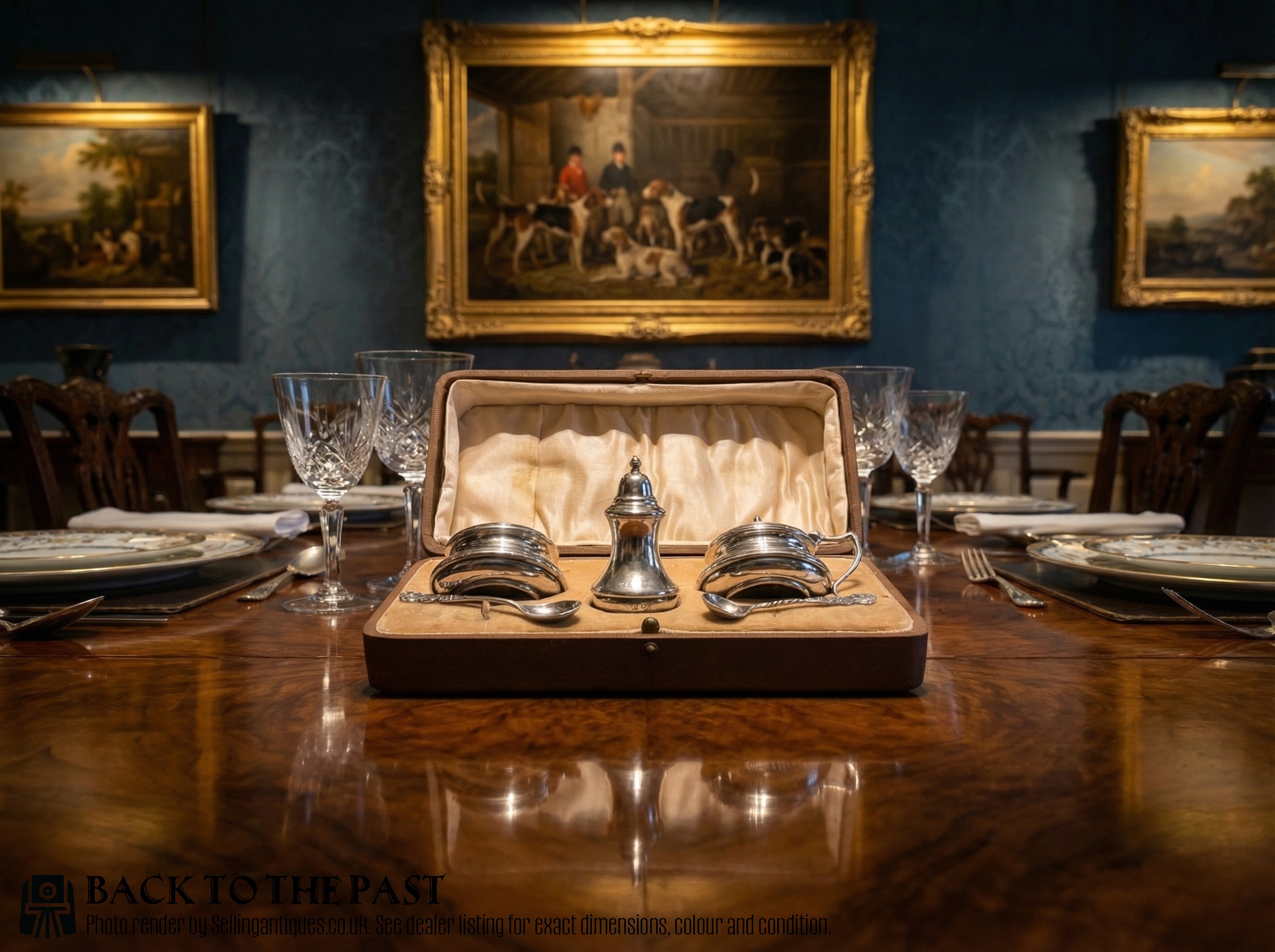
What an art deco silver cruet set is
An art deco silver cruet set comprises matched vessels for table condiments such as salt, mustard, pepper, oil, and vinegar, designed with the clean lines characteristic of the period. You will most frequently encounter three-piece configurations alongside larger sets complete with matching spoons, sometimes housed in fitted presentation cases.
The pieces emerge from the 1920s, 1930s, and 1940s, spanning the George V and George VI reigns. Makers such as Goldsmith & Silversmith's, William Neale, Wilmot Manufacturing Co., and Adie Brothers shaped these dining accessories in Birmingham and London workshops.
Materials and construction methods
Silversmiths formed the primary frames and vessels using sterling silver and solid silver, occasionally turning to silver plating. Glass and striking blue glass liners provide the functional inner containers for liquids and powders.
Interior protection and presentation involved fitted elements lined with silk, satin, velvet, or general fabric. Hallmarks stamped directly into the metal record the assay office locations such as Birmingham and London alongside the year of manufacture.
Retail Price Guide 2026
Typical UK retail prices for art deco silver cruet, calculated from the Sellingantiques database of over a million retail prices indexed since 2003. This retail price guide relies exclusively on Sellingantiques data; no external sources or auction records are used, so the figures do not describe the wider market.
Some sets included dedicated oil and vinegar cruets alongside mustard pots, ensuring every condiment had its own metallic stage.
Distinctions in craftsmanship and survival
The distinction between standard sets and the finest examples rests on the heaviness of the silver gauge and the crispness of the geometric piercing or moulding. Sets retaining their original matching spoons and intact coloured glass liners demonstrate a higher degree of preservation.
The presence of a dedicated fitted case adds structural completeness, whereas loose sets rely entirely on the individual weight and proportion of the pieces. Maker attribution through clear hallmarks distinguishes commercial production from named silversmith output.
William Neale·Wilmot Manufacturing Co.·Adie Brothers
The Art Deco Silver Cruet Glossary
- Cruet set
- A matched group of small containers designed to hold table condiments like mustard, pepper, and salt. These sets form the centrepiece of period dining arrangements.
- Sterling silver
- A silver alloy containing 92.5 percent pure silver by mass and 7.5 percent other metals, usually copper. This standard composition guarantees durability for functional tableware.
- Hallmark
- An official stamp applied by an assay office to indicate the purity of the metal, the maker, and the year of production. English silver items typically carry these marks near the rim or base.
- Blue glass liner
- A removable insert placed inside open silver salt cellars to protect the metal from corrosive contents. They introduce a strong contrasting colour beneath pierced silver work.
- Condiment set
- An alternative term for a cruet set encompassing mustard pots, salt cellars, and pepper shakers. These combinations served individual places or shared tables.
Frequently Asked Questions
What pieces belong in a cruet?
A standard cruet typically includes pots for mustard, cellars for salt, and shakers for pepper. Some larger configurations also incorporate oil and vinegar bottles.
Many sets include matching small spoons designed specifically to accompany the mustard pots and open salt cellars.
How do I date a silver cruet?
Dating relies primarily on the assay office hallmarks stamped into the silver, which include a specific letter code for the year of production. Stylistic markers such as strict geometric art deco angles also point towards the 1920s and 1930s.
King's reigns noted in the hallmarks, such as George V and George VI, narrow the broader decade of manufacture.
Are glass liners original?
Original glass liners fit snugly into the pierced silver frames and often feature deep blue colouring. Replacements sometimes differ slightly in tone or thickness.
Examining the rim for secure seating helps confirm whether the glass dates from the same period as the silver mount.
How should I clean silver cruets?
Cleaning requires a soft cloth and a specialised silver polish formulated to lift tarnish without abrading the surface. Glass liners and fabric interiors should be removed before applying polish to the metal.
Avoiding harsh chemical dips preserves the integrity of the hallmarks and the subtle details of the art deco design.