
Carved Hardwood Table
A carved hardwood table brings deep grain, intricate relief, and international history into a room through forms spanning Chinese Export to Anglo-Indian design.
What these pieces are
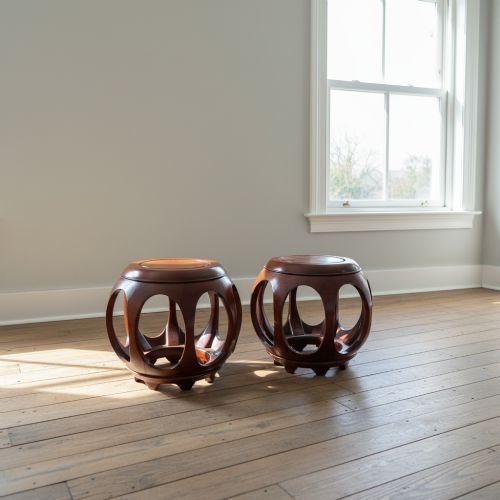
A carved hardwood table encompasses a wide range of surfaces designed for display, dining, and repose, originating from global export workshops and domestic Victorian settings. Buyers searching this phrase encounter low coffee and Kang tables, versatile occasional stands, and substantial centre tables intended for prominent placement in a room.
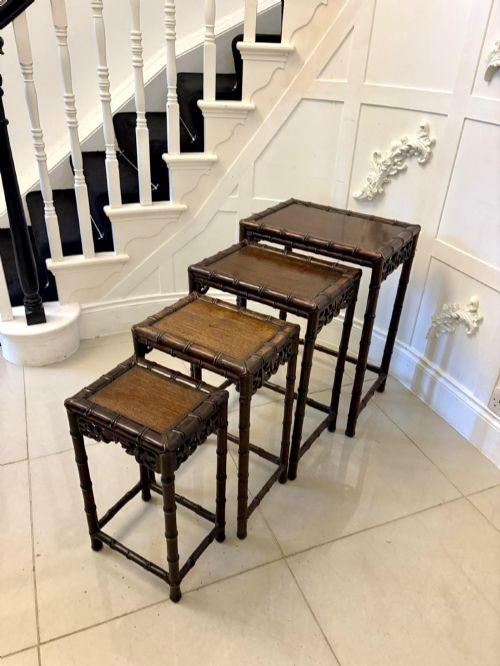
The selections on this page lean heavily towards Chinese Qing Dynasty and Victorian examples, alongside Anglo-Indian, Burmese, and Middle Eastern pieces. Forms vary from nest tables and console tables to octagonal folding designs and heavy library tables.
Origins stretch across the nineteenth and early twentieth centuries, bringing diverse regional aesthetics together under the umbrella of dense timber and deep chisel work. Each piece reflects the functional traditions of its maker, whether configured as a plant stand, a card table, or an altar table.
How they were made
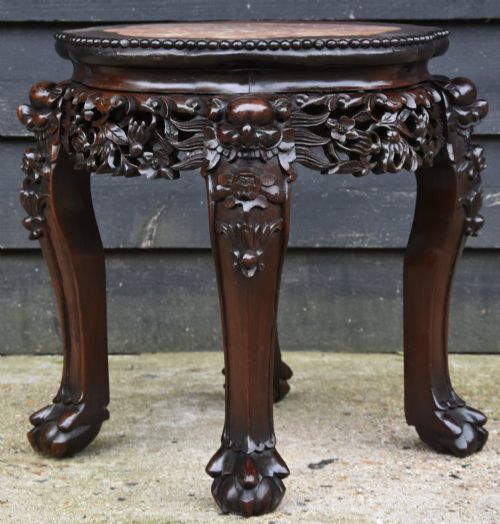
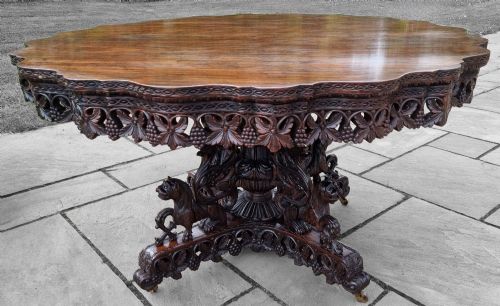
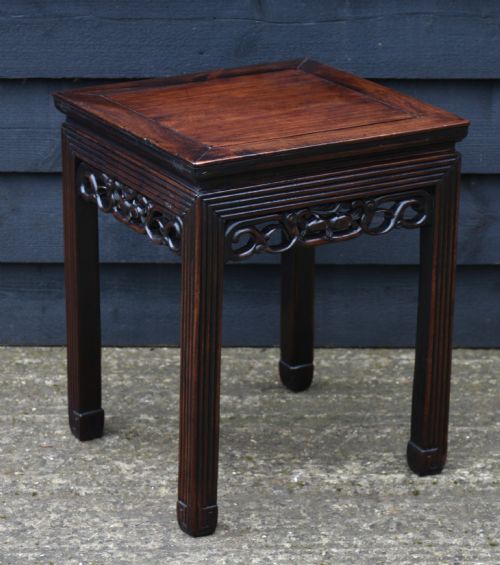
The construction relies upon dense timbers including padauk, teak, rosewood, and huanghuali, selected for their stability and capacity to hold crisp detail under hand tools. Artisans carved these woods in high and low relief, often incorporating pierced panels and mortise-and-tenon joinery suited to complex frames.
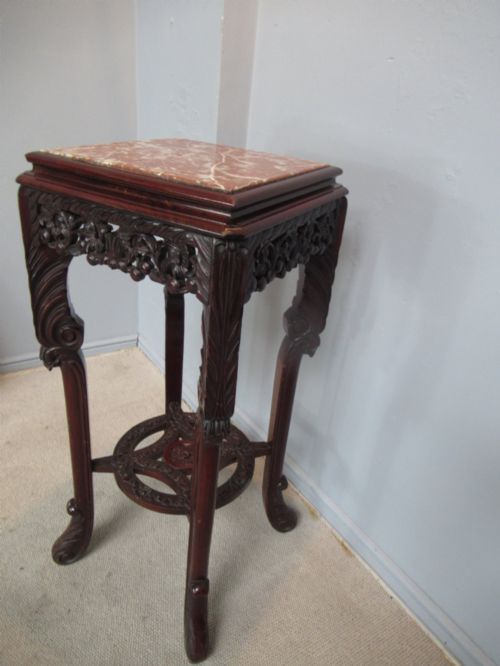
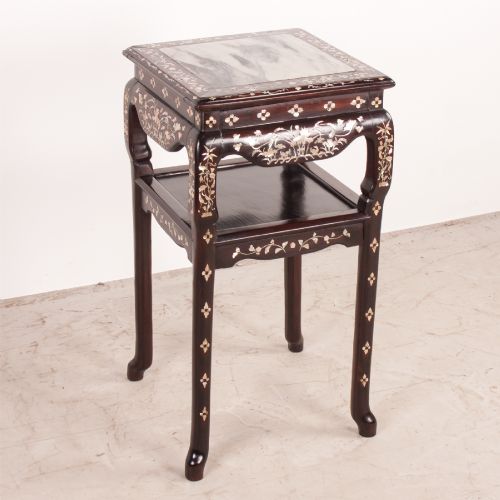
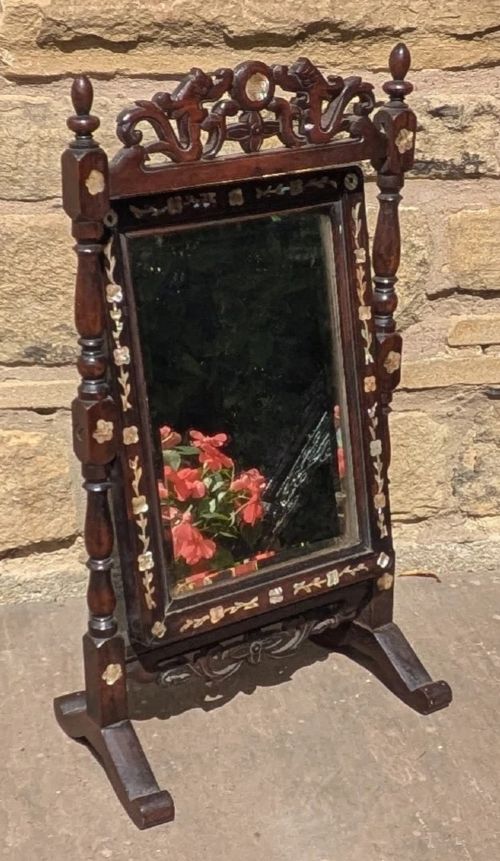
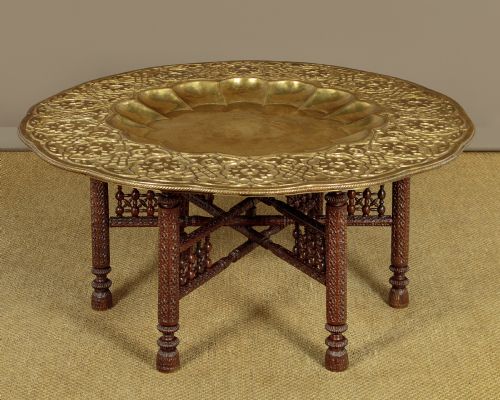
Many surfaces feature contrasting materials embedded directly into the timber, such as inset marble slabs, shimmering mother of pearl, and beaten brass or copper wirework. Some tables utilise polychrome pigments or turn into folding structures hinged for portability.
Retail Price Guide 2026
Typical UK retail prices for carved hardwood table, calculated from the Sellingantiques database of over a million retail prices indexed since 2003. This retail price guide relies exclusively on Sellingantiques data; no external sources or auction records are used, so the figures do not describe the wider market.
Some folding tables made the journey across empires so officers could play cards in a tent.
What varies in quality
Quality rests upon the depth, precision, and sharpness of the hand carving, where fluid floral motifs, dragons, and elephants demonstrate superior control of the chisel. Secondary woods, the tightness of joints, and the thickness of the primary hardwood planking separate standard utility pieces from exhibition-grade examples.
The integration of decorative elements like rouge marble tops, burr thuya veneers, or extensive mother of pearl inlay indicates higher workshop ambition. Condition of the timber grain and the original patination dictate the visual strength of the piece.
The Carved Hardwood Table Glossary
- Padauk
- A dense, heavy tropical hardwood showing vibrant reddish-brown tones that darken with age. It holds fine detail well in relief carving.
- Kang table
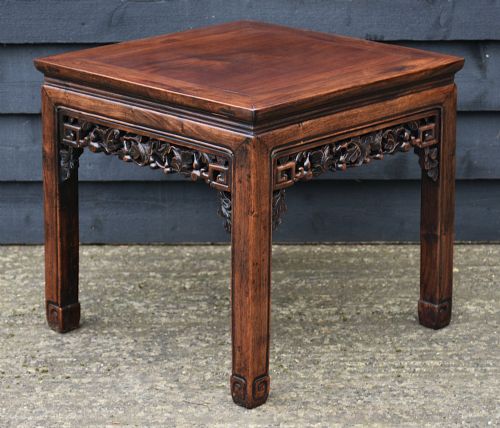
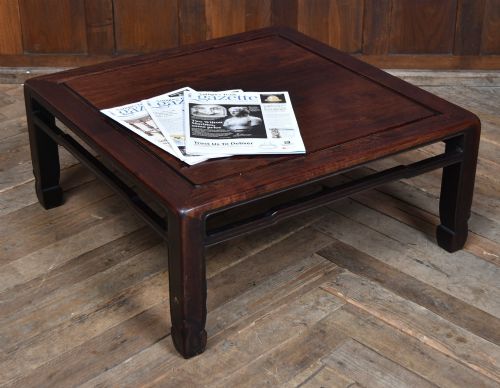
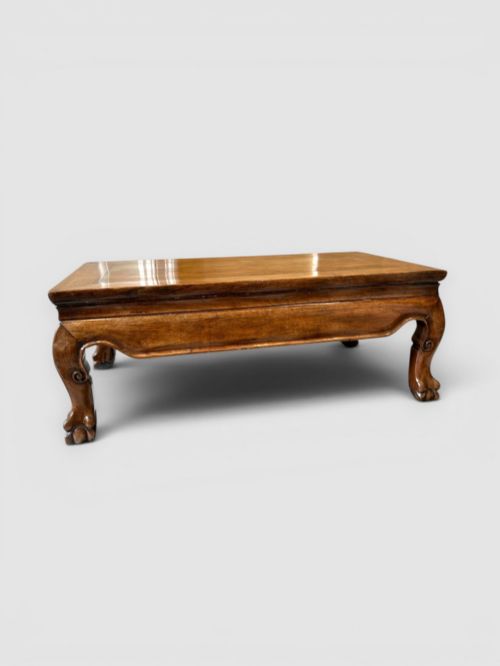
- A low domestic table originating in China, traditionally placed upon a heated brick platform for sleeping, tea drinking, or writing. These pieces feature short legs and deep aprons.
- Quartetto tables
- A graduated set of four tables designed to slide neatly beneath one another when not in use. They appeared frequently in late nineteenth-century export workshops.
- Anglo-Indian
- A style of furniture produced in India during the British period combining local craftsmanship with European forms. These items often showcase dense foliate carving and inlaid metals.
Frequently Asked Questions
What is a Kang table used for?
A Kang table serves as a low surface originally designed for sitting or resting upon domestic platforms in China. They function today as coffee tables or display platforms.
Their low profile allows them to anchor modern seating arrangements without obstructing sightlines across a room.
How do I care for a hardwood table?
Maintenance requires keeping the timber away from direct heat sources and sudden humidity shifts to prevent splitting. Regular dusting with a dry cloth preserves the finish.
Avoid chemical polishes that build up a residue over the carved relief work.
Are these tables sturdy enough for daily use?
Solid timber construction and traditional joinery give these tables robust structural integrity for everyday tasks. Items like library tables and centre tables were built for heavy loads.
Folding or nested tables benefit from mindful handling when moving them between rooms.
How can I tell a Chinese Export table apart?
Chinese Export pieces exhibit distinct regional motifs such as dragons, prunus blossom, and scrolling foliage executed in dense hardwoods. They frequently incorporate inset marble panels or clever nesting designs.
Construction details often reflect traditional Chinese joinery adapted for Western buyers.