


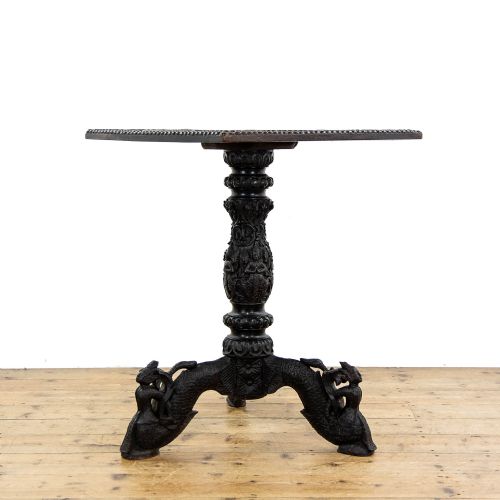


Oriental Tripod Table
An oriental tripod table brings distinctive regional carving and rich lacquer surfaces into a room as an occasional or side table.
Oriental Tripod Table
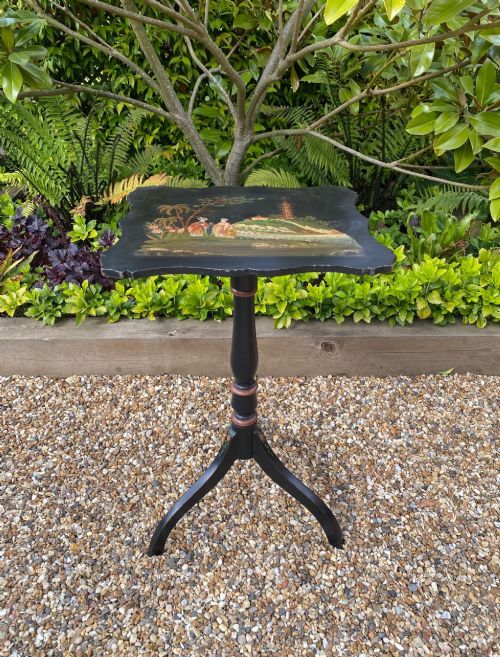
An oriental tripod table encompasses diverse regional forms spanning the nineteenth century and the Edwardian period, often functioning as side tables, wine tables, or occasional tables. These pieces emerge from traditions such as Anglo-Indian, Chinoiserie, Chinese Export, and Burmese craftsmanship.
The most common examples on this page are carved hardwood tables originating from China, Burma, and India. They frequently feature circular tops supported by three legs, incorporating tilt-top mechanisms, drum shapes, or elephant head supports.
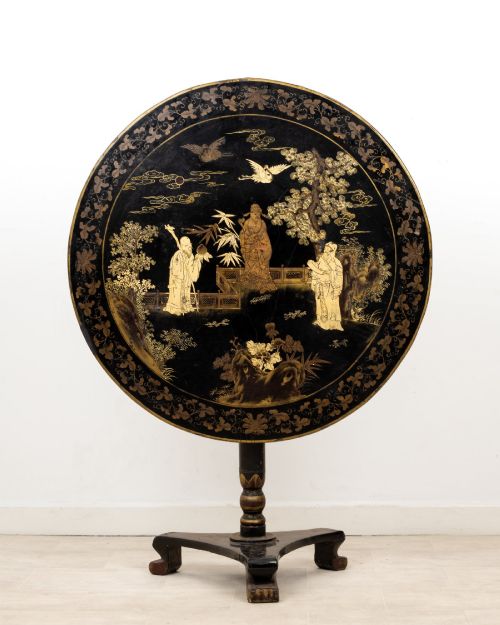
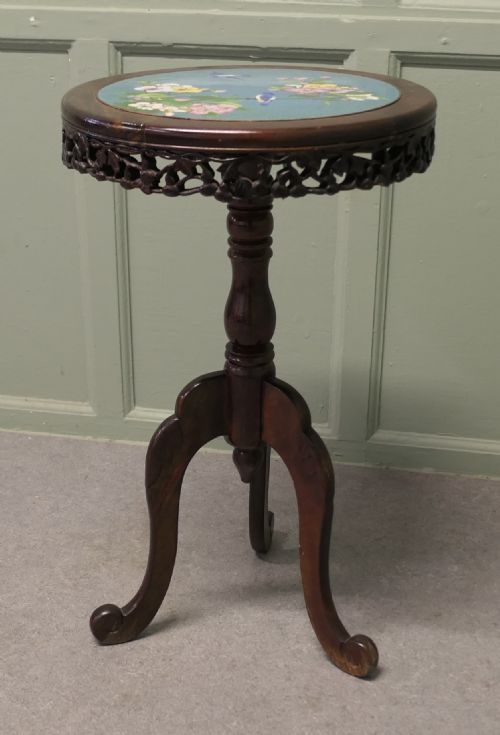
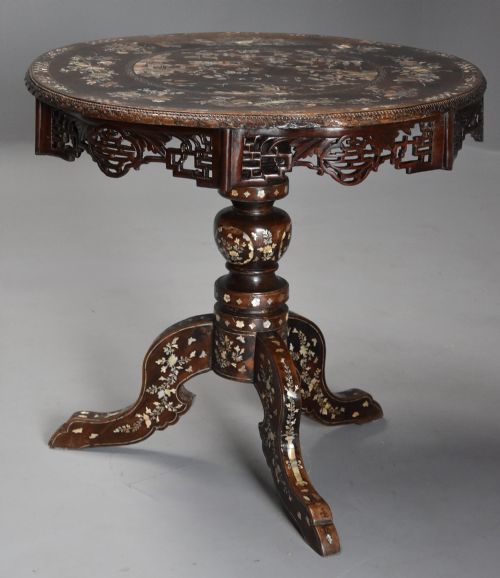
Makers adapted traditional motifs for domestic European and colonial interiors, producing highly decorative items with inlaid marble, mother of pearl, or painted panels. Each regional style brings distinct structural characteristics, from pedestal bases to tripartite supports.
Qualities of Construction and Decoration
Quality rests primarily on the depth and crispness of the hand carving across the hardwood frames and figurative elements. Superior examples display sharply defined details on motifs such as dragons, birds, flowers, and elephants rather than soft or shallow incisions.
The integrity of the surface finish dictates the overall standing of a piece, whether through intact black lacquer, securely seated marble or cloisonné panel inserts, and precisely fitted tilt-top mechanisms. Tables with harmonious proportions and unblemished inlay work represent the higher tier of surviving examples.
Materials recorded on this page include hardwood, teak, rosewood, padauk, lacquer, marble, gold leaf, and bone.
The Oriental Tripod Table Glossary
- Tripod table
- A small freestanding table supported by three legs attached to a central pedestal or directly to the underside of the top. This configuration provides steady placement on uneven floors.
- Tilt top
- A tabletop hinged to the pillar so it can pivot vertically to a flat position when not in use. This mechanism allowed tables to be stored compactly against a wall.
- Chinoiserie
- European artistic styles that reflect Chinese decorative motifs and techniques, popular in furniture decoration. Artisans applied black lacquer and gilt painting to emulate imported wares.
- Cloisonné
- An enamel decoration technique where metal wire forms raised barriers on a surface to contain coloured glass pastes before firing. These vibrant panels frequently appear inset into table tops.
- Padauk
- A heavy, durable tropical hardwood valued for its reddish hue and dense grain. Cabinetmakers selected this timber for its exceptional strength in carved furniture.
Oriental Tripod Table: Frequently Asked Questions
What is an oriental tripod table?
An oriental tripod table is a small occasional or side table supported by three legs, originating from regions including China, India, and Burma during the nineteenth and early twentieth centuries.
These tables combine traditional regional woodwork, such as deep hand carving and lacquer, with forms designed for domestic use like tilt-top mechanisms and pedestal bases.
How were these tables used originally?
They served primarily as portable surface furniture for holding small objects, drinks, or decorative items within reception rooms and parlours.
Tilt-top variants allowed households to clear floor space quickly by pivoting the surface upright against a wall when the table was idle.
How do I distinguish regional styles?
Regional styles appear through distinct material choices and carving motifs, such as dragon carvings on Chinese rosewood or elephant head supports on Anglo-Indian pieces.
Examining the specific inlay materials, like mother of pearl or cloisonné panels, also helps identify whether a piece originates from Japanese, Chinese, or Indian workshops.
How do I care for lacquer and wood?
Maintain these tables by keeping them away from direct sunlight and sudden temperature shifts to prevent timber splitting or lacquer cracking.
Dust gently with a soft dry cloth and avoid applying modern chemical polishes that can damage historic finishes like gold leaf and paintwork.