


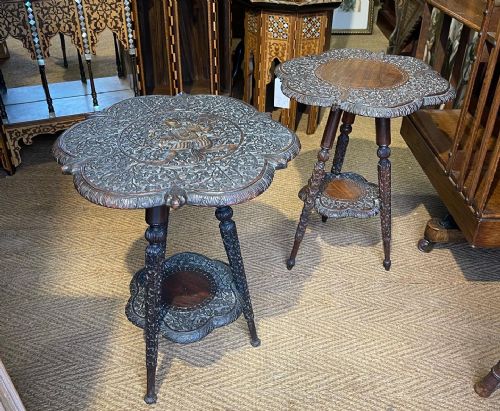
Carved Floral Tripod Table
These carved floral tripod table examples bring intricate floral woodwork and steady pedestals into living spaces.
Carved Floral Tripod Table
A carved floral tripod table brings three-legged support and surface utility together through detailed botanical ornamentation. Buyers searching this phrase encounter nineteenth-century pieces ranging from compact wine tables to larger centre tables.
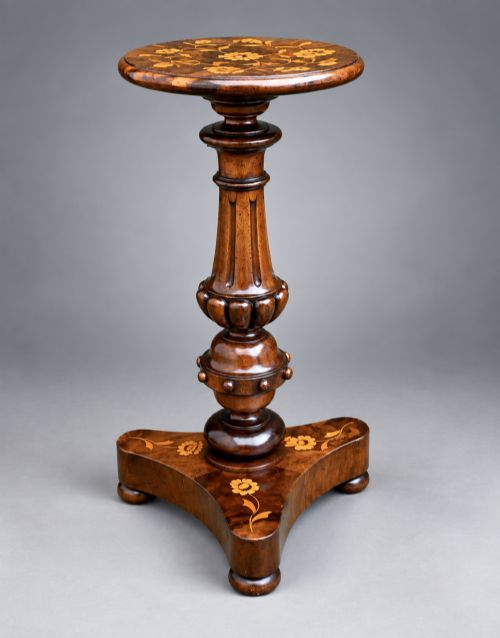
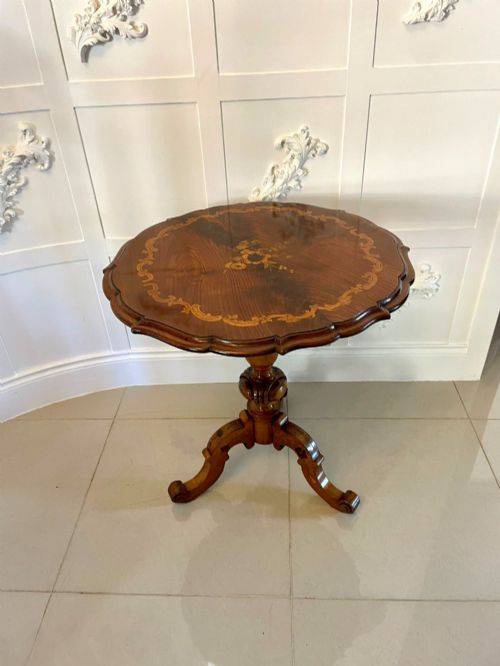
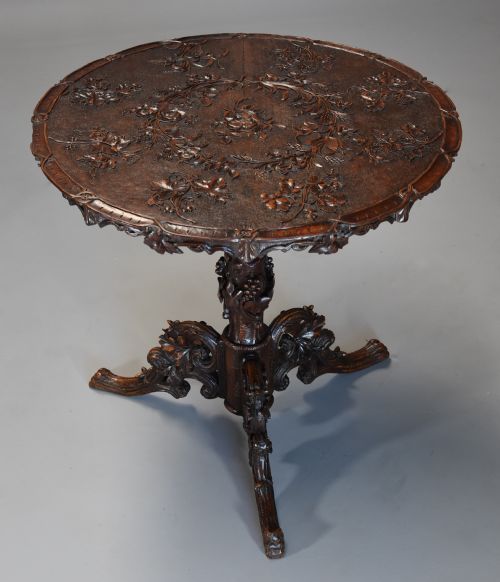
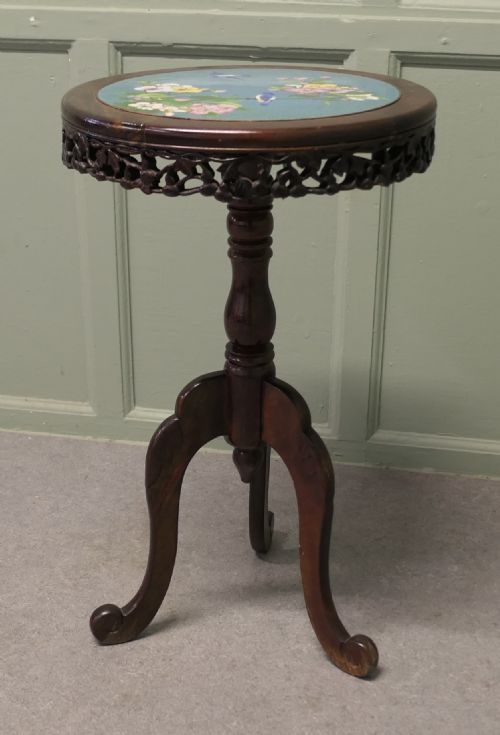
The selections on this page span Victorian designs alongside Dutch marquetry, Black Forest, Chinoiserie, and Anglo-Indian styles. Walnut, mahogany, rosewood, and burr walnut form the primary timber foundations for these tripod designs.
Forms vary from occasional and side tables to tilt-top and sewing tables. The Victorian period dominates the chronological spread, alongside specific regional interpretations from the nineteenth century.
How they were made
Cabinetmakers utilised dense hardwoods such as mahogany, walnut, and rosewood alongside linden wood for deep botanical carving. Burr walnut provided figured veneers for tabletops while contrasting timbers enabled intricate marquetry inlay.
Turned shafts and tripod bases required precise lathe work to support heavy ornamental tops, occasionally incorporating tilt mechanisms or brass fittings. Specialised carvers rendered floral motifs, birds, and foliage directly into the solid wood surfaces.
Several tables feature inlaid birds among their floral marquetry, bringing permanent garden wildlife straight into the nineteenth-century parlour.
What varies in quality
The depth and crispness of the floral carving separate standard production from exceptional examples, particularly in Black Forest or oriental hardwood pieces. Sharp definition in petals and leaves indicates superior hand-tool work by skilled carvers.
Marquetry execution determines overall merit, where tight alignment of wood inlay creates seamless botanical patterns without visible gaps. The selection of figured timbers like burr walnut for the tabletop dictates visual richness.
The Carved Floral Tripod Table Glossary
- Tripod table
- A small freestanding table supported by a central pillar resting on three legs. This configuration provides stability on uneven floors.
- Marquetry
- Decorative veneer work forming pictures and patterns by applying thin pieces of wood to a structural surface. Craftsmen selected contrasting timbers to delineate floral motifs.
- Tilt top
- A hinged tabletop mechanism that allows the surface to pivot to a vertical position when not in use. This clever design saved floor space in period rooms.
- Centre table
- A freestanding table designed to be viewed from all sides rather than pushed against a wall. These pieces often occupied the middle of a Victorian parlour.
- Bobbin turned
- Wood turned on a lathe to resemble a series of rounded bobbins or spools end to end. This technique created textured structural supports.
Carved Floral Tripod Table: Frequently Asked Questions
Where did people use these tables?
These tables served primarily in nineteenth-century drawing rooms and parlours for holding lamps, books, or tea services. Smaller versions functioned as wine tables near seating.
Larger centre tables occupied the middle of formal rooms to display decorative objects or floral arrangements.
How do I maintain the wood surface?
Protect the polished timber surfaces by keeping them away from direct sunlight and sudden temperature shifts. Regular dusting with a soft dry cloth preserves the finish.
Apply high-quality beeswax occasionally to nourish walnut, mahogany, and rosewood veneers without building up residue.
Are tilt top tables stable?
The tipping mechanism relies on a original wooden catch or brass latch beneath the top to lock the surface flat. When secured properly, the top remains firm during daily use.
Check that the pivoting block and pillar junction moves smoothly without excessive wobble in the joint.