

Round Carved Tilt Top Table
A round carved tilt top table is a versatile circular piece designed to fold away when not in use.
Round Carved Tilt Top Table
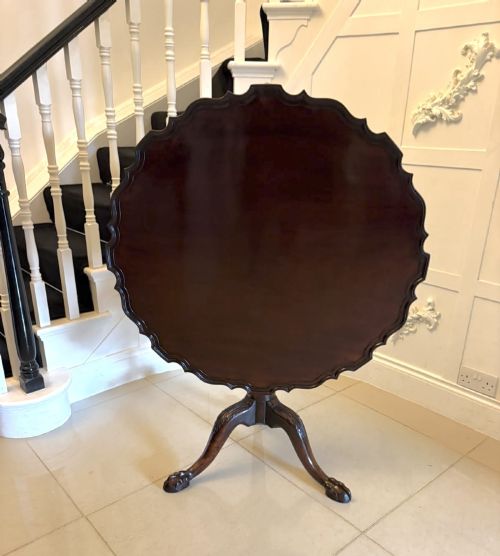
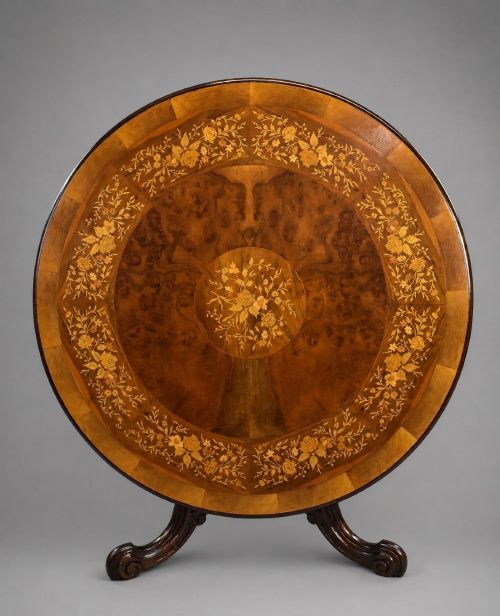
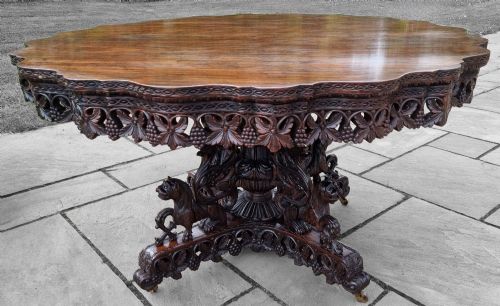
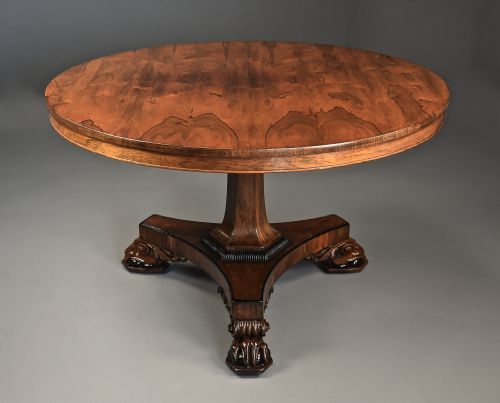
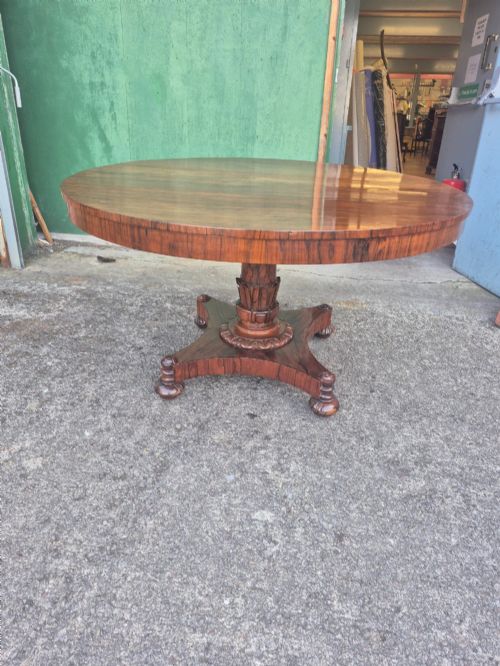
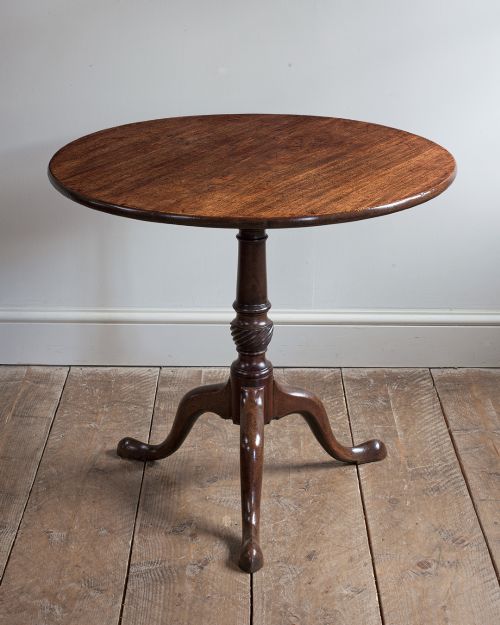
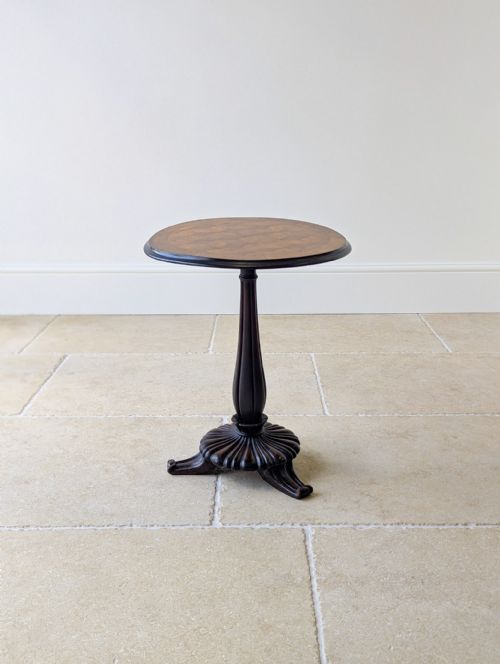
A round carved tilt top table combines a circular surface with a mechanism that pivots the top to a vertical position for storage. These items serve as breakfast tables, occasional tables, and dining tables depending on their diameter and height. The selections span from the George III period through the Victorian era, offering formal dining options as well as smaller wine and occasional pieces.
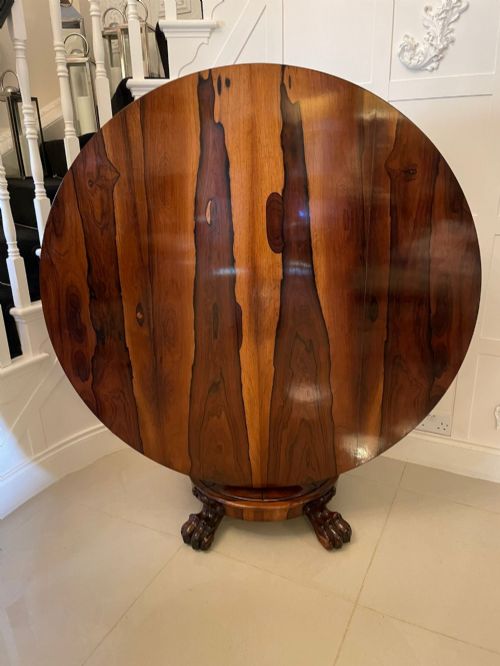
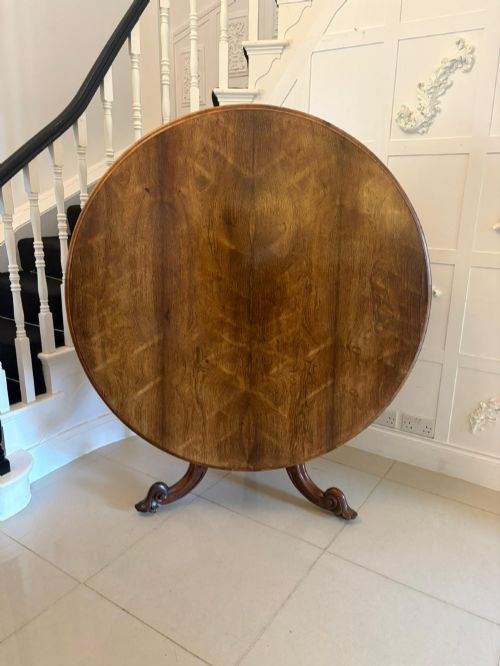
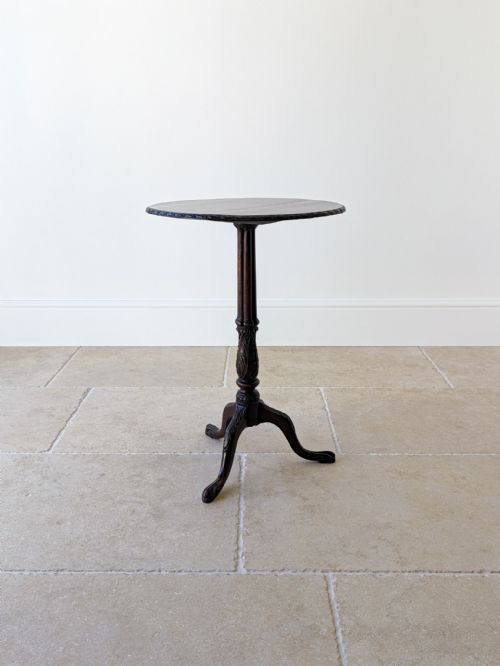
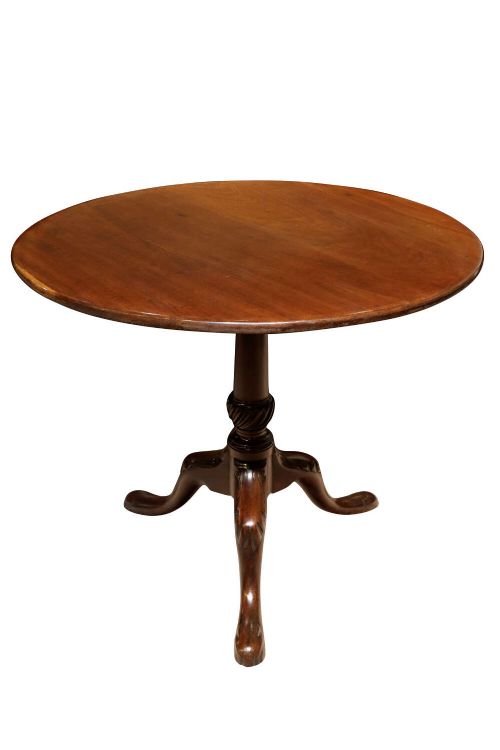
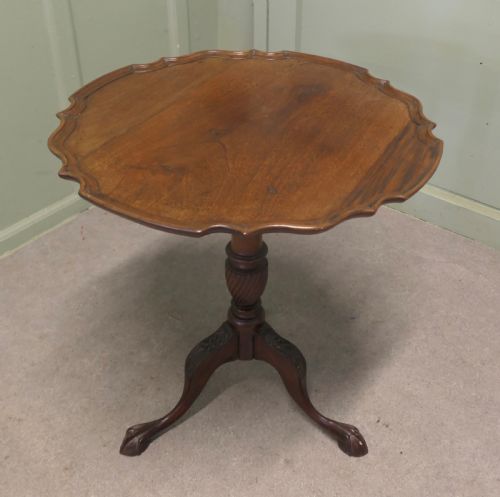
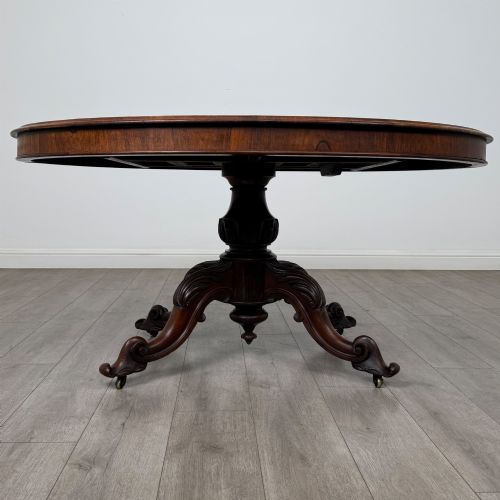
Rosewood and mahogany dominate the selection, often accompanied by walnut, burr walnut, and oak. Many examples employ a central pillar supported by a tripod base, though heavier pedestal designs appear frequently in breakfast and dining configurations. Forms range from plain country house models to elaborately carved Victorian and William IV iterations.
How they were made
Cabinet makers utilised dense hardwoods such as mahogany, rosewood, and walnut, frequently applying veneers like flame mahogany or burr walnut to create striking surface patterns. Timber was selected for grain movement and stability, then shaped into circular tops and turned central pillars.
Carving was executed by hand on pillars, tripod legs, and friezes, ranging from subtle moulding to deep foliate decoration. The tilting mechanism relied on a wooden or brass catch and block assembly that allowed the top to pivot securely on the pedestal.
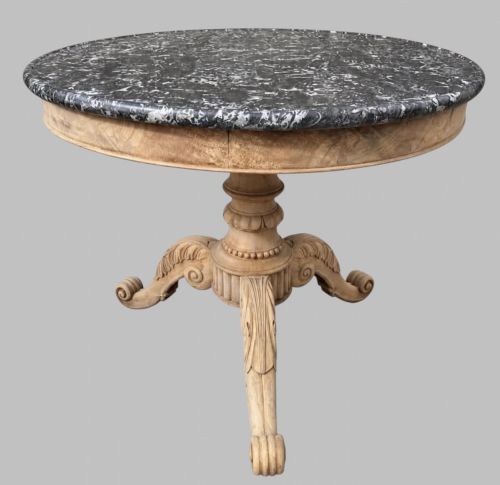
Listings feature 19th century, Victorian, Regency, and 18th century periods alongside materials such as rosewood, mahogany, walnut, and marble.
What varies in quality
Quality rests in the selection of the timber and the crispness of the hand carving. Pieces built with highly figured veneers or solid rosewood and mahogany sit at the upper end of the range, showing deeper grain contrast and superior durability.
Construction methods determine structural stability, particularly at the pivot point and the junction between the pillar and the tripod legs. Fine examples maintain smooth operation in the tilt mechanism alongside well-proportioned pedestals that prevent rocking.
Peters of Genoa·Gillows
The Round Carved Tilt Top Table Glossary
- Tilt top
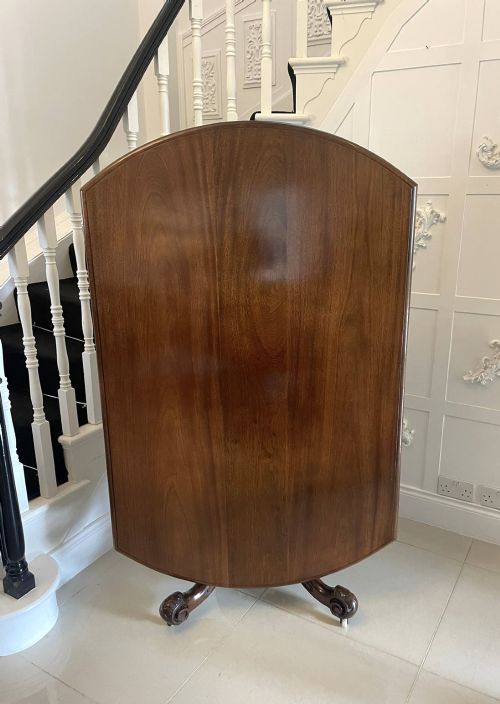
- A table mechanism allowing the circular surface to pivot ninety degrees into a vertical position. This design enables the furniture to stand flat against a wall when floor space is required.
- Snap top
- An alternative term for a tilt top table, referencing the catch or latch that secures the surface in the horizontal position. The mechanism prevents the table from dropping unexpectedly while in use.
- Tripod base
- A support structure consisting of three curved legs radiating from a central column. This configuration provides steady contact on uneven floors.
- Gueridon
- A small French occasional table supported by a central column or legs. The form gained popularity during the nineteenth century for decorative display and serving.
- Piecrust edge
- A raised, carved border shaped to resemble pastry work around the perimeter of a circular table top. This decorative finish appears on select 18th century and revival pieces.
Round Carved Tilt Top Table: Frequently Asked Questions
How do I use a tilt top table?
Release the brass or wooden catch underneath the surface to pivot the circular top into a vertical position. This allows the piece to be stored compactly against a wall.
Lower the top back to the horizontal plane and secure the catch before placing items on the surface for dining or display.
Where should I place a round table?
These tables suit hallways, drawing rooms, and dining spaces where a circular footprint softens rectilinear layouts. Their ability to tilt means they function effectively as display pieces when not needed for dining.
Position the piece away from direct heat sources and strong sunlight to protect polished mahogany and rosewood surfaces from fading.
How do I identify a Victorian table?
Victorian examples often feature heavy rosewood or walnut timber, deep carved foliate motifs, and robust pedestal bases. The 19th century introduced diverse revival styles alongside utilitarian occasional formats.
Examine the underside for construction marks, screw types, and timber ageing that align with mid to late nineteenth-century workshop practices.
What is the difference between a breakfast and wine table?
Breakfast tables are typically larger in diameter, designed for morning dining or central room placement, and rest on substantial pillars with robust tripod or platform bases. Wine tables are smaller occasional pieces meant for holding drinks.
Wine tables feature lighter tripod supports and smaller tops, making them easily portable around a reception room.