






Brown Wood Toilet Glass
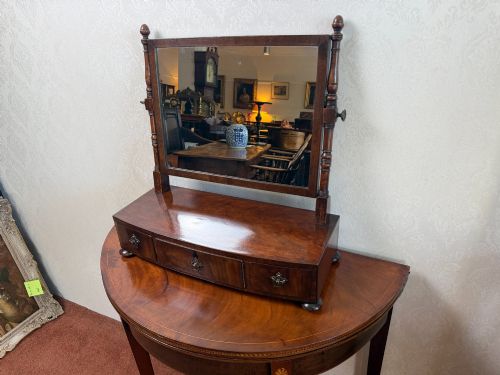
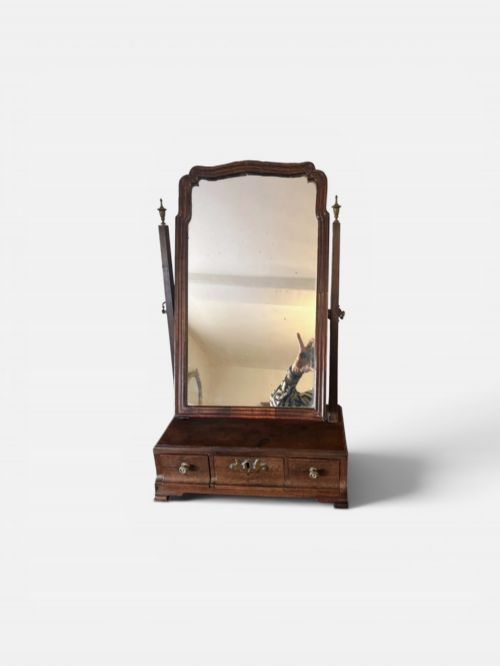
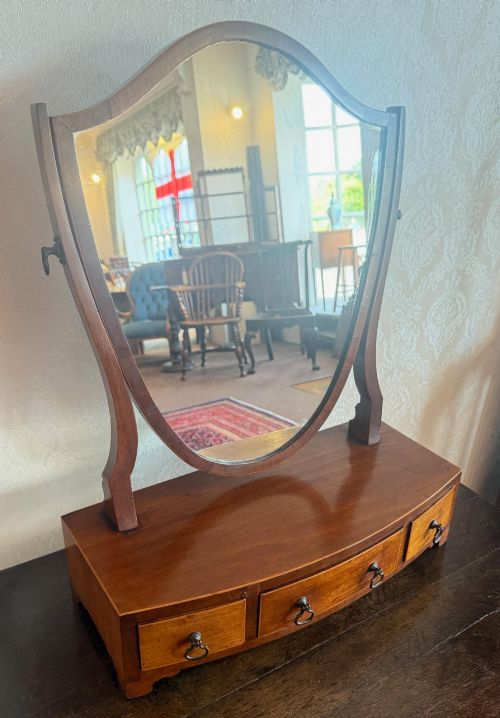
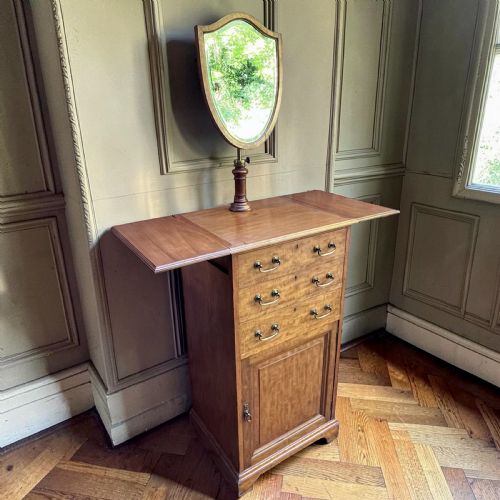
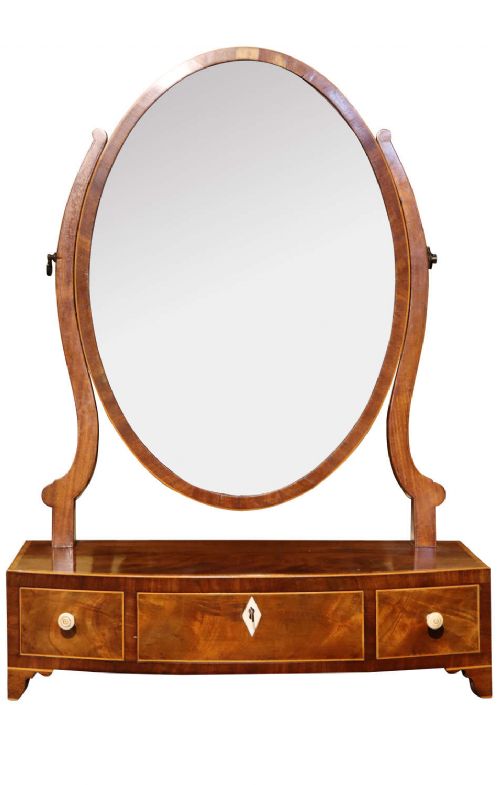
Brown wood toilet glass pieces are tabletop dressing mirrors that bring period character to a room.

Brown Wood Toilet Glass
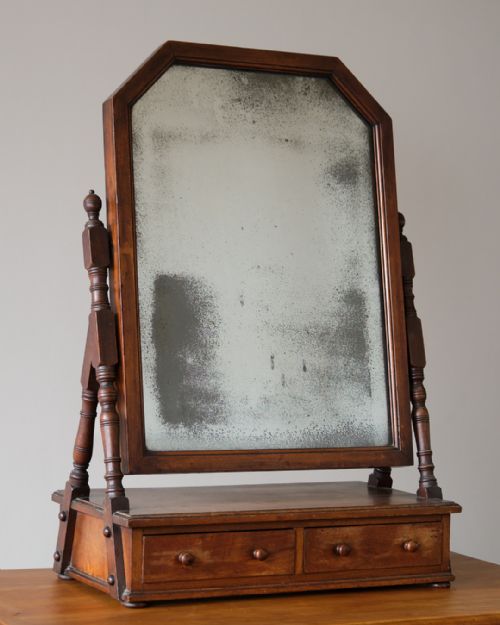
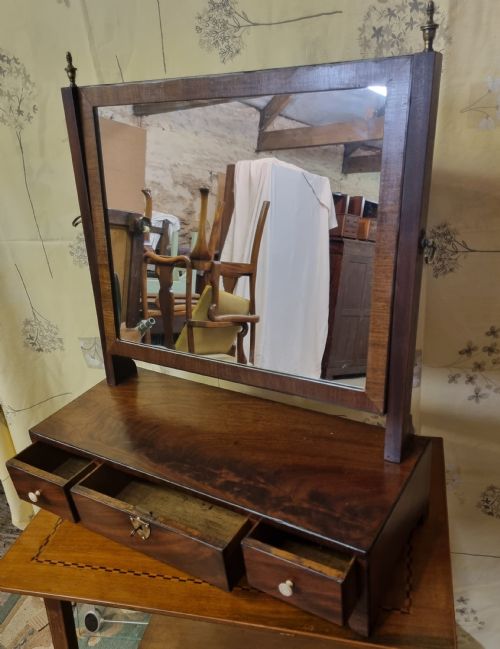
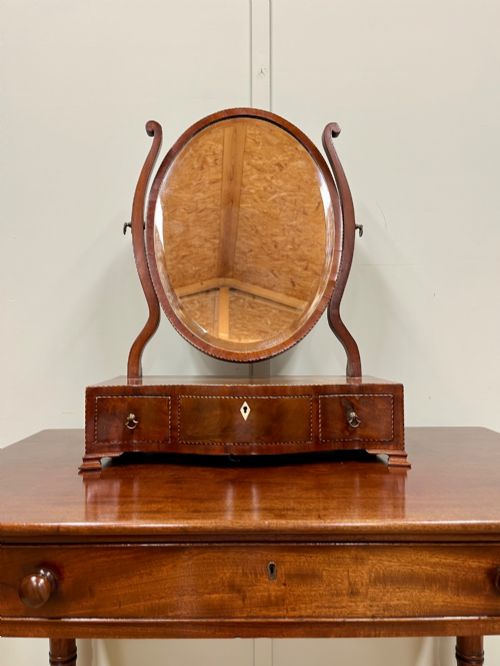
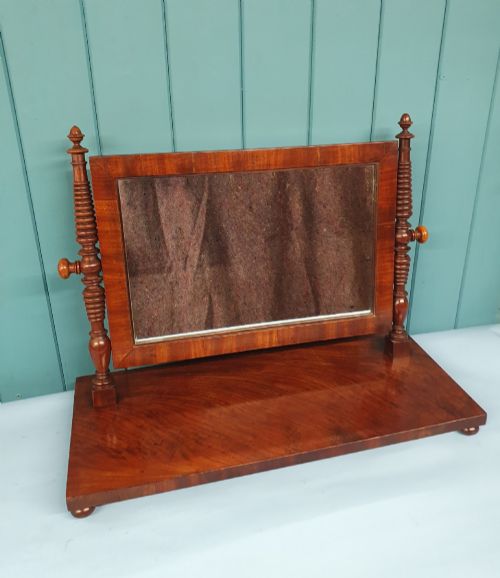
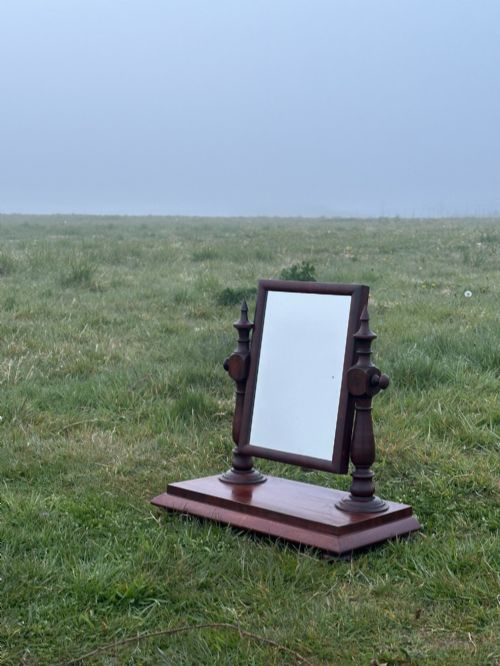
A brown wood toilet glass sits upon a dressing table or chest, providing a pivoting mirror plate for daily grooming. You will most frequently encounter mahogany examples spanning the Georgian, Regency, and Victorian periods.
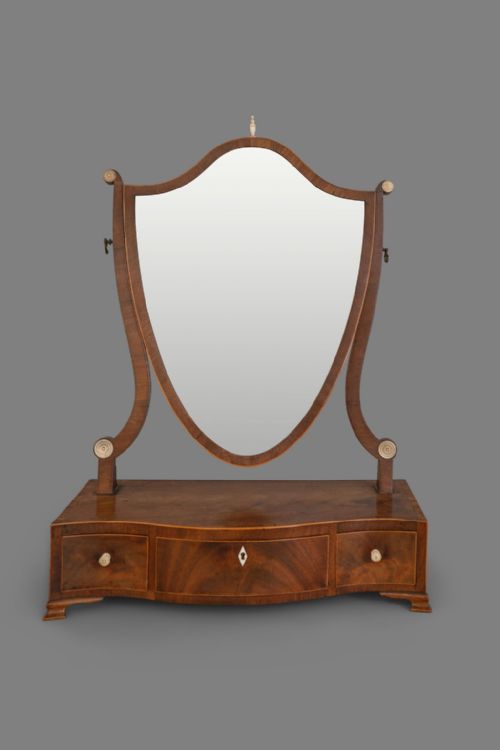
These pieces typically combine a rectangular, oval, or shield-shaped glass frame suspended between two upright arms, often mounted over a small base fitted with drawers. Styles range from plain upright boxes to serpentine and bow-fronted designs with considerable cabinetwork detail.
Origins stretch from the 18th century through the Edwardian era, taking the form of dressing mirrors, box mirrors, and tabletop swing glasses. The glass itself pivots on brass screws or pins, allowing the user to adjust the angle of reflection.
Materials and construction
Cabinetmakers constructed these mirrors primarily in solid or veneered mahogany and walnut, occasionally incorporating burr walnut, boxwood stringing, and marquetry inlay. Brass fittings such as finials, hinges, and bracket feet provide structural support and decorative contrast.
The upright supports are tenoned into heavy base boxes or smaller drawer plinths, ensuring the weight of the frame remains stable during adjustment. Mirror plates were traditionally silvered glass held within rebated frames and backed with thin pine or cedar panels.
Brown Wood Toilet Glass Retail Price Guide 2026
Typical asking prices for brown wood toilet glass among the pieces listed under this phrase on Sellingantiques today, from the lower quarter to the upper quarter. They describe what is for sale here now, not the wider market.
Listings feature mahogany, walnut, and burr walnut across 18th-century, Regency, and Victorian periods.
Quality differences
Superior examples distinguish themselves through choice veneers, well-figured timbers, and precise dovetail joints within the base drawers. Secondary woods like oak or pine are handled with greater care in finer workshops, and mouldings remain crisp and well-proportioned.
The integration of the mirror frame to the upright arms dictates much of the physical fluidity. Higher quality pieces feature substantial turned pillars and well-cast brass hardware that hold the glass firmly at any chosen angle without sagging.
Heal & Sons
The Brown Wood Toilet Glass Glossary
- Toilet glass
- A tabletop dressing mirror designed for use on a chest of drawers or dressing table. These units usually feature a pivoting frame mounted on a small base fitted with one or more small drawers.
- Swing mirror
- A mirror plate hung on horizontal pivots between two upright posts so that it can tilt. This mechanism allows the user to adjust the viewing angle.
- Serpentine front
- A furniture front curving outward in the centre and inward at the sides. This shape demands high skill from the cabinetmaker, particularly when applied to the drawer fronts of a mirror base.
- Crossbanded
- Bordered with a narrow strip of veneer laid across the grain of the main surface. It frames the primary wood to create a refined visual edge on drawer fronts and table tops.
Brown Wood Toilet Glass: Frequently Asked Questions
How do I date a toilet glass?
Dating relies on timber choice, edge moulding profiles, and drawer construction. Earlier pieces from the 18th century often feature walnut or dense mahogany with hand-cut dovetails and subtle boxwood stringing.
Later Victorian and Edwardian examples tend to display heavier proportions, machine-sawn elements, or darker factory finishes. Examining the backboards and the mirror glass itself also offers clues to the period of manufacture.
Where should I place a toilet glass?
These mirrors function best on top of a low chest of drawers, a sideboard, or a dedicated dressing table. Because they are tabletop items, they require a stable surface with adequate depth to support the base.
Positioning them near natural window light yields the best reflection for daily grooming while highlighting the polished wood grain and brass hardware.
Are the mirror plates original?
Many antique mirrors retain their original mercury or silvered glass plates, which often exhibit characteristic foxing, light oxidation, or minor speckling. These age marks confirm authenticity.
Some pieces have received replacement mirror plates over the decades for clearer reflection. Inspecting the glass backing and the way the plate is secured helps determine if the glass has been changed.
How do I maintain the wood and brass?
Regular dusting with a dry, soft cloth protects the polished mahogany or walnut surface from airborne grime. Avoid silicone polishes, using a traditional beeswax occasionally to nourish the timber.
Brass fittings should be left unpolished unless cleaning is strictly necessary, as patinated metal contributes to the historical character of the piece.