
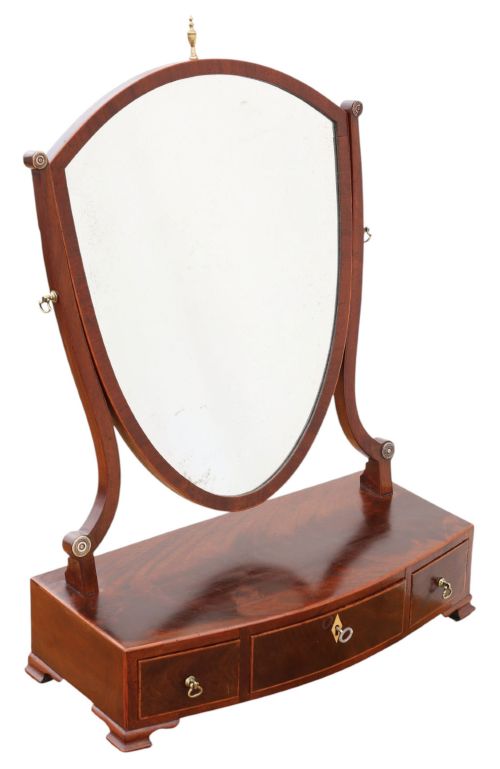
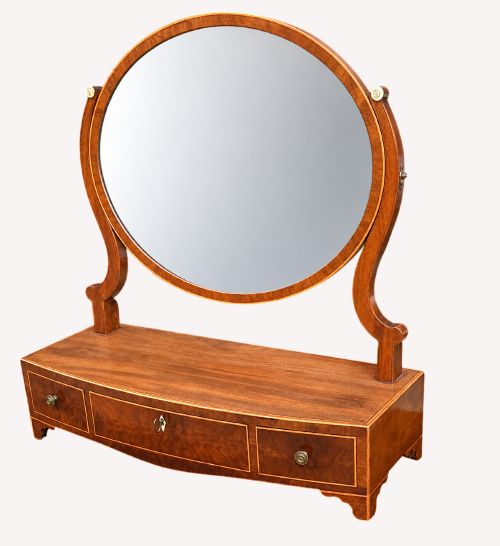
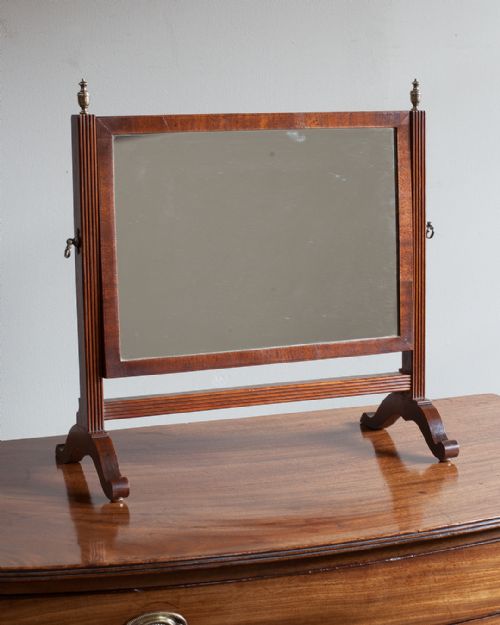
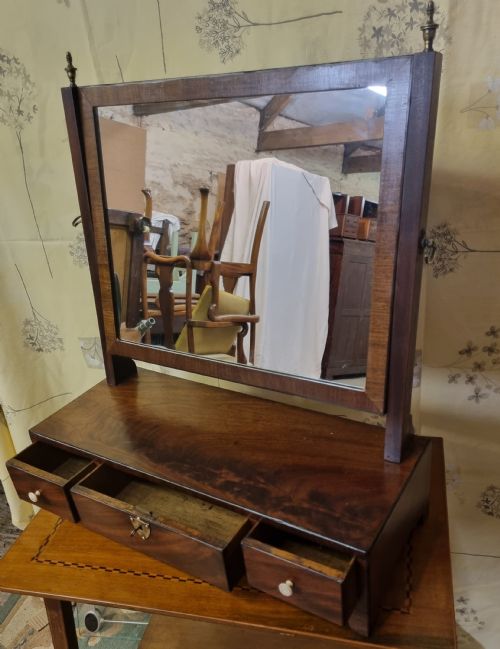
Georgian Mahogany Table Mirror
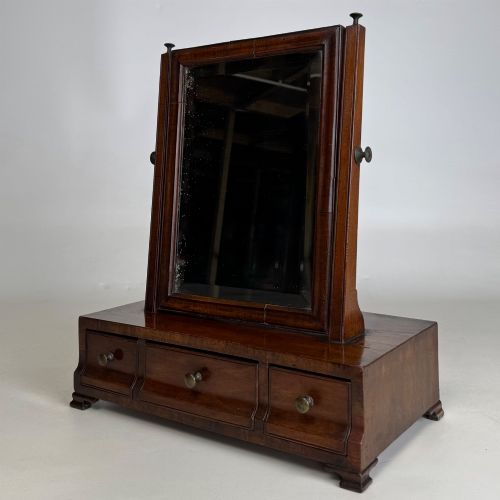
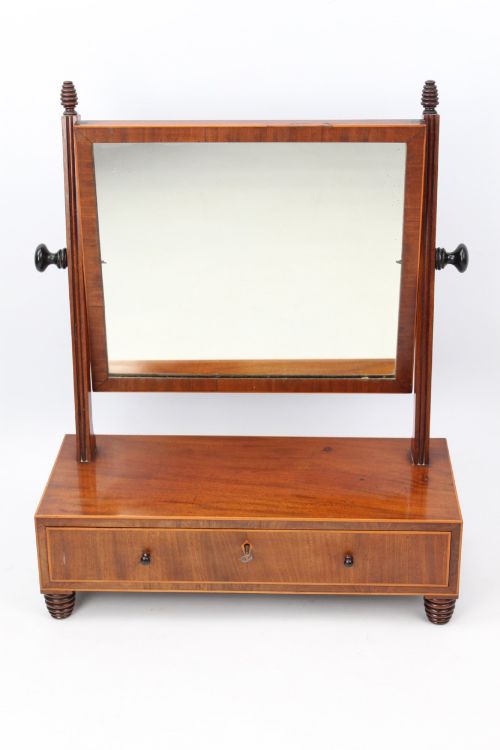
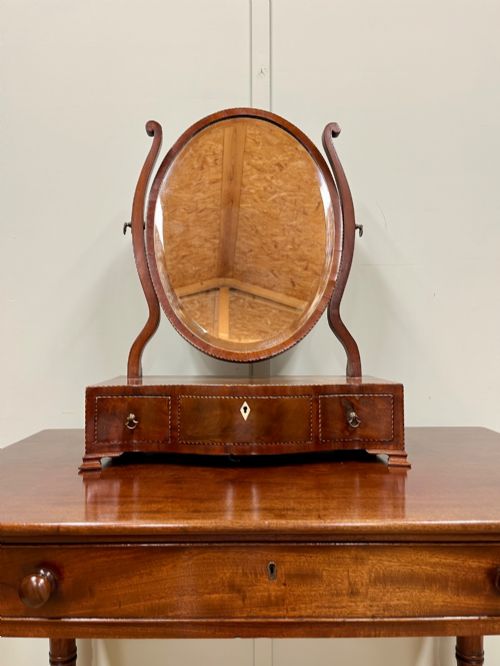
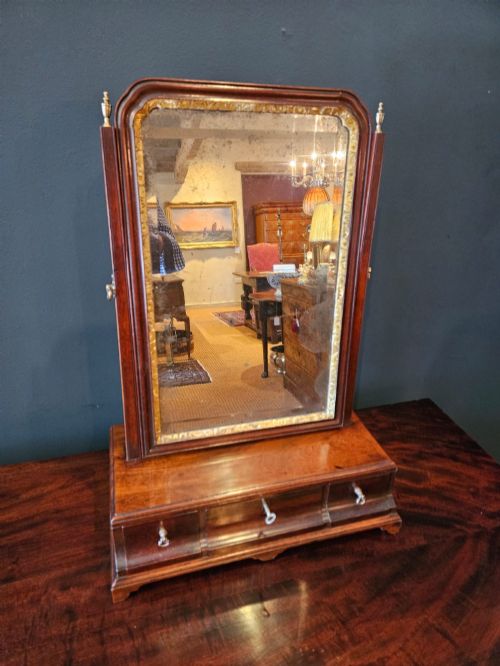
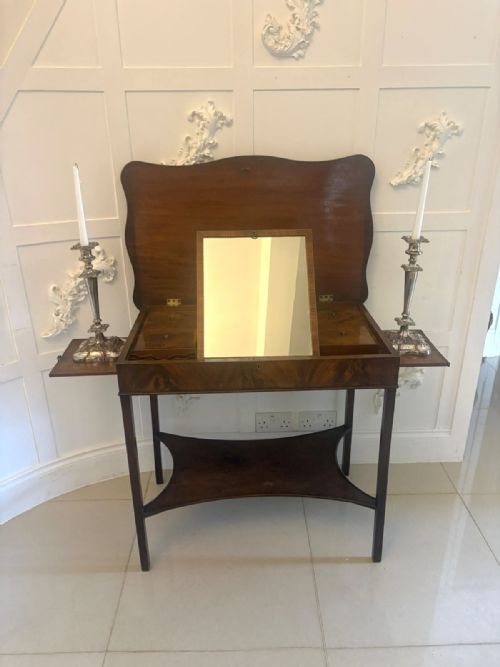
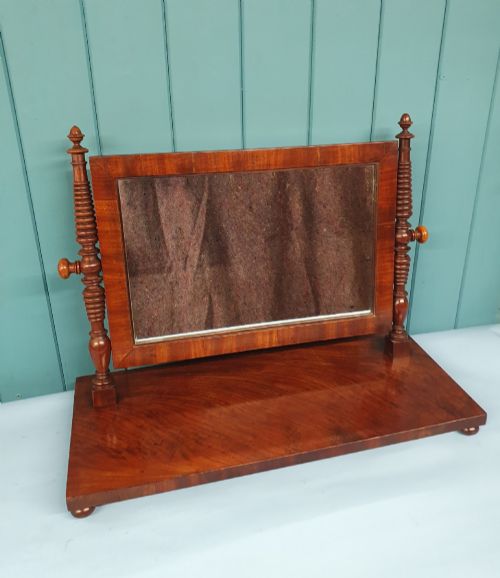
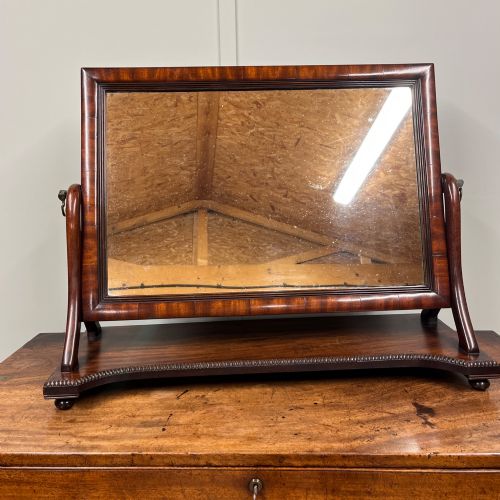
These pieces are a georgian mahogany table mirror, built to sit upon a chest or dressing table to reflect the face during daily toilette.
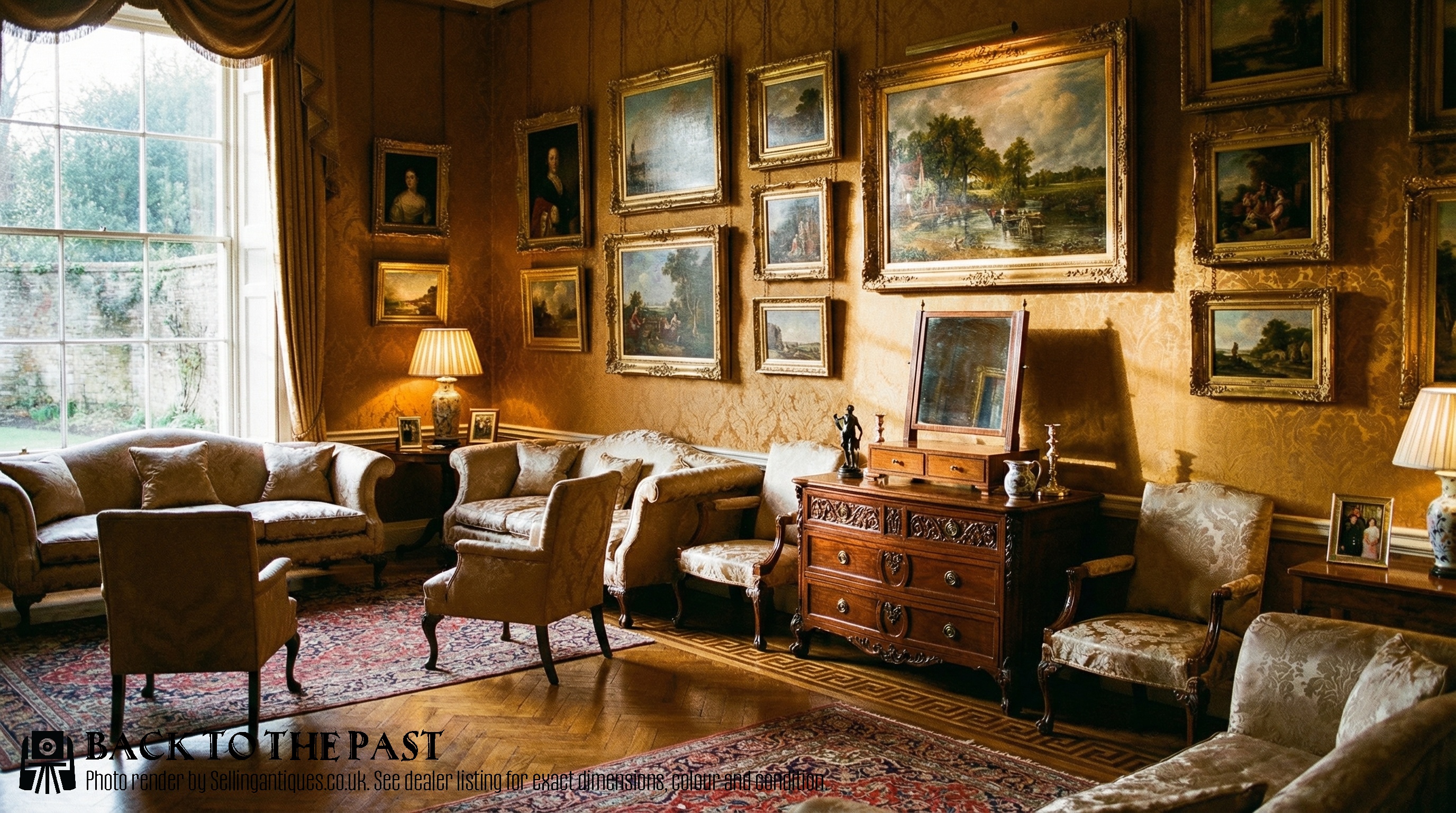
Georgian Mahogany Table Mirror
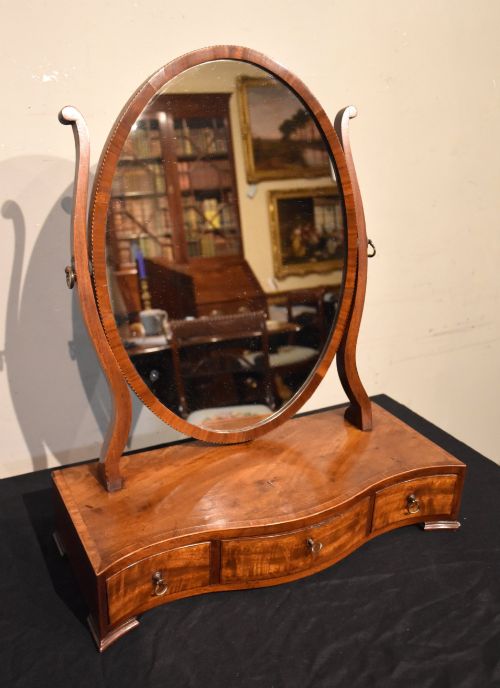
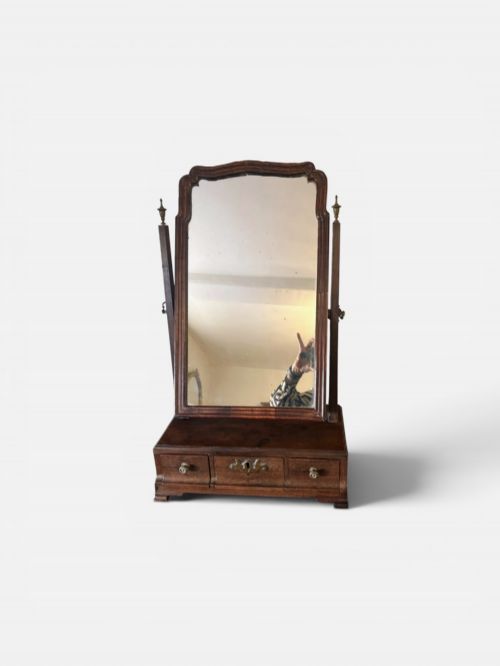
A georgian mahogany table mirror appears primarily as a swing or toilet glass mounted on an upright frame above a box base fitted with small drawers. These items date predominantly from the eighteenth and nineteenth centuries, spanning periods such as the Georgian, George III, and Regency eras.
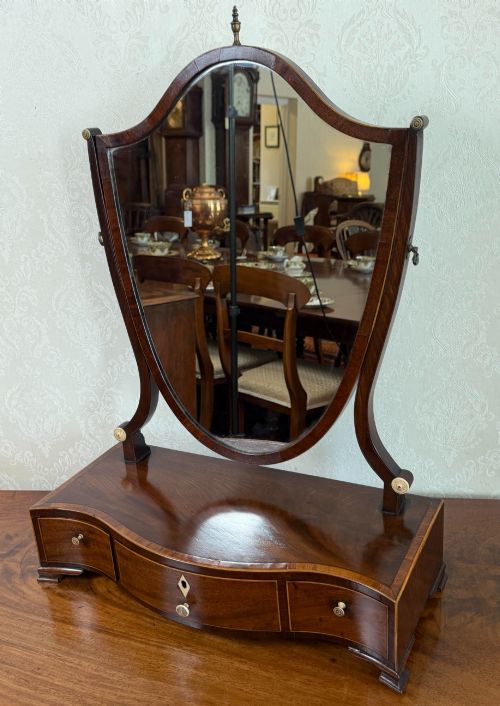
The format ranges from small portable vanity glasses to large scale examples featuring serpentine or bow fronts, shield-shaped plates, and occasionally double-sided or triplate configurations. Most examples utilise the swing mechanism, allowing the glass to tilt on brass screw pivots housed in upright arms.
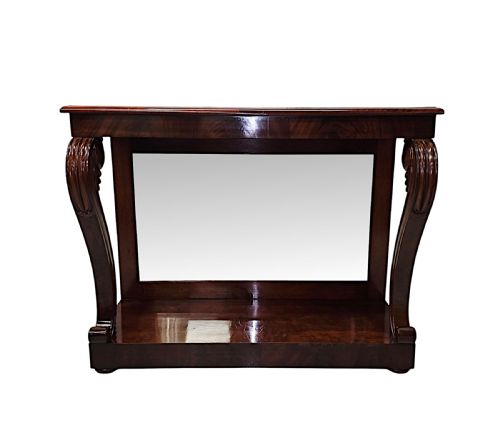
Makers and workshops of the period also produced specialised forms including gentleman's wash stands, campaign boxes, and console tables incorporating mirror plates. The overarching purpose remains functional dressing and grooming, executed with cabinet-making skill suited to domestic chambers.
How they were made
Cabinet makers constructed the frames and box bases predominantly from solid mahogany, frequently incorporating secondary timbers and applying veneers such as flame mahogany or satinwood. Surfaces gained detail through boxwood inlay, crossbanding, and Dutch marquetry work.
The mirror plates themselves consist of glass secured within moulded frames, while brass fittings such as side knobs, handles, and small bracket feet provide both operational movement and structural accent. Construction methods rely on precision joinery for the small drawers housed in the stepped or serpentine bases.
Georgian Mahogany Table Mirror Retail Price Guide 2026
Typical asking prices for georgian mahogany table mirror among the pieces listed under this phrase on Sellingantiques today, from the lower quarter to the upper quarter. They describe what is for sale here now, not the wider market.
Listings feature mahogany, glass, brass, bone, and satinwood across periods from the Georgian era through the Regency and Victorian epochs.
What varies in quality
The distinction between tiers of quality rests upon the selection of timber figure, the crispness of the boxwood inlay, and the sophistication of the base design such as serpentine or bow fronts. Finer pieces demonstrate superior proportion in the upright horns and delicate execution of the crossbanding.
Hardware selection marks another division, where original brass handles and pivoting screw nuts indicate higher grade production compared to later replacements. The integration of well-fitted, dovetailed drawers within the box base separates standard utilitarian toilet glasses from finer cabinet pieces.
Gillingtons of Dublin·Gillows of Lancaster
The Georgian Mahogany Table Mirror Glossary
- Swing mirror
- A glass plate suspended between two upright posts by pivots, allowing the angle of the reflection to be adjusted. This mechanism is standard on most toilet and dressing table mirrors from the period.
- Shield-shaped plate
- A mirror glass cut into the outline of a heraldic shield, popular during the eighteenth century. This silhouette softens the rectangular geometry common in earlier cabinet work.
- Crossbanding
- A strip of veneer applied to the border of a panel or drawer front with the grain running perpendicular to the main surface. It creates a defined visual frame around mahogany panels.
- Serpentine front
- A piece of furniture cabinetry curved in a wave-like shape, presenting a convex centre flanked by concave wings. This contour appears on the drawer bases of finer dressing mirrors.
- Toilet mirror
- A smaller mirror designed to stand upon a dressing table, chest of drawers, or wash stand. The base often contains small compartments or drawers for storing personal items.
Georgian Mahogany Table Mirror: Frequently Asked Questions
What is the difference between a toilet mirror and a dressing table mirror?
A toilet mirror typically refers to a smaller, portable glass resting on a box base with drawers, designed to sit on top of an existing chest or table. A dressing table mirror may describe a similar table-top piece or integrated components associated with vanity furniture.
Both terms appear interchangeably in historical records to denote mirrors used for personal grooming in bedrooms and dressing rooms during the eighteenth and nineteenth centuries.
How do I know if the mirror plate is original?
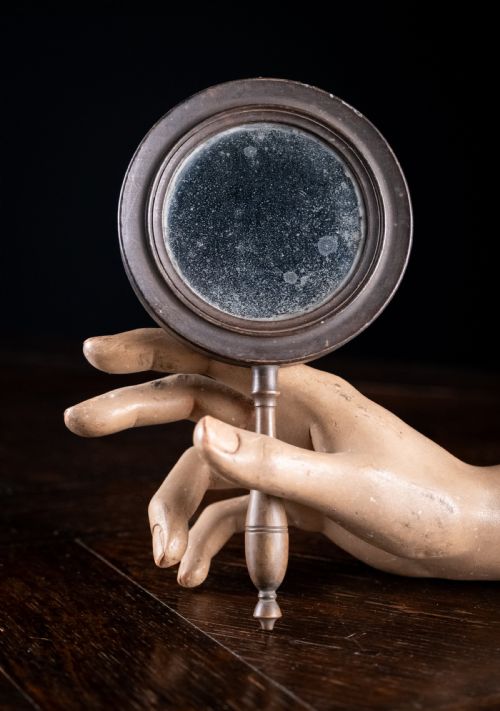
Original mirror glass often exhibits slight imperfections, foxing, or thinness that differs from modern manufactured plate glass. The silvering behind the glass can age unevenly, showing characteristic dark spots or dimming.
Replacement glass frequently appears clean, flat, and lacks the historical wear patterns expected on pieces dating from the Georgian period.
Where were these mirrors placed in a Georgian home?
These mirrors rested upon chests of drawers, dedicated dressing tables, or wash stands in private bedchambers and dressing rooms. Their portable nature allowed them to be moved to locations with the best natural light near windows.
Larger scale examples remained fixed to specific tables, while campaign versions travelled with owners for use during journeys.
How do I care for antique mahogany and glass?
Maintain the mahogany surfaces by dusting with a soft, dry cloth and applying traditional wax polish sparingly to preserve the timber sheen. Avoid placing the mirror in direct sunlight or near heat sources to prevent veneer lifting.
Clean the glass plate using a mild, non-ammonia cleaner applied to a cloth rather than sprayed directly, protecting the surrounding timber and antique backing.