





Antique Desktop Mirror
An antique desktop mirror brings a refined traditional focus to a room, offering adjustable glass framed in period timbers and metals.
Antique Desktop Mirror
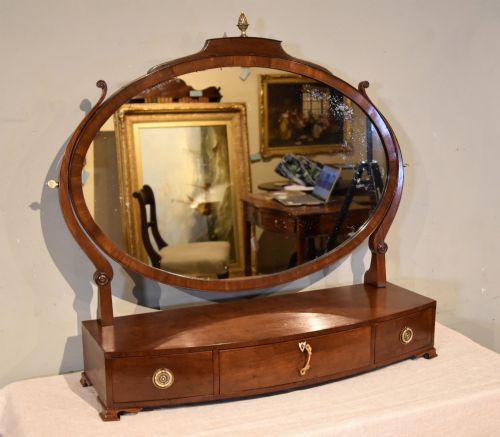
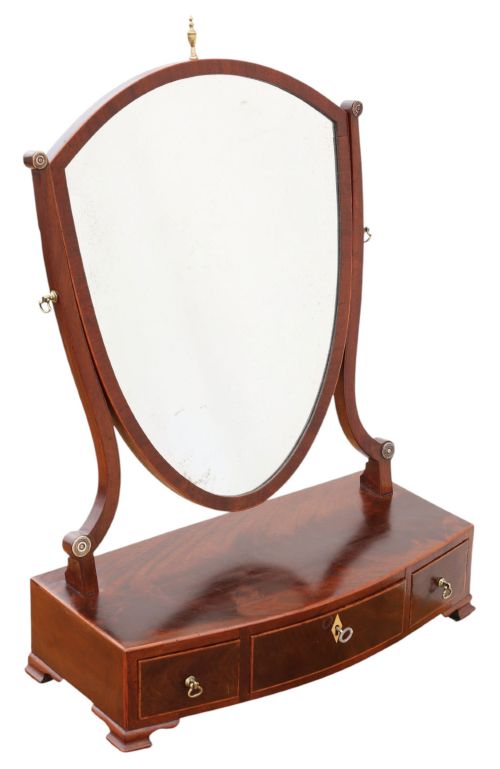
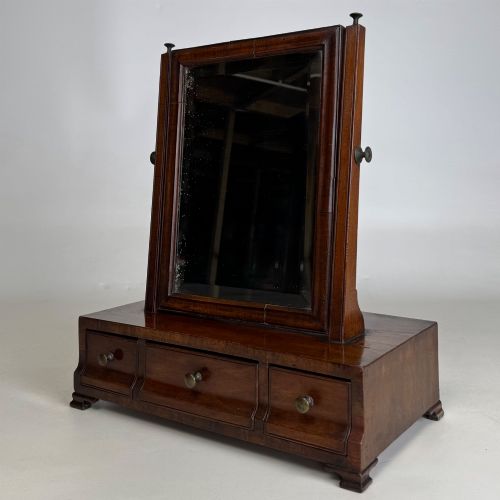
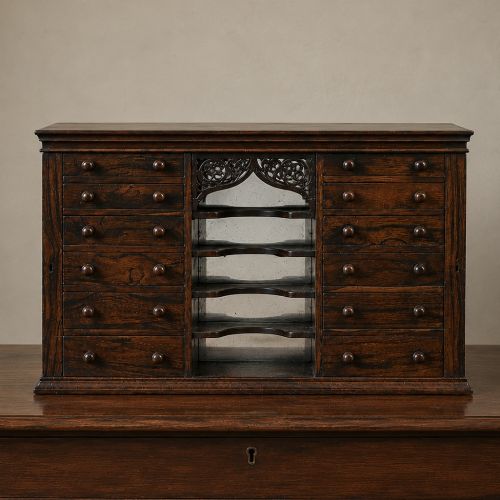
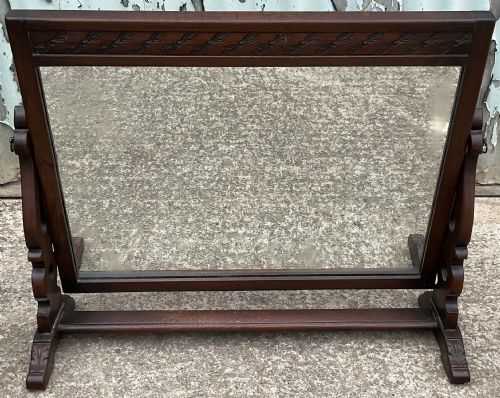
When searching for an antique desktop mirror, buyers encounter dressing table mirrors, toilet mirrors, and table mirrors designed to sit upon furniture. These pieces span the eighteenth century, nineteenth century, and early twentieth century, taking forms such as swing mirrors and table-top bureaus.
Mahogany and walnut form the backbone of these pieces, alongside brass, oak, and satinwood. Styles range from Georgian and Regency to Victorian and Edwardian, reflecting the changing tastes of domestic interiors over centuries.
How they were made
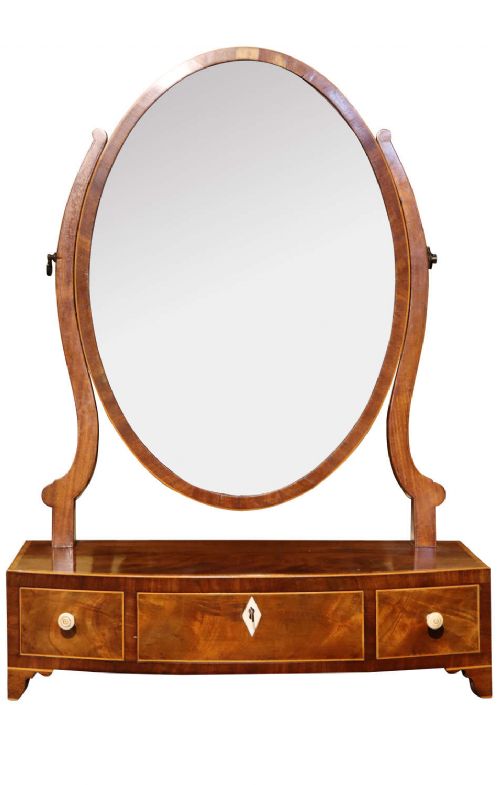
Cabinetmakers constructed these frames using dense timbers like mahogany, walnut, and oak, frequently incorporating crossbanding and marquetry inlay for decorative effect. Mirror glass sits within swing frames supported by upright arms attached to small drawer bases or plinths.
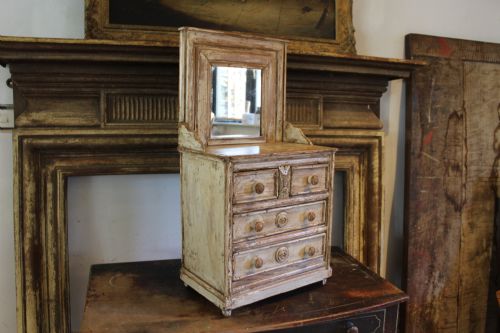
Brass fittings provide the pivot mechanisms for the swing mirrors, while specialised items incorporate small drawers, compartments, or writing slopes beneath the glass.
Antique Desktop Mirror Retail Price Guide 2026
Typical asking prices for desktop mirror among the pieces listed under this phrase on Sellingantiques today, from the lower quarter to the upper quarter. They describe what is for sale here now, not the wider market.
Scientific optical mirrors occasionally join the dressing glasses, reminding us that nineteenth-century optics belonged on the dressing table too.
What varies in quality
The sophistication of the timber selection and inlay work dictates the standing of a piece, with figured grains and intricate crossbanding marking out finer examples. Proportions between the mirror plate and the base structure determine the visual balance of the object.
The integration of functional elements such as small drawers, fitted compartments, and original brass hardware distinguishes standard domestic items from superior cabinetwork.
Thomas Rubergall of London
The Antique Desktop Mirror Glossary
- Swing mirror
- A mirror plate suspended on pivots between two upright arms allowing the angle of the glass to tilt. This mechanism permits the user to adjust the reflection.
- Toilet mirror
- A traditional term for a small dressing mirror designed to sit on a tabletop or chest. These often feature a box base fitted with small drawers.
- Crossbanding
- A border technique where thin strips of veneer are laid with the grain running perpendicular to the surrounding wood. It frames the primary timber panel with a contrasting edge.
- Marquetry
- The art of creating decorative patterns by fitting together small pieces of veneer of different woods. It appears on drawer fronts and frames to add ornamentation.
- Serpentine
- A curved shape that undulates outward and inward in a gentle wave. This contour frequently defines the front edge of dressing mirror drawer bases.
Antique Desktop Mirror: Frequently Asked Questions
Where should I place an antique desktop mirror?
These mirrors suit dressing tables, chest of tops, and sideboards where their compact size allows them to sit securely. They function effectively on any stable horizontal surface.
Ensure the placement provides adequate natural or artificial light for the mirror to serve its purpose while displaying the timber frame to advantage.
How do I distinguish a Georgian mirror from a Victorian one?
Georgian examples often employ dense mahogany or walnut with understated mouldings and delicate proportions, sometimes featuring serpentine drawer bases. Victorian pieces tend to be heavier in construction, utilising rich mahogany with robust carved supports.
Examining the construction methods of the drawer boxes and the type of wood figure helps clarify the period of manufacture.
What is a bureau mirror?
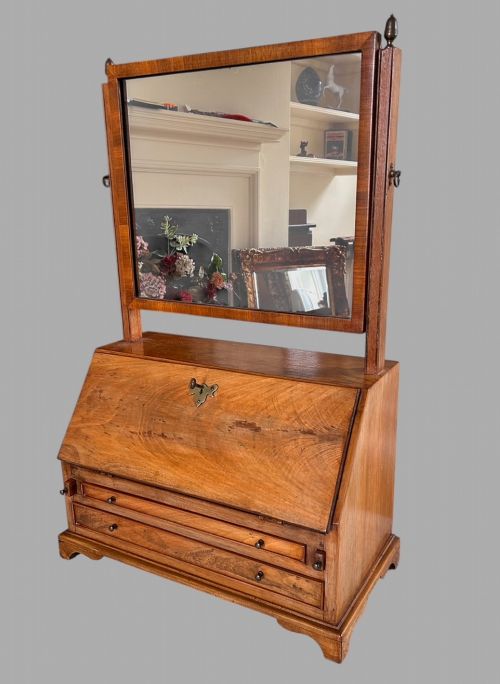
A bureau mirror combines a small writing desk or compartment section with a swing mirror mounted above. The lower portion includes small drawers or a writing flap.
This hybrid form served practical needs in domestic spaces where writing and grooming took place at the same piece of furniture.
Are the mirror glasses original?
Mirror glass frequently underwent replacement over the centuries due to damage or silver degradation. Examining the silvering and the back of the glass offers clues regarding its age.
Original glass may exhibit slight imperfections and oxidation consistent with long exposure to the atmosphere.