



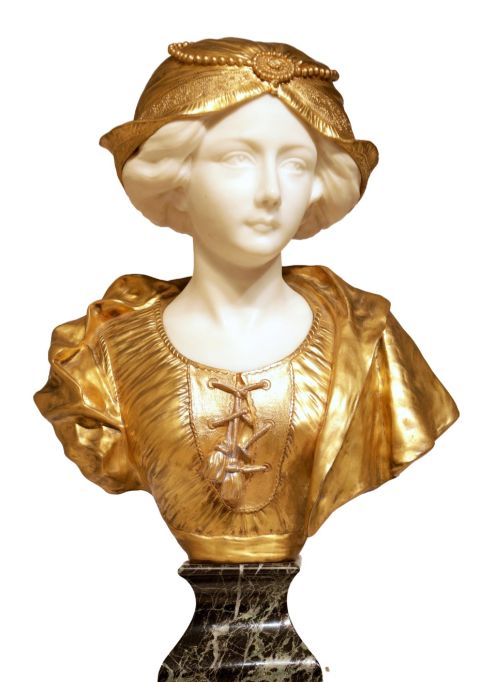
Bronze Female Figure Statue
A bronze female figure statue captures the grace of classical antiquity and the sleek rhythm of the twentieth century in cast metal.
Bronze Female Figure Statue
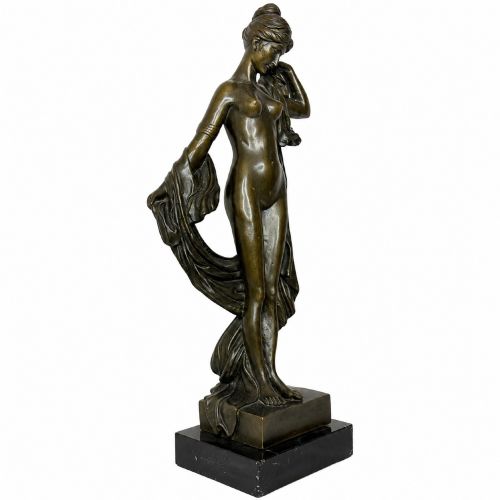
A bronze female figure statue encompasses sculptural works depicting women, ranging from classical mythological figures to dynamic dancers of the early twentieth century. When searching this phrase, a buyer encounters pieces originating primarily from the nineteenth century through the 1930s, reflecting shifts from academic realism to Art Nouveau and Art Deco aesthetics.
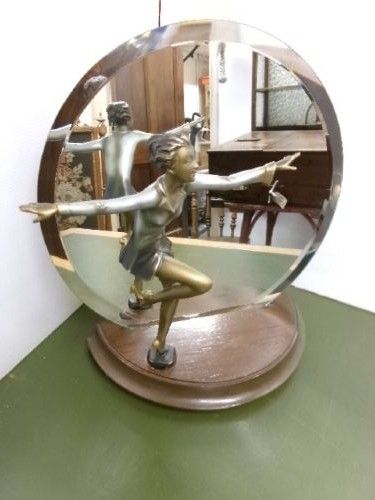
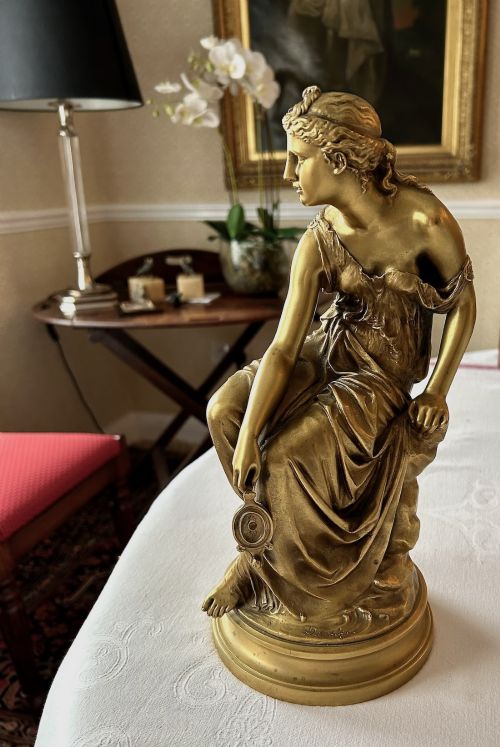
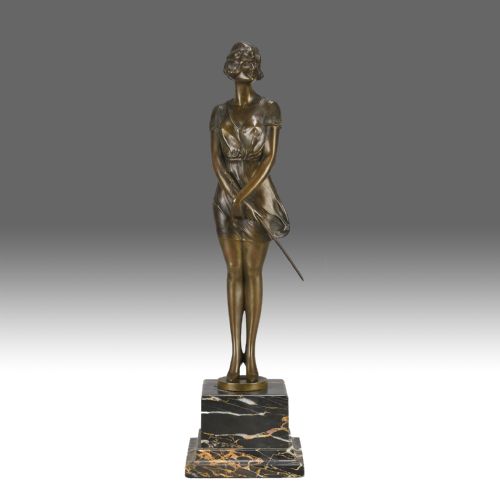
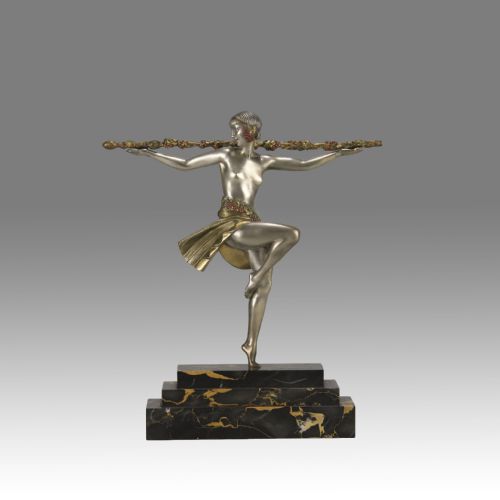
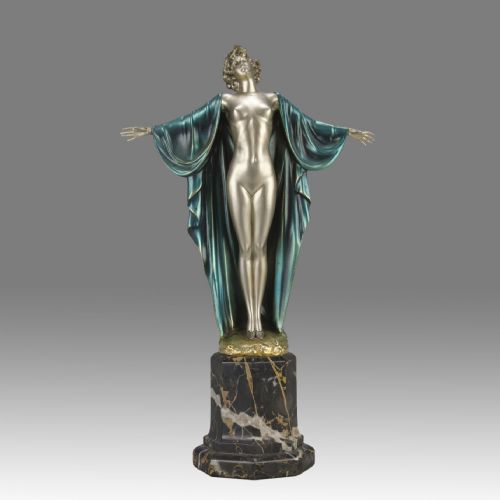
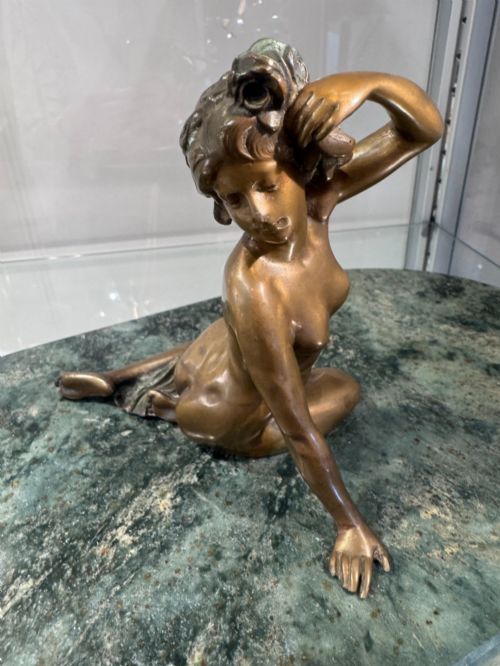
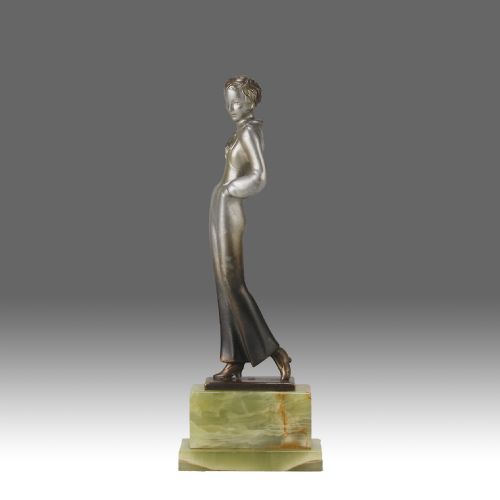
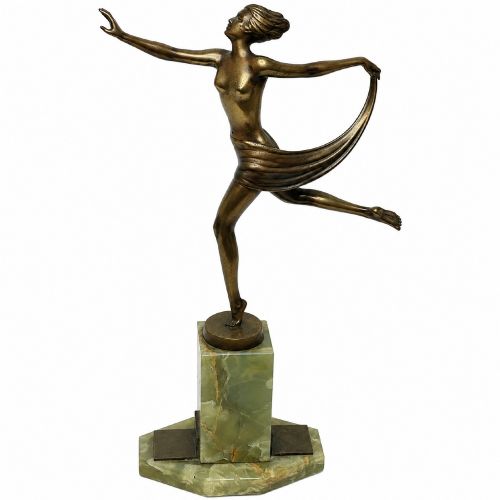
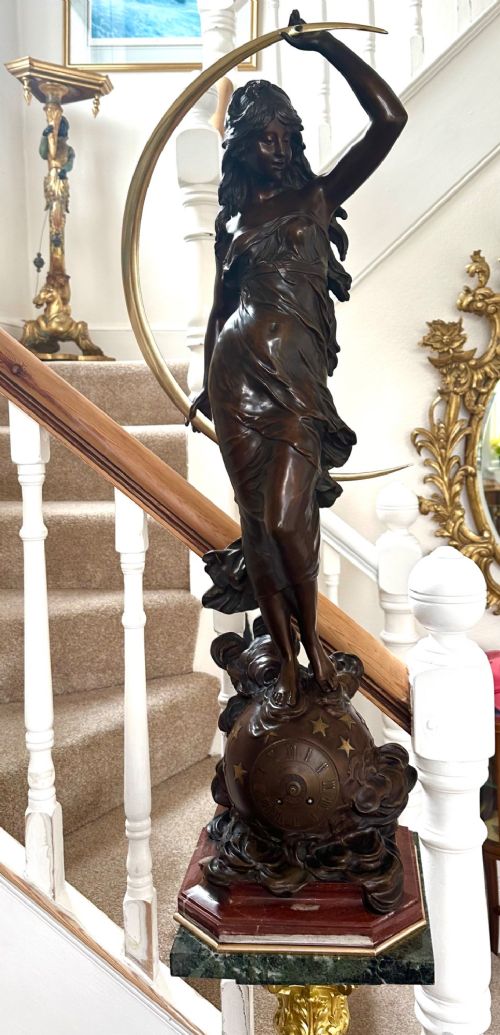
The selections on this page frequently manifest as depictions of dancers, maidens, and allegorical subjects such as spring or classical deities. These sculptures appear mounted on bases of marble or onyx, functioning both as freestanding mantel pieces and table lamps.
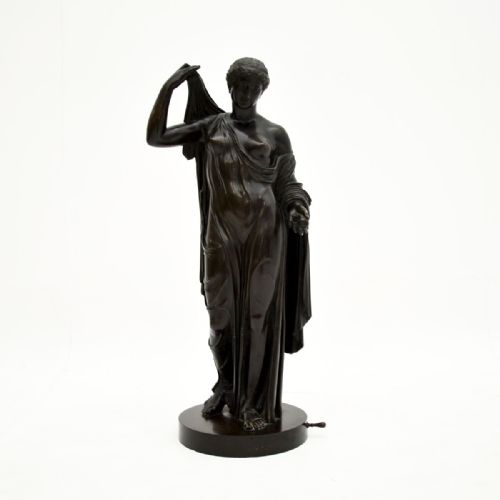
Nineteenth-century examples lean heavily towards Neoclassical and French Realism traditions, portraying robed ladies and historical heroines with detailed chasing. Conversely, twentieth-century iterations embrace the stylised lines of the Art Deco period, often depicting theatrical dancers and modern women.
Materials and production methods
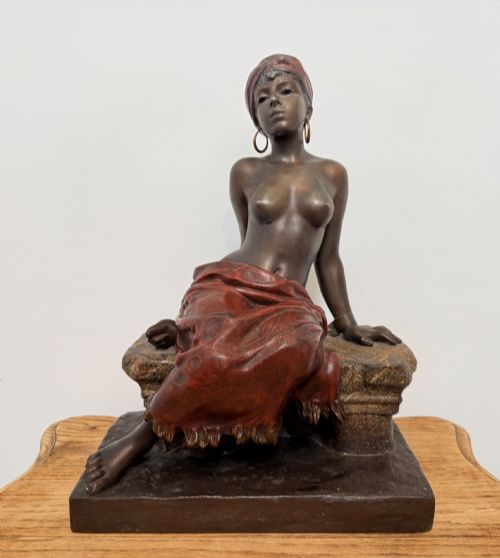
Foundries utilised traditional casting techniques, predominantly the lost-wax method, to achieve intricate details in bronze and gilt bronze. Patination was applied chemically to produce varied surface tones, while cold-painted finishes introduced vibrant polychrome colours to garments and skin.
Alternative alloys such as spelter appear frequently as a more accessible medium for figures produced during the Art Deco era. Bases were frequently fashioned from contrasting natural stones, incorporating carved marble and onyx to support the weight of the metal sculptures.
Distinctions in craftsmanship and execution
Signatures of established sculptors and foundry marks often denote higher tiers of production, reflecting the oversight of renowned ateliers. The integration of auxiliary materials, such as finely polished marble bases and well-preserved cold-painted surfaces, further distinguishes superior examples from mass-market output.
Etienne-Henri Dumaige·Ferdinand Barbedienne·Bruno Zach·Pierre le Faguays·Ferdinand Preiss·Josef Lorenzl·August Moreau·Emmanuel Villanis·Affortunato Gory·Mathurin Moreau·Demetre Chiparus·Henri Godet·Henry Wissen Senior·C J R Colinet·Jules Dalou·Georges Van Der Straeten·Edouard Drouot·Carrier-Belleuse·Bergman·Zoldan Kovats
The Bronze Female Figure Statue Glossary
- Patinated bronze
- Bronze treated with chemical solutions to produce a specific surface colour, ranging from deep brown to greenish tones. This process protects the metal and accentuates sculptural contours.
- Cold-painted bronze
- A technique where paint is applied to cold metal rather than fired in a kiln. It is particularly characteristic of Austrian foundry work from the late nineteenth and early twentieth centuries.
- Spelter
- A zinc alloy commonly used as a cost-effective substitute for bronze. It was widely utilised for figures during the Art Deco period and often given a bronze-like finish.
- Lost-wax casting
- A process where a wax model is used to create a mould for molten metal. This method allows for high detail and complex undercuts in sculptural work.
- Chasing
- The manual refinement of a raw metal casting using chisels and hammers. Artisans use this technique to sharpen details and remove surface imperfections.
Bronze Female Figure Statue: Frequently Asked Questions
How do I identify Art Deco figures?
Art Deco figures are characterised by stylised geometric lines, depictions of modern dancers, and materials such as gilt bronze and cold-painted spelter.
These pieces often feature smooth surfaces and energetic poses that reflect the aesthetic of the 1920s and 1930s.
What is cold-painted bronze?
Cold-painted bronze refers to sculptures where oil paint or enamel was applied directly to the unheated metal surface.
This technique was favored by Viennese foundries to create colourful garments and realistic skin tones on small figures.
How are marble bases integrated?
Sculptors frequently mounted bronze figures onto heavy bases of carved marble or onyx to provide stability and visual contrast.
These stone plinths are often shaped to complement the posture of the seated or standing female subject.
Are spelter and bronze different?
Spelter is a softer, zinc-based alloy, whereas bronze is a durable alloy composed primarily of copper and tin.
Spelter was frequently utilised as an affordable alternative to bronze for decorative figures during the early twentieth century.