
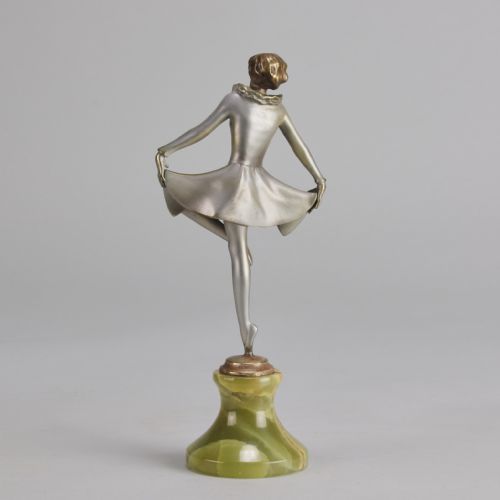
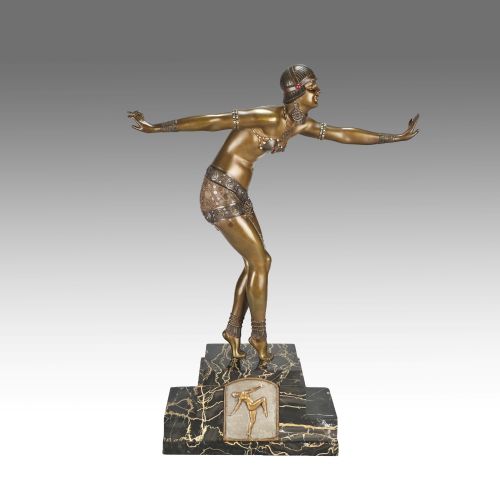


Cold Painted Bronze Dancer
A cold painted bronze dancer brings the distinct glamour of the interwar years straight into a room through precise metalwork and movement.
Cold Painted Bronze Dancer
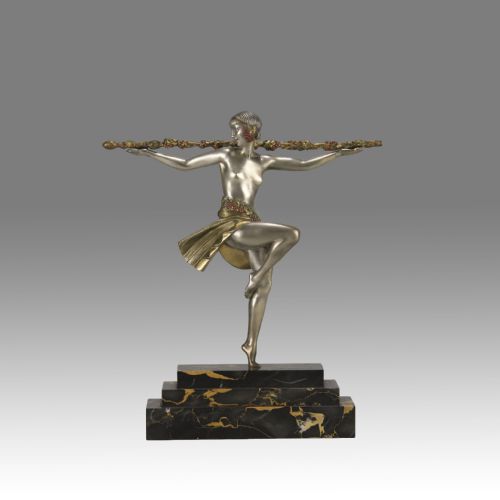
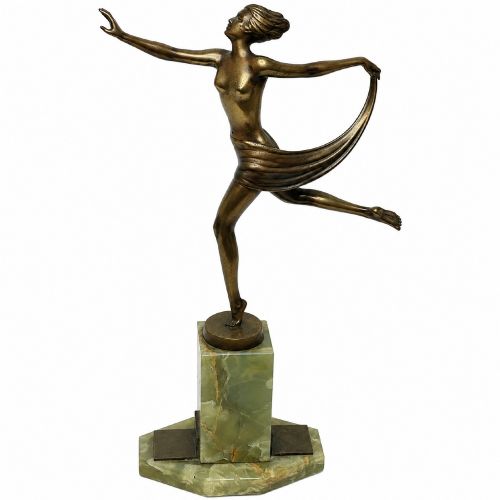
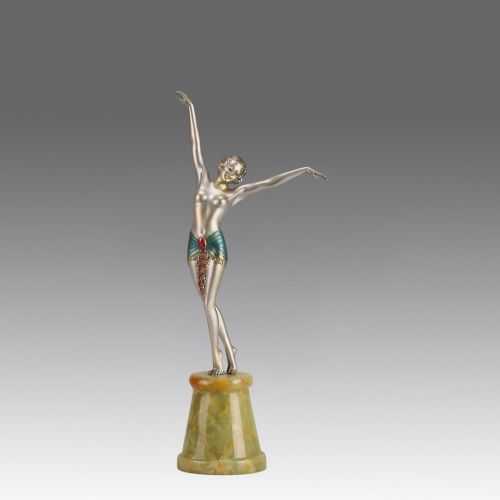
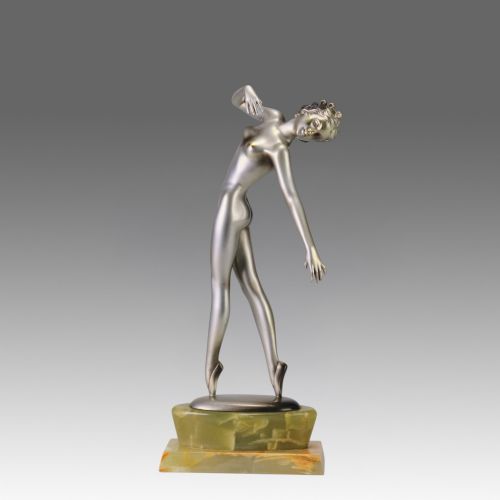
When you search for a cold painted bronze dancer, you encounter figural sculptures capturing motion from the interwar period. The pieces on this page emerge primarily from the nineteen-twenties and nineteen-thirties, embodying the sleek lines characteristic of Art Deco design.
Most examples depict named subjects, theatrical performers or graceful young women captured mid-movement. These figures frequently stand upon heavy stone bases, grounding the dynamic posture of the dancer in contrasting natural materials.
How they were made
The primary material is cast bronze, sometimes complemented by gilt applications or paired with carved ivory in chryselephantine works. Artisans also utilised spelter for alternative figural editions during the period.
Makers applied polychrome cold paint by hand directly onto the metal surface, a technique requiring steady precision. Bases were cut from solid blocks of onyx or marble to support the weight of the metal figures.
Cold Painted Bronze Dancer Retail Price Guide 2026
Typical asking prices for cold painted bronze dancer among the pieces listed under this phrase on Sellingantiques today, from the lower quarter to the upper quarter. They describe what is for sale here now, not the wider market.
Several dancers balance entire porcelain or ivory spheres while poised on one toe, defying gravity on their heavy stone plinths.
What varies in quality
Quality rests significantly on the crispness of the casting and the preservation of the delicate hand-applied paintwork. Superior examples retain their original polychrome surface intact without heavy overpainting.
The artistry of the sculptor dictates the fluidity of the movement and the realism of the drapery. Heavier, well-balanced stone bases that securely anchor the bronze figure also indicate a higher grade of production.
Pierre le Faguays·Josef Lorenzl·Demetre Chiparus·Paul Philippe·Bruno Zach·Claude Mirval
The Cold Painted Bronze Dancer Glossary
- Cold-painted
- A method where enamel paint is applied to unheated bronze metal. This technique allows for detailed polychrome clothing and hair on small figures.
- Chryselephantine
- A term describing sculptures combining bronze with carved ivory. This dual-material approach was popular among Art Deco makers for rendering flesh and garments.
- Spelter
- A zinc alloy used as a substitute for bronze. It offers a lighter, cheaper alternative while maintaining similar casting detail.
- Art Deco
- The dominant design style of the nineteen-twenties and nineteen-thirties. It prioritises streamlined geometric forms and dynamic movement.
Cold Painted Bronze Dancer: Frequently Asked Questions
How do I clean a cold painted bronze dancer?
Dust the figure gently with a dry, soft brush to protect the delicate surface paint. Avoid liquid cleaners and chemical solvents entirely.
Moisture can strip the cold-painted enamel from the metal body. Keep the sculpture in a stable environment away from direct sunlight.
Are these figures mounted on stone?
Many examples are secured to heavy bases made from natural marble or onyx. These stone plinths provide necessary stability for figures posed in motion.
Some pieces integrate the stone directly into the composition as part of the styling. Check the base for natural veining and secure fastenings.
What period do these sculptures come from?
The pieces originate from the early twentieth century, specifically the nineteen-twenties and nineteen-thirties. This era defines the height of the Art Deco movement.
Design cues from this decade focus on dance, theatre, and modern fashion. Figures often reflect specific stage performers of the era.
What is the difference between bronze and spelter?
Bronze is a durable copper alloy that takes fine casting details and heavy cold paint well. Spelter is a zinc-based metal that is softer and lighter.
Bronze examples generally command higher regard among collectors due to their longevity. Examining the underside often reveals the heavier weight of genuine bronze.