



Brass Sconce Mirror
A brass sconce mirror combines reflective glass and candle arms to cast warm light across a room.
Brass Sconce Mirror
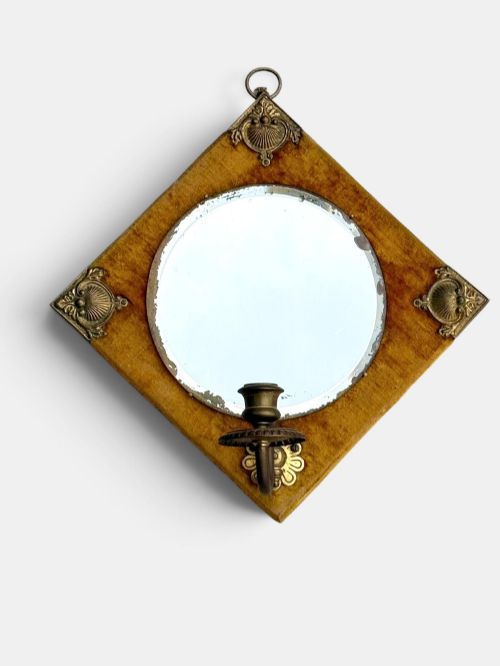
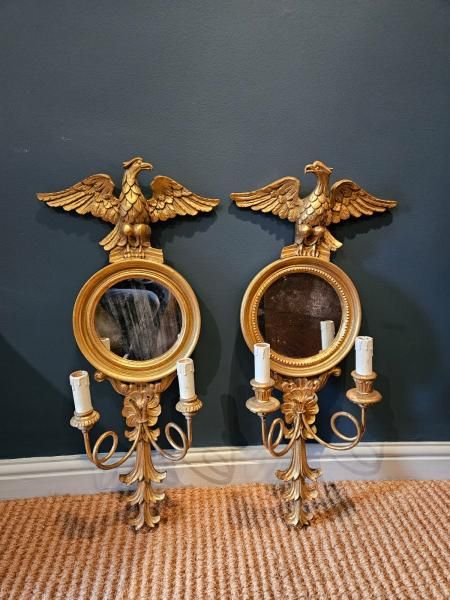
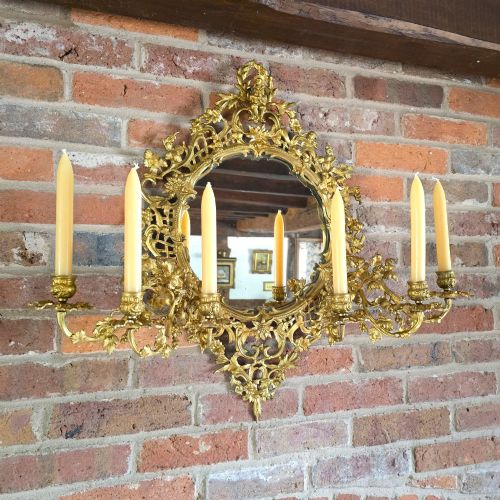
A brass sconce mirror is a wall-mounted glass plate set within a metal frame that incorporates projecting candle holders, designed to multiply the flicker of candlelight in a room. The examples appearing here span from the Victorian and Edwardian eras into the early twentieth century, alongside earlier stylistic revivals.
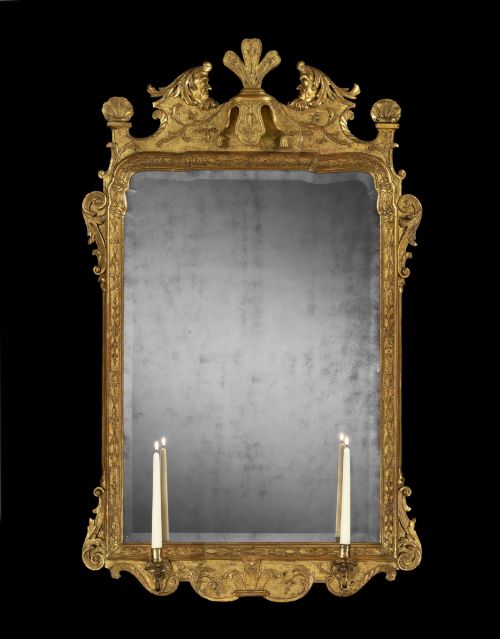
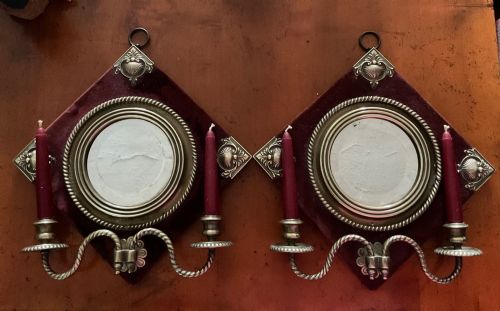
The form frequently manifests as matched pairs intended to flank a mantelpiece or doorway, though single wall lights and larger girandoles also emerge. Makers from Victorian workshops to continental foundries produced these pieces using brass, bronze, and gilt metal, often pairing the reflective backplate with velvet or carved wood.
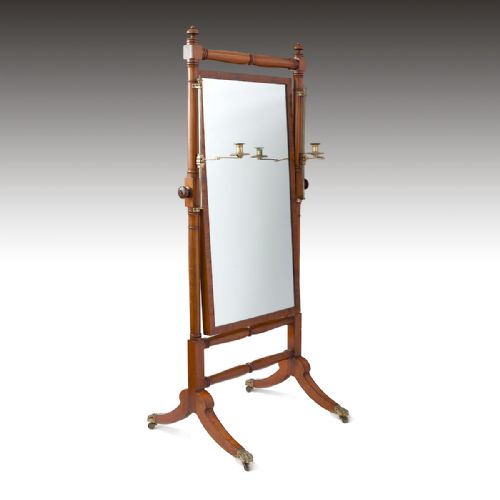
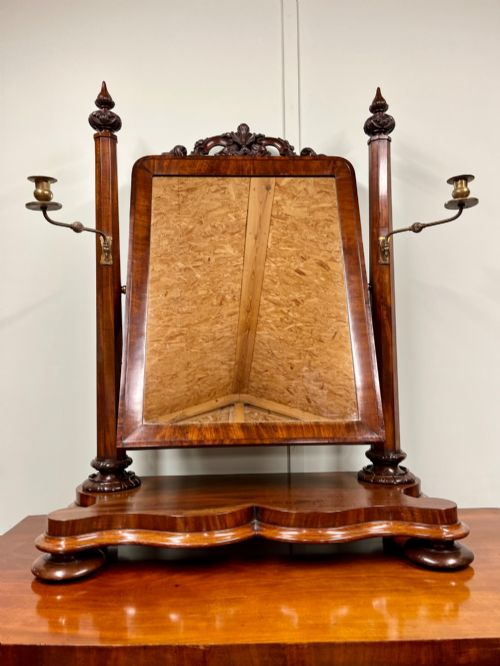
Beyond standard wall sconces, the selection encompasses related items sharing brass mounts and mirror glass, including dressing table toilet mirrors and telescopic shaving stands. Each variant serves the dual purpose of illumination and decoration, utilising the polished metal frame to catch and throw light.
How they were made
The construction of a brass sconce mirror relies primarily on cast or stamped brass frames secured to wooden or plaster backing boards, holding bevelled mirror glass in place. Branch arms for candles are screwed or soldered firmly to the main chassis, designed to bear the weight of burning tapers.
Makers often applied a gilt finish or ormolu to the brass components to enrich the surface reflection, while alternative models integrate mahogany, walnut, or velvet into the support structure. The glass itself is typically hand-bevelled and set deep within the metal rebate to ensure stability on the wall.
Recorded forms include wall lights, girandoles, and dressing table mirrors spanning the eighteenth to the twentieth centuries.
What varies in quality
Quality in a brass sconce mirror is determined by the crispness of the metal casting and the depth of the chasing on the brass or bronze. Finer examples display sharp relief work on floral or figural motifs rather than soft, mass-produced outlines.
The integration of the candle arms also signals a higher standard of manufacture, where joints remain rigid and straight under the weight of the branches. Furthermore, the clarity of the original mirror glass and the substance of the underlying timber frame separate standard production items from superior workshop pieces.
Gillow
The Brass Sconce Mirror Glossary
- Girandole
- A branched wall light incorporating a mirror backplate. This form uses the reflective glass to multiply the illumination cast by the candles.
- Ormolu
- Finely ground high-carat gold applied to a bronze or brass base metal. The technique creates a rich, enduring metallic sheen.
- Gesso
- A plaster-like mixture applied to a wooden surface to prepare it for gilding or painting. It allows for intricate relief moulding before metal leaf is laid.
- Cheval mirror
- A full-length floor mirror hung in a freestanding frame. Certain variations incorporate articulated brass candle holders or arms.
- Aesthetic period
- A late nineteenth-century British design movement prioritising visual beauty over narrative meaning. Pieces from this era often feature stylised natural motifs.
Brass Sconce Mirror: Frequently Asked Questions
How were brass sconce mirrors used?
These pieces hung on parlour and drawing-room walls where their candle branches helped illuminate dark corners. The reflective glass amplified the dim light of nineteenth-century rooms before electricity became common.
They were frequently positioned above mantelpieces or between windows to bounce natural and artificial light around the space. Their dual role as lighting fixtures and decorative mirrors made them central to period interior design.
How do I hang a heavy brass sconce mirror safely?
Secure hanging requires fixing directly into wall studs or using heavy-duty wall anchors rated for the combined weight of the metal and glass. Because many examples feature projecting candle arms, the centre of gravity sits forward from the wall.
Check that the hanging loops or brackets on the reverse are firmly attached to the frame before mounting. Using a two-point hanging system prevents the mirror from tilting sideways over time.
How do I clean antique brass and mirror glass?
Dust the brass frame gently with a dry microfibre cloth to remove surface particles without disturbing any aged patina or gilt finish. Avoid harsh commercial metal cleaners that strip away historical character.
Clean the mirror glass with a mild glass cleaner applied to a cloth rather than sprayed directly, preventing liquid from seeping behind the plate or into the wooden backing.
How do I tell a Victorian sconce from a later reproduction?
Examine the construction of the metal components and the fixings on the reverse of the backplate. Nineteenth-century pieces typically feature hand-cut screws, heavier cast brass, and silver-nitrate mirror backing that shows natural ageing spots.
Look closely at the style indicators, such as the distinct cast relief work found on Victorian and Edwardian examples. Modern reproductions often feel lighter in the hand and use uniform machine-made assembly methods.