



Dressing Room Glass
These dressing room glass pieces are freestanding and adjustable looking glasses designed for daily grooming, offering the functional luxury needed in any period bedchamber.
Dressing Room Glass
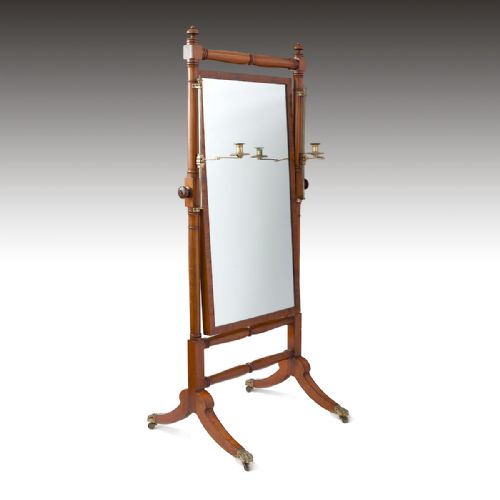
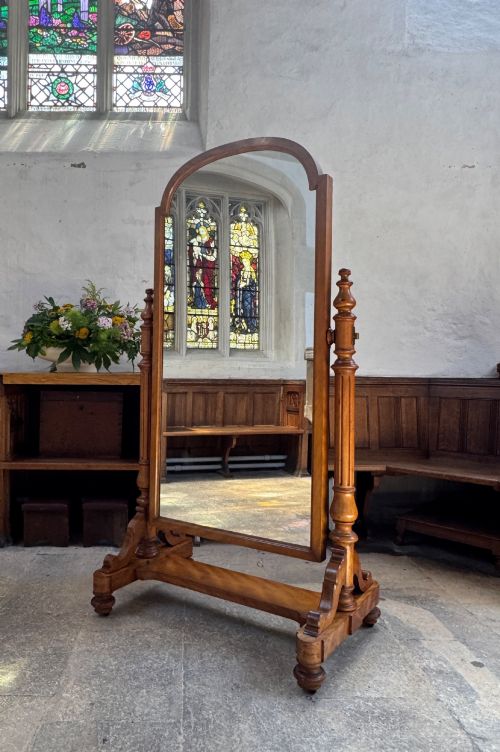
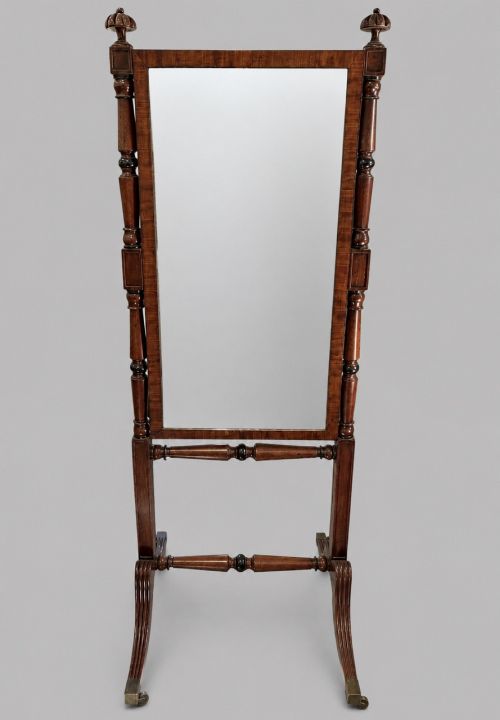
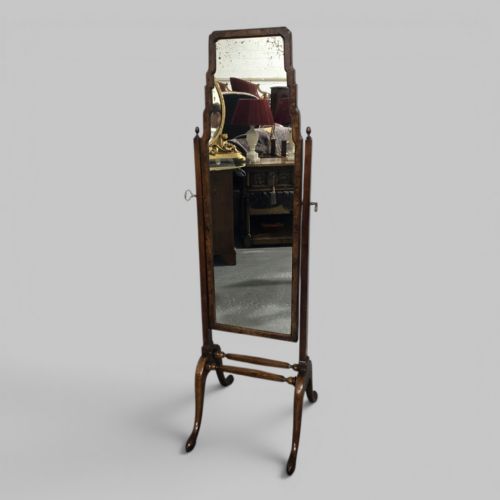
When you search for dressing room glass, you are looking at substantial movable mirrors that stand upon the floor or rest upon a table surface for personal grooming. These pieces range from towering freestanding cheval mirrors to smaller swing vanity glasses equipped with storage compartments and oak-lined drawers.
The versions you meet most frequently on this page include tall mahogany and walnut cheval frames from the Regency and Victorian eras, alongside folding screens and smaller Georgian toilet mirrors. Materials span from rich satin birch and giltwood to simple oak and brass hardware.
Originating primarily from English workshops and continental makers, these items served the private dressing rooms of country houses and town residences. They combine practical glass surfaces with architectural timber frames to suit period interiors.
How they were made
Cabinet makers built these frames using dense hardwoods like mahogany, walnut, and satin birch, often applying marquetry inlay or ebonised details for visual depth. Brass pivots and adjustable brackets allowed the mirror glass to tilt smoothly on its vertical axis.
The looking glass itself utilised silvered or mercury glass plates fitted securely within rebated wooden rabbets or giltwood surrounds. Folding vanity screens and room dividers incorporated fabric panels or multiple hinged leaves joined by metal hardware.
Object types span cheval mirrors, room dividers, folding screens, and vanity swing glasses with oak-lined storage drawers.
What varies in quality
The distinction between ordinary utility items and exhibition quality pieces lies in the selection of figured timber veneers and the crispness of carved or gilded ornamentation. Master workshops employed superior joinery techniques and heavier gauge brass fittings that withstand centuries of adjustment.
Proportion and scale also dictate the hierarchy of these items, where grand country house proportions command greater architectural presence than standard bedroom pieces. The original state of the mercury glass plate and secondary timbers adds further differentiation across the range.
The Dressing Room Glass Glossary
- Cheval mirror
- A large freestanding mirror supported on a frame with four legs, allowing the user to view their entire reflection. These pivot vertically between upright posts.
- Pier glass
- A tall and narrow mirror designed specifically to hang on the wall space between windows, often placed above a console table.
- Satin birch
- A light yellow wood with a natural sheen, utilised extensively for cabinet work and decorative veneer during the nineteenth century.
- Giltwood
- Timber carved and coated with gold leaf or metallic paint, characteristic of decorative Rococo revival and continental framing styles.
Dressing Room Glass: Frequently Asked Questions
Where were these mirrors placed?
These mirrors stood in private dressing rooms, bedrooms, and grand hallways of period residences where occupants dressed and groomed. Their movable frames allowed placement near natural light sources.
Larger cheval designs required floor space away from walls, while smaller swing and toilet mirrors sat atop dressing tables and chests of drawers.
How do I adjust a cheval mirror?
Cheval mirrors pivot on metal pins secured into side uprights, allowing the glass frame to tilt forward or backward to the desired angle. Brass thumbscrews or weighted mechanisms hold the glass steady.
Users simply tilt the frame gently by hand until the reflection aligns properly for full-length viewing.
What is a vanity screen?
A vanity screen is a folding panel structure, often with three or four leaves, used historically to partition dressing areas or block drafts. They frequently incorporated mirror glass or decorative fabric.
These screens combined privacy functions with reflective surfaces for grooming within larger bedchambers.
How do I date a mahogany mirror?
Dating relies on timber selection, construction methods, and hardware styles observable across Georgian, Regency, and Victorian periods. Early pieces often feature hand-cut dovetails and dense Cuban mahogany.
Later Victorian and 1920s examples show machine-sawn elements, different veneer thicknesses, and distinct revival design motifs.