

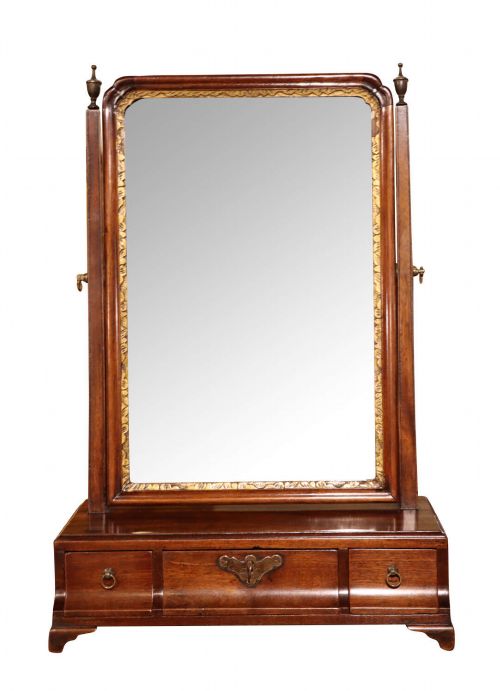


Swinging Bedroom Mirror
A swinging bedroom mirror offers an adjustable glass for daily grooming, moving through Victorian, Georgian and Edwardian periods in mahogany, walnut and brass.
Swinging Bedroom Mirror
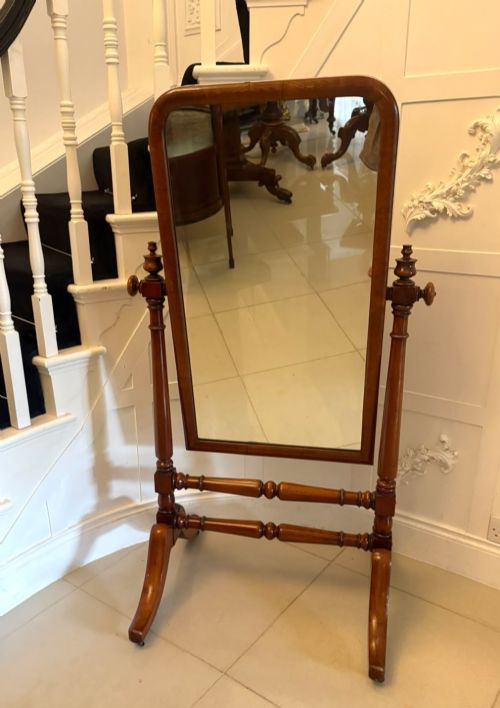
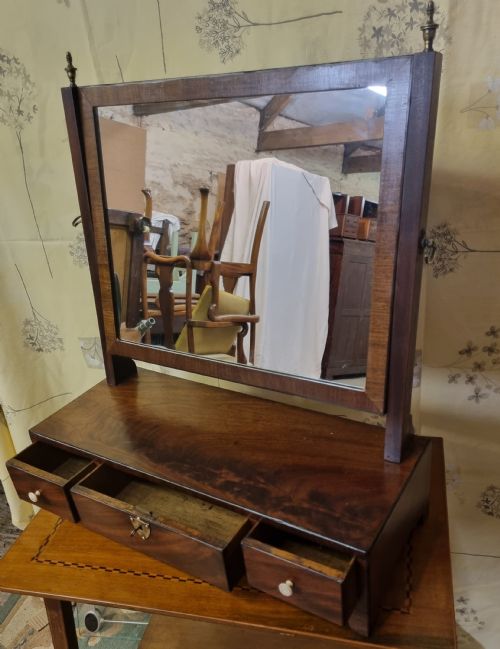
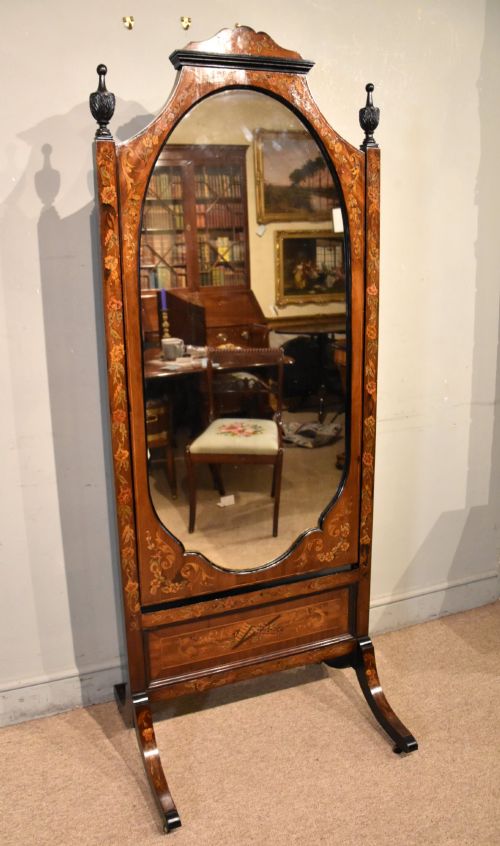
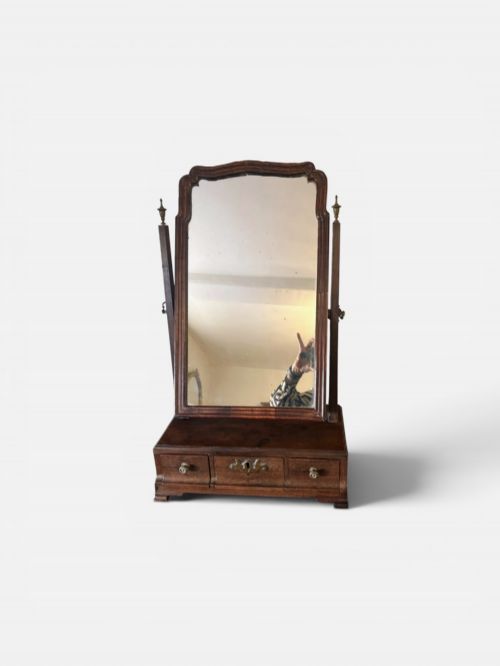
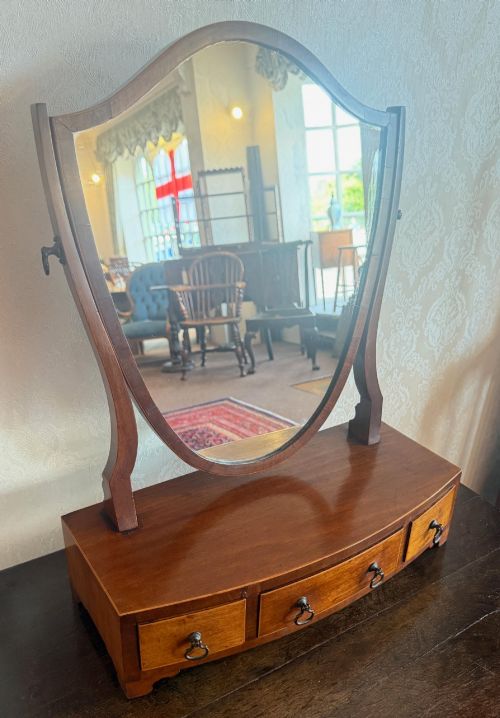
When you search for a swinging bedroom mirror, you encounter two distinct forms designed for the dressing room or bedroom: the compact tabletop toilet mirror and the full-length freestanding cheval mirror. The most common version met on this page is the Victorian mahogany dressing table mirror, often fitted with small drawers in its base.
These pieces date predominantly from the nineteenth century, spanning Georgian, Regency, Early Victorian and Edwardian eras. They range from simple tabletop swinging glasses on upright supports to large floor-standing cheval mirrors and dressing tables equipped with integrated swing mirrors.
How they were made
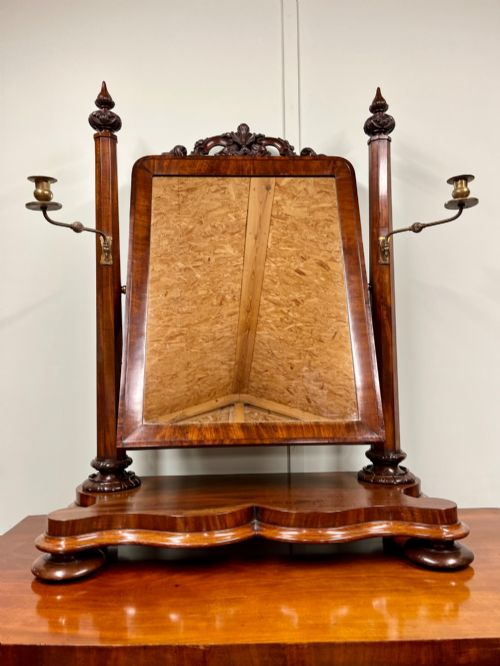
Cabinet makers utilised dense timber such as mahogany, walnut, burr walnut, pine and satinbirch to construct the frames and supportive standards. Brass pivots, screws and candle arms allow the glass plate to tilt smoothly within its housing.
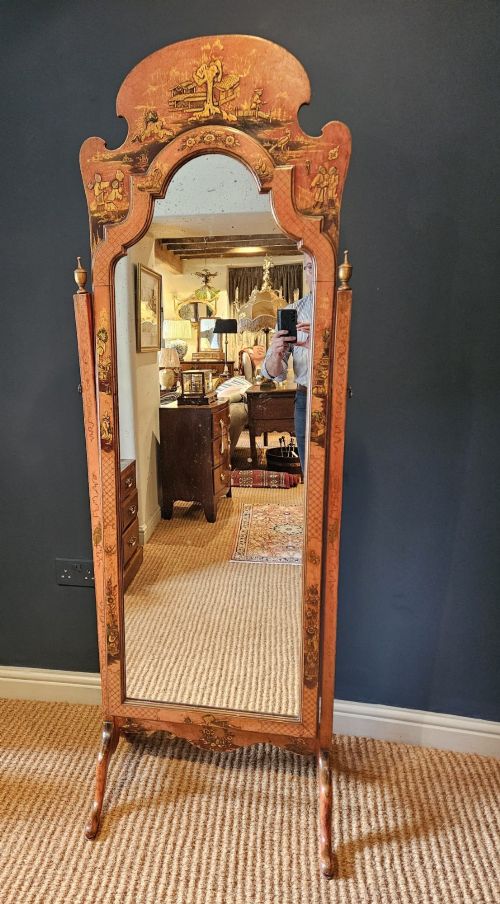
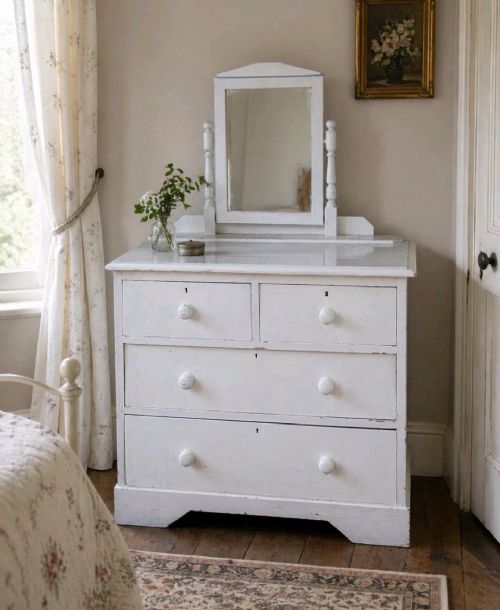
Surfaces receive various finishes, including polished wood grains, painted wood, inlay and Chinoiserie decoration. Mirror glass sits within framed surrounds, supported by sturdy side arms attached to heavy bases or table boxes.
What varies in quality
The standard of timber selection and cabinet construction dictates the grade of the piece, with fine examples displaying carefully matched wood veneers and robust joinery. Finer mirrors show thoughtful proportions between the pivoting glass frame and the supporting base.
Hardware choice also separates categories, where solid brass fittings and well-turned support columns indicate superior manufacture compared to plain or replacement metalwork.
Wright and Hunter of Belfast·Waring and Gillow
The Swinging Bedroom Mirror Glossary
- Cheval mirror
- A large freestanding floor mirror that swings vertically within a stable wooden frame. This tall glass allows a full-length view of attire in the bedroom.
- Toilet mirror
- A smaller dressing glass designed to sit upon a table or chest of drawers. These portable mirrors often incorporate small storage drawers beneath the swinging frame.
- Swing mirror
- A pivoting glass plate mounted on side pins between upright supports. This mechanism allows the user to tilt the angle of reflection.
- Inlay
- Decorative wood or brass ornamentation set flush into the surface of the timber frame. Craftspeople use contrasting materials to form geometric or floral patterns.
- Burr walnut
- Highly figured wood harvested from walnut tree growths, prized for its swirling grain patterns. Cabinet makers veneer furniture surfaces with this material for visual richness.
Swinging Bedroom Mirror: Frequently Asked Questions
What is the difference between a toilet mirror and a cheval mirror?
A toilet mirror sits on a tabletop or dressing chest, designed primarily for upper body grooming and often featuring small drawers in its base. A cheval mirror is a much taller, freestanding floor mirror that enables a full-length view.
Both utilise a pivoting frame to adjust the angle of the glass, but their placement and scale within the bedroom differ entirely.
How do I date a swinging bedroom mirror?
Dating relies on observing timber choices, construction methods, and stylistic cues associated with periods like the Georgian, Victorian or Edwardian eras. Mahogany and walnut predominate in earlier pieces, while painted finishes and satinbirch appear in later Victorian examples.
Examining the mirror plate itself, the joinery of any base drawers, and the brass pivoting hardware provides further clues to the decade of manufacture.
Were these mirrors made for bedrooms?
These mirrors were primarily produced for dressing rooms, boudoirs and bedrooms to assist with personal grooming and dressing. Tabletop versions sat upon matching dressing tables or chests of drawers.
Freestanding cheval mirrors stood directly on the floor in larger sleeping quarters where full-length attire could be checked.
How should I care for an antique swing mirror?
Maintain the wooden frame using appropriate wax polishes suitable for historic timbers like mahogany or walnut. Avoid harsh chemical cleaners on the glass and the brass pivoting hardware.
Check the tension of the side screws periodically to ensure the swinging glass remains secure within its upright supports.