

Brass Inlay Writing Desk
A brass inlay writing desk combines refined cabinetmaking with precise metalwork to create a functional surface for correspondence and study.
Brass Inlay Writing Desk
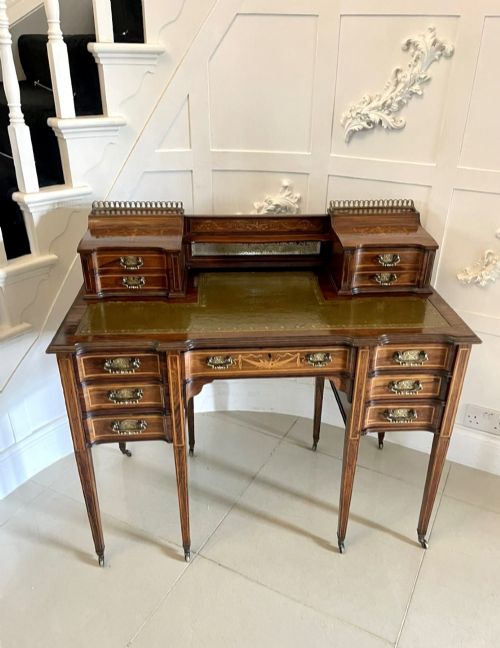
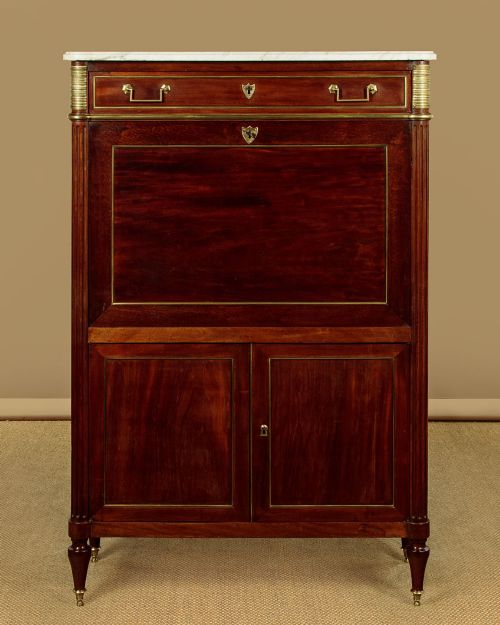
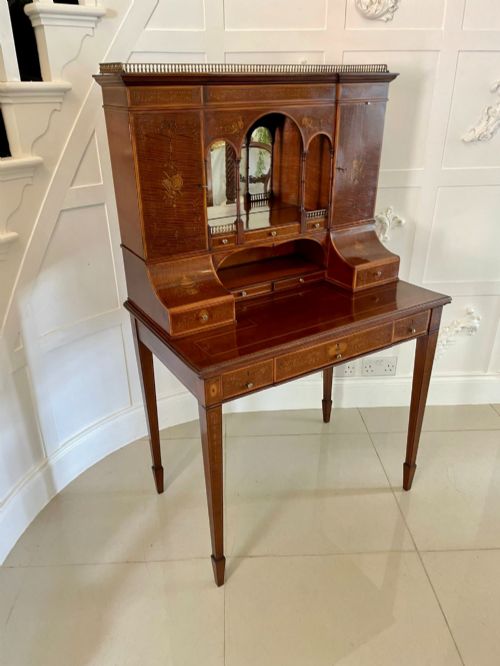
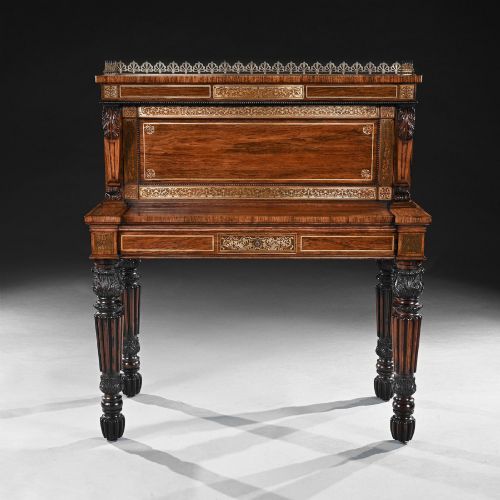
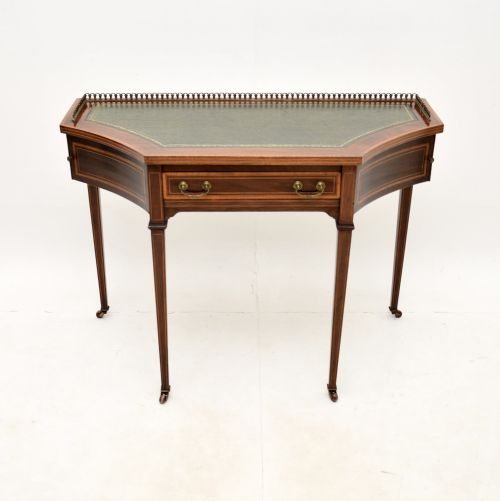
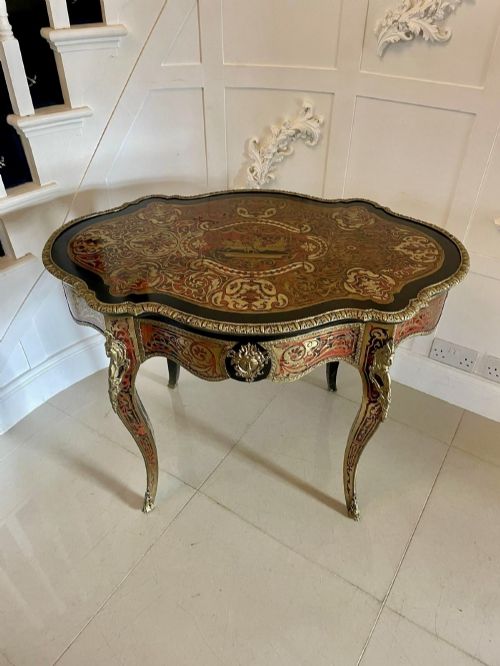
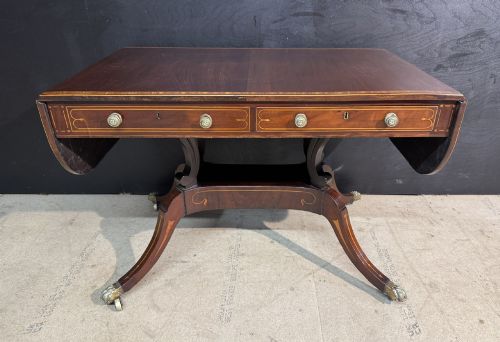
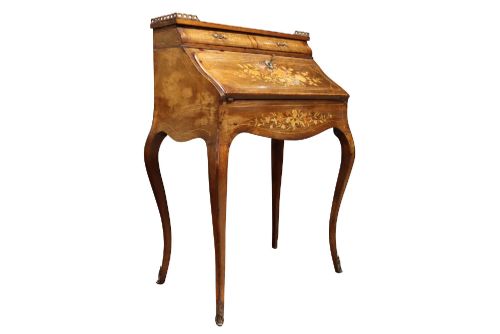
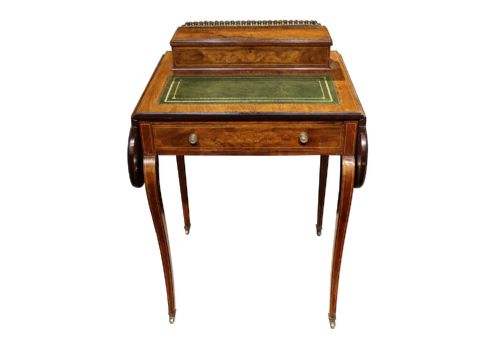
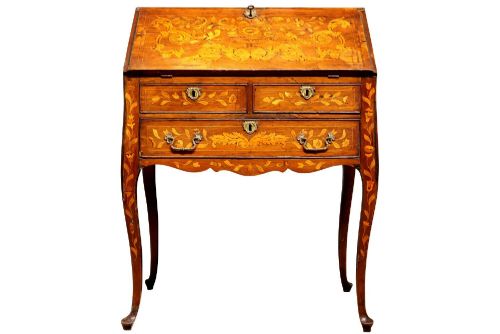
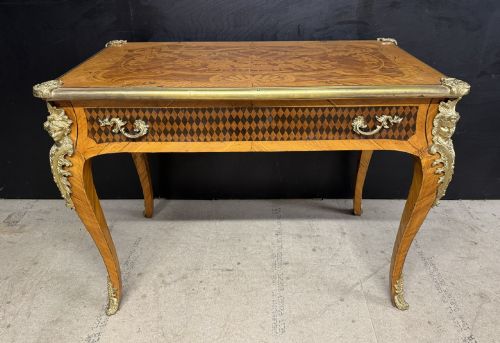
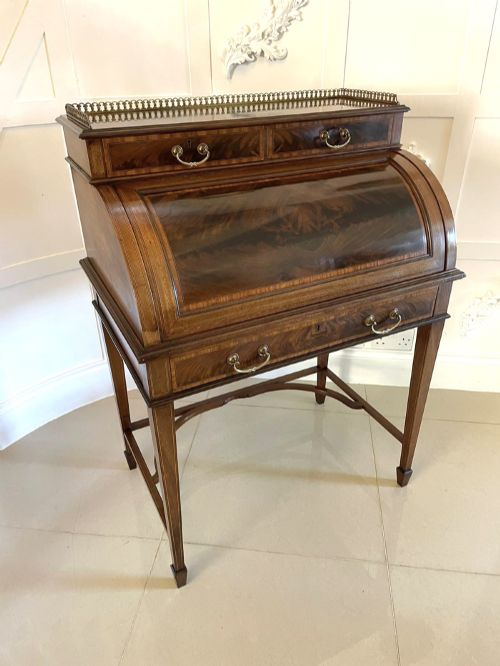
A brass inlay writing desk appears in several distinct forms across the Georgian, Regency, and Victorian periods, including freestanding writing tables, compact slope boxes, and sophisticated bureau de dame designs. These pieces originate from English workshops as well as French cabinetmakers influenced by Boulle work and Napoleon III styles.
The buyer meets variations ranging from modest mahogany and rosewood campaign boxes to grander ebonised and burr walnut library pieces. Many incorporate fitted interiors with small drawers and compartments designed for stationery and inkwells.
Stylistic influences span Sheraton Revival, Regency, and French periodic designs, reflecting the changing domestic requirements for correspondence and record keeping through the nineteenth century.
Materials and Construction
Makers constructed these pieces using dense timber foundations such as mahogany, rosewood, and burr walnut, often applying satinwood or ebony for contrast. Brass wire and sheet metal were meticulously hand-cut and pressed into precision channels carved into the wooden surface.
Secondary woods provide structural integrity to drawer linings and interior partitions, while leather inserts frequently form the writing surface. Ormolu mounts and cast brass handles complement the flat metal inlay across the exterior carcass.
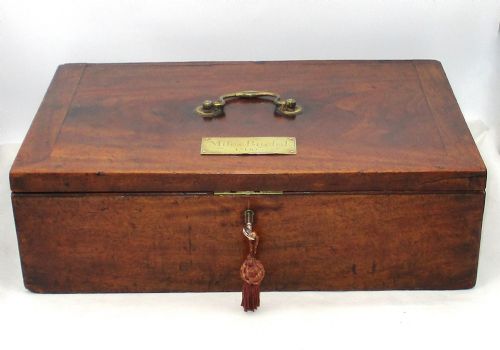
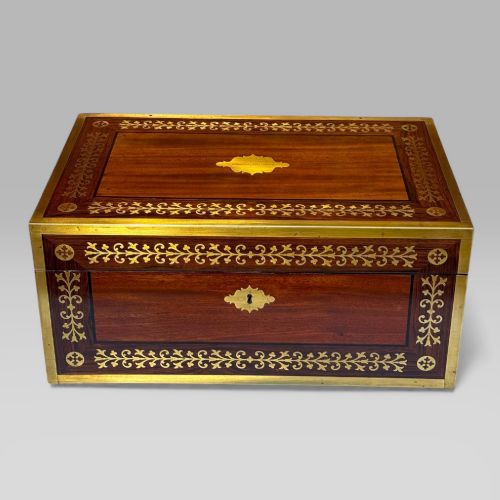
Campaign writing slope boxes include recessed brass handles designed to sit flush against the timber exterior.
Evaluating Craftsmanship
Quality rests in the precision of the metalwork and how cleanly the brass sits flush within the timber grain. Superior examples display tight joints, unwarped writing surfaces, and fully intact brass motifs without gaps or modern repairs.
The sophistication of the internal fittings, such as secret compartments, original leather inserts, and working locks with keys, distinguishes standard utility pieces from high-workshop commissions.
Maple and Co·Gillows Oxford Street Workshop·Edwards and Roberts
The Brass Inlay Writing Desk Glossary
- Boulle work
- A method of marquetry using brass and tortoiseshell inlaid in elaborate scroll patterns. This technique was popular in French furniture of the nineteenth century.
- Writing slope
- A portable box with a slanted writing surface that folds flat when closed. It typically opens to reveal storage for paper, pens, and ink.
- Carlton House desk
- A form of writing table featuring a curved superstructure of small drawers and compartments enclosing the rear and sides of the writing surface. This design originated in the late eighteenth century.
- Marquetry
- The art of applying pieces of veneer to a structure to form decorative patterns and pictorial designs. Cabinetmakers used contrasting woods alongside metal elements.
- Campaign desk
- Furniture designed to dismantle or fold easily for military travel. These pieces often feature brass binding to protect the edges during transit.
Brass Inlay Writing Desk: Frequently Asked Questions
What is a brass inlay writing desk used for?
These pieces served as dedicated domestic stations for writing letters, managing household accounts, and storing personal correspondence. The integrated storage compartments kept ink, nibs, and stationery organised within easy reach.
Today, they function as practical writing tables or focal points in studies and living spaces, offering surface area combined with built-in storage.
How do I date a brass inlay writing desk?
Dating relies on examining the timber species, carcass construction, and style of the brass ornamentation. Georgian and Regency pieces tend to feature restrained linear brass stringing, whereas Victorian examples often display more exuberant floral or geometric Boulle work.
Secondary wood choices and the method of drawer construction also help determine whether a piece originates from the early nineteenth century or the later Victorian period.
Are these desks suitable for daily use?
Most antique writing desks accommodate modern writing tasks and laptop use, provided the surface leather and wooden structure remain stable. Care should be taken with historical finishes and delicate brass inlay.
Using protective pads and maintaining consistent room humidity helps preserve the timber and prevents the brass elements from loosening over time.
What is the difference between a writing slope and a writing table?
A writing slope is a portable box placed upon another surface, featuring a hinged sloping lid that opens to reveal storage compartments and a flat or angled writing pad. It was designed to be stored away when not in use.
A writing table is a freestanding piece of furniture with fixed legs, providing a permanent surface and often incorporating frieze drawers beneath the top.