




Regency Brass Inlaid Desk
A regency brass inlaid desk brings together polished dark timbers and precision metalwork created for correspondence and study during the early nineteenth century.
Regency Brass Inlaid Desk
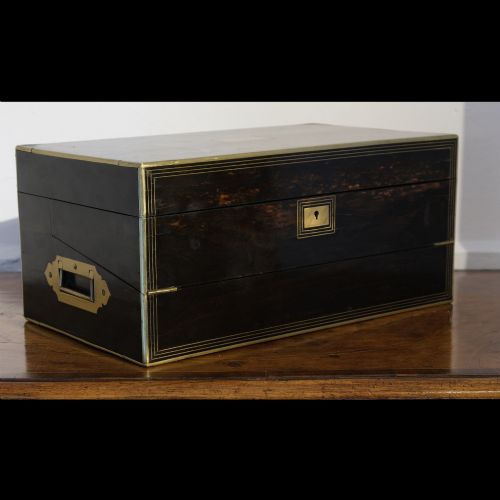
A regency brass inlaid desk encompasses writing tables, slope boxes, and larger library forms originating primarily from the Regency and Georgian periods. These pieces demonstrate the refined cabinet-making traditions of the early nineteenth century, constructed to serve domestic studies and writing rooms.
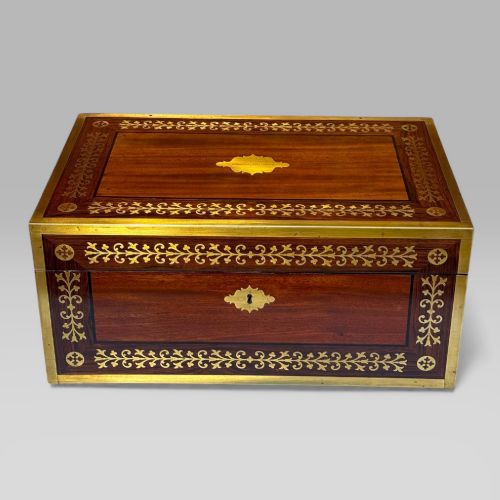
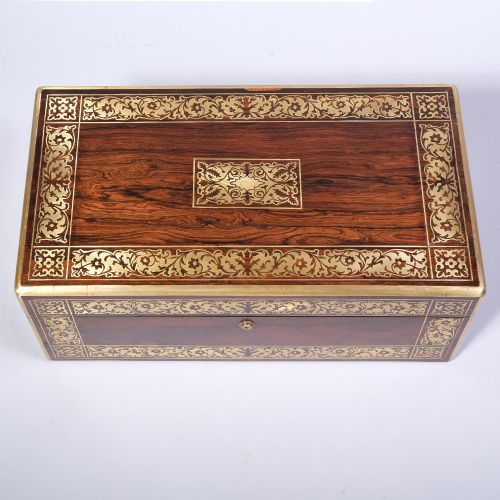
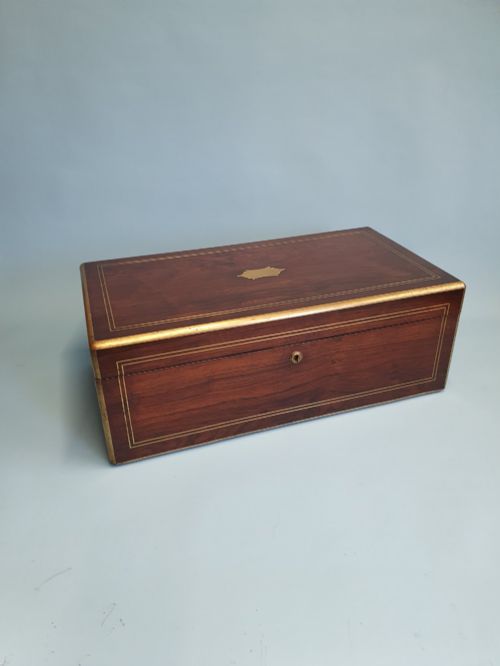
The version most commonly encountered on this page is the rosewood or mahogany writing slope or table featuring intricate brass inlay. These compact and freestanding formats reflect the domestic requirements of the era, combining storage compartments with dedicated writing surfaces.
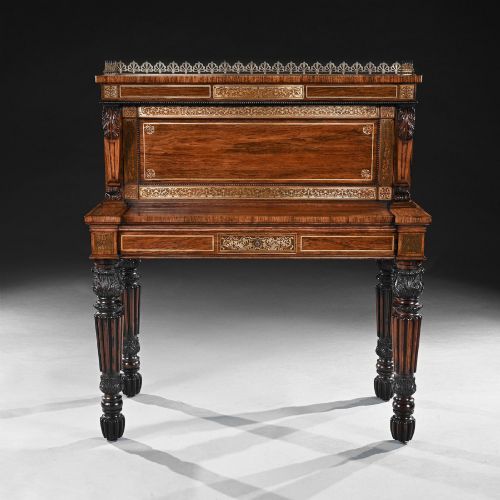
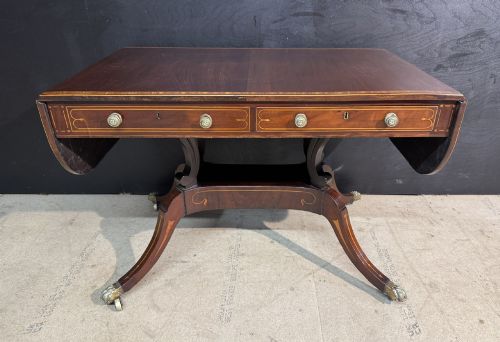
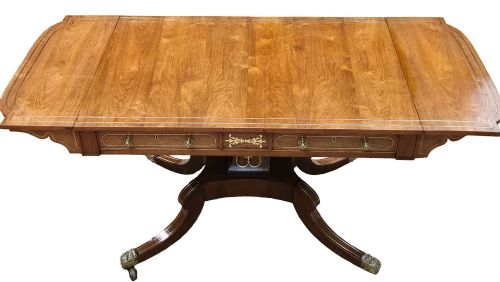
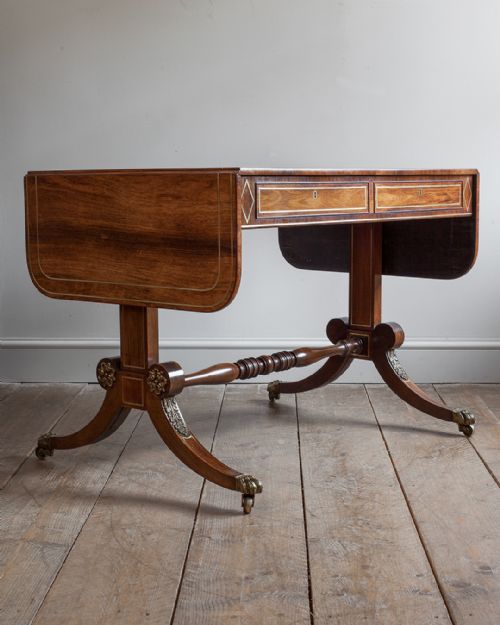
The selection ranges from tabletop campaign boxes to substantial pedestal desks and sofa tables fitted with brass stringing and foliate motifs. Such items represent the intersection of functional utility and decorative ambition characteristic of nineteenth-century British craftsmanship.
How They Were Made
Cabinet-makers relied heavily on dense tropical hardwoods, predominantly rosewood and mahogany, supplemented by decorative accents of coromandel, satinwood, and ebony. These timbers provided a dark, uniform ground that contrasted sharply with bright metal embellishments.
Brass inlay was meticulously hand-cut and pressed into channels carved directly into the wooden surface, often following elaborate foliate or geometric patterns. Subsidiary materials such as leather writing inserts, glass inkwells, and fabric linings completed the internal fittings of desks and slope boxes.
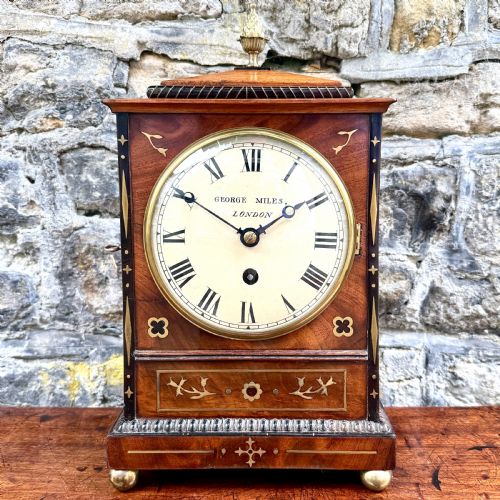
Current listings feature diverse forms including sofa tables, library clocks, and writing slopes produced across the nineteenth century.
What Varies In Quality
The distinction between tiers rests upon the precision of the brass inlay work and the selection of timber veneers. Superior examples display tight, flush metalwork without gaps, alongside highly figured rosewood or mahogany grains that demonstrate careful book-matching.
Internal complexity and the retention of original components dictate the standing of individual pieces. Desks featuring fitted secret drawers, original cut-glass inkwells, and intact locking mechanisms achieve greater distinction than those with replaced hardware or simplified secondary woods.
Gillows Oxford Street Workshop·Bush of London·S Simpson Southampton·Wilkinson Leicester
The Regency Brass Inlaid Desk Glossary
- Writing Slope
- A portable desk featuring a slanted hinged lid that opens to reveal compartments for paper, pens, and ink. These slope boxes were designed for lap use or placement on tables.
- Brass Inlay
- Thin strips or cut sheets of brass embedded into the wooden surface of furniture to form decorative patterns. This technique requires precise chiselling to ensure the metal sits level with the surrounding timber.
- Rosewood
- A heavy, dark timber with distinct figuring utilised extensively during the nineteenth century for high-status cabinet work. Its rich colour provides a strong visual contrast against polished brass.
- Secretaire
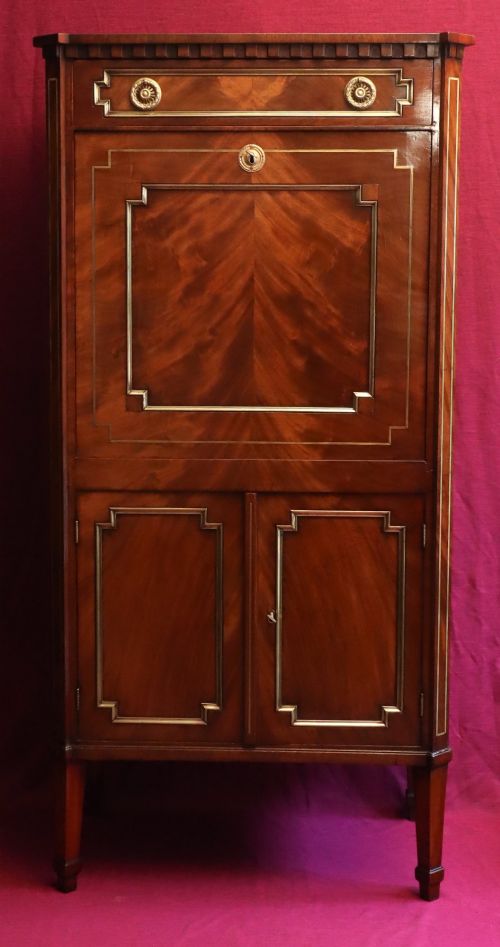
- A cabinet or desk incorporating a drop-front writing flap that conceals a collection of small drawers and pigeonholes. This form offers enclosed storage while maintaining a compact footprint.
- Campaign Box
- A portable storage chest or desk constructed for travel and military use, typically fitted with flush brass handles and reinforced corners. These items prioritize robust construction alongside compact organisation.
Regency Brass Inlaid Desk: Frequently Asked Questions
How do I identify a genuine period desk?
Examine the timber selection, construction joints, and the method of brass insertion. Genuine nineteenth-century examples utilise old-growth hardwoods and hand-cut brass channels rather than modern adhesives.
Look for signs of hand-tooling on the secondary woods inside drawers and compartments. Consistency in the ageing of the materials provides further indication of period authenticity.
What is the difference between a slope and a table?
A writing slope is a portable box with a slanted lid designed for sitting on top of other furniture or a lap. A writing table is a freestanding piece of furniture supported by legs or pedestals.
Slopes generally contain internal compartments for inkwells and stationery storage. Tables offer a fixed surface for writing alongside drawers built directly into the frieze.
How should I care for brass inlaid wood?
Maintain a stable indoor environment away from direct sunlight and rapid temperature fluctuations to protect the timber and metal. Apply traditional wax polishes sparingly to nourish the wood without loosening the brass.
Clean the metal elements gently with a soft cloth to avoid scratching the surrounding veneer. Ensure that cleaning products do not seep into the joints where the brass meets the wood.
Were these desks used for travel?
Certain compact forms such as campaign boxes and lap desks were specifically constructed for travel and military deployment. These pieces feature robust corner mounts and flush handles to withstand movement.
Larger library tables and pedestal desks remained stationary in permanent rooms. Their heavy rosewood or mahogany construction suited fixed domestic and institutional studies.