

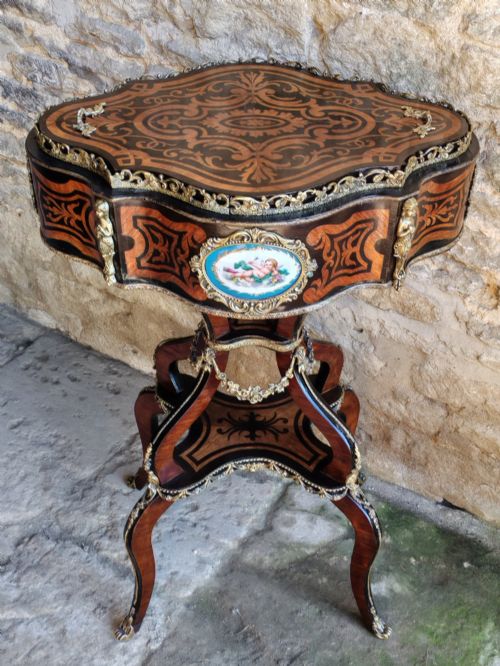
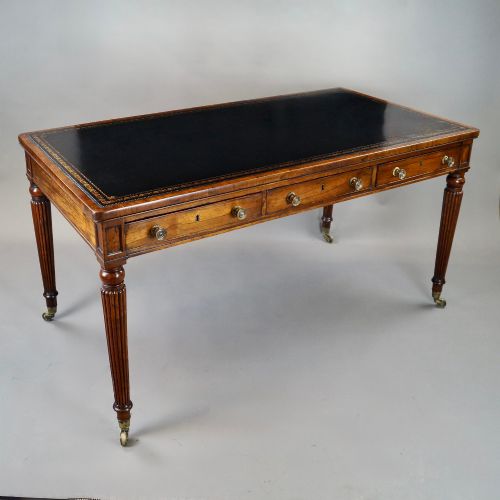
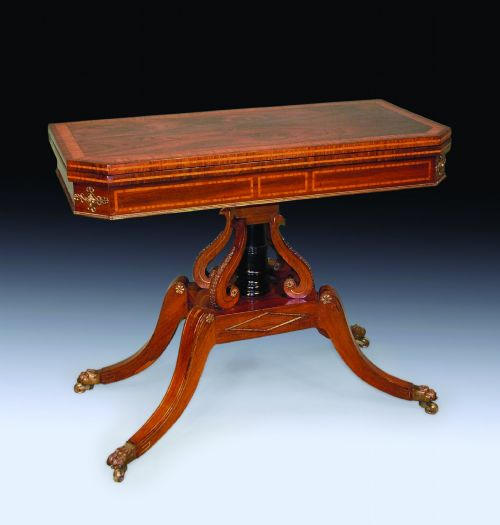
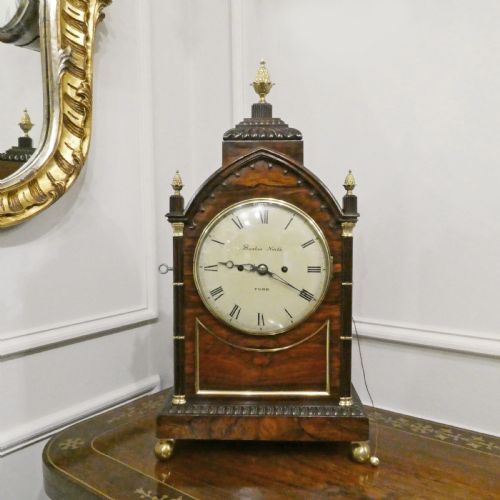
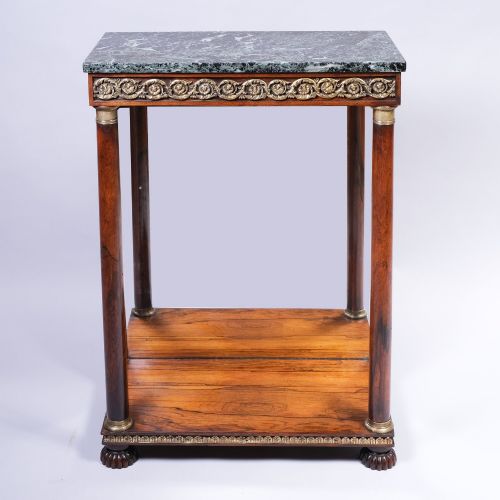


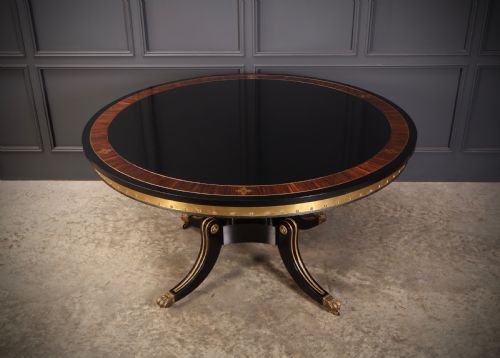
Brass Mount Rosewood Table
A brass mount rosewood table brings dense tropical timber and bright metalwork together in forms designed for formal rooms.
Brass Mount Rosewood Table
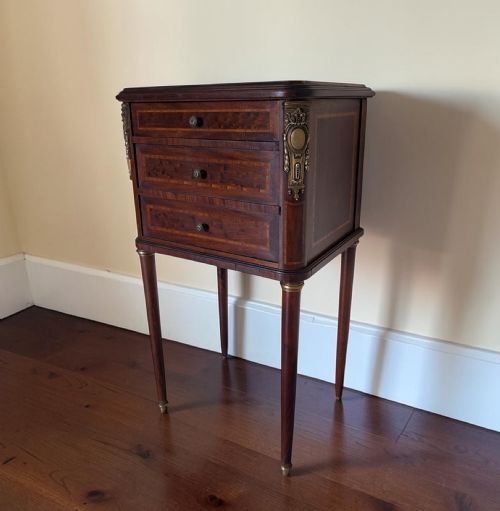
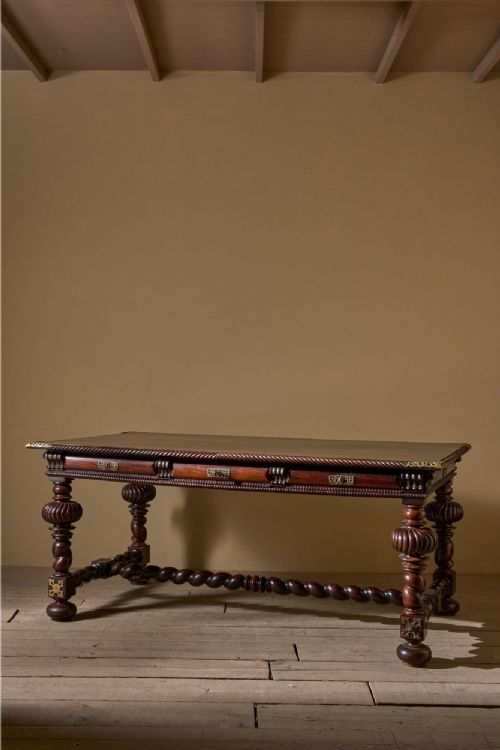
A brass mount rosewood table is a piece of antique furniture built around a core of figured tropical hardwood and finished with cast metal mounts or delicate brass inlay. When searching this phrase, buyers encounter several distinct forms spanning multiple decades of design.
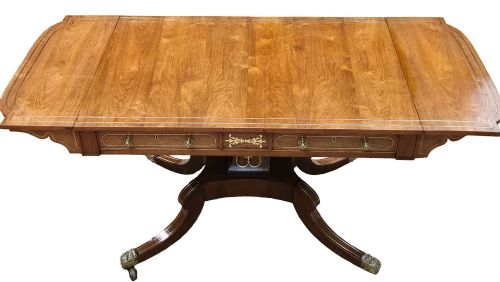
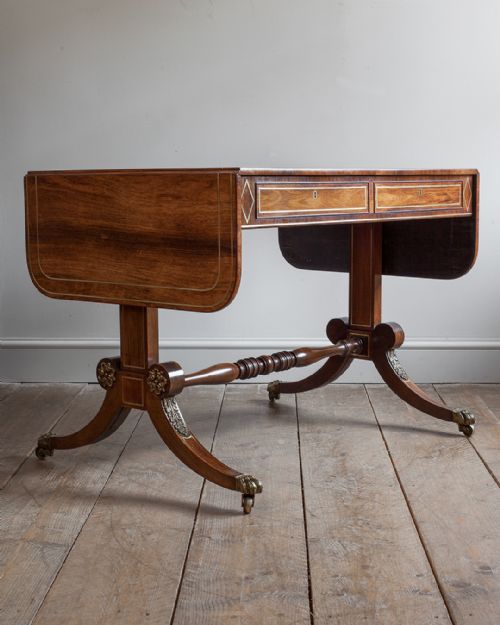
The most common versions met on this page are writing tables, sofa tables, and card tables originating from the Regency and Victorian periods. French occasional and centre tables from the later nineteenth century also appear frequently.
Makers utilised rosewood for its dark grain and polished surface, often combining it with satinwood, kingwood, or amboyna. These woods form the foundation of pieces designed for libraries, drawing rooms, and studies.
Materials and construction
Makers constructed these tables using solid rosewood or thick veneers laid over secondary timbers to display the rich, dark grain of the wood. Brass and ormolu mounts were cast and chased, then secured to the timber with small brass pins.
Inlaid pieces feature precision cutting of brass stripwork, lemon wood, or satinwood set directly into channels carved in the rosewood surface. Ormolu, consisting of gilded bronze, provides three-dimensional decorative accents around table edges and legs.
Listings feature rosewood tables spanning from the Regency period through the Victorian era into the 1920s, incorporating brass, ormolu, and mahogany.
Judging quality
Quality rests upon the crispness of the cast brass or ormolu mounts and the precision of any inlaid stringing. Superior examples display hand-chased detail on the metal and seamless integration into the timber surround.
The choice of rosewood veneer grain and the stability of the underlying construction also separate fine workshop pieces from standard commercial output. Well-executed crossbanding and matching timber selections indicate high craftsmanship.
Gillows·Donald Ross·John MaClean·Barber & North of York
The Brass Mount Rosewood Table Glossary
- Ormolu
- Gilded bronze used for decorative mounts on furniture. The technique involves applying a gold amalgam to cast bronze before heating.
- Crossbanding
- A strip of veneer laid perpendicular to the grain of the main surface. This frames the top of a table with contrasting timber direction.
- Sofa table
- A rectangular table designed to stand in front of a sofa, typically featuring drop leaves at either end. These often include two small drawers.
- Marquetry
- Patterns created on furniture surfaces using thin pieces of wood veneer and other materials. It differs from inlay by covering the entire surface design.
- Bonheur de jour
- A small, light lady's writing desk featuring a set of drawers and compartments on top. They became popular during the eighteenth and nineteenth centuries.
Brass Mount Rosewood Table: Frequently Asked Questions
What is a sofa table used for?
Sofa tables served as versatile writing or work tables positioned behind sofas in nineteenth-century drawing rooms. Their drop leaves allowed them to expand when needed for reading or writing.
Today, they function well as console tables against walls or behind modern seating arrangements.
How do I care for rosewood furniture?
Rosewood requires stable humidity and protection from direct sunlight to prevent the timber from drying out or fading over decades. Regular dusting with a soft, dry cloth maintains the polished surface without the need for heavy waxes.
Keep these tables away from direct heat sources such as radiators to protect the underlying veneer and glue.
How do I identify a Regency table?
Regency tables date from the early nineteenth century and often feature classical proportions, brass inlay, and rosewood veneers. Common supports include pillar pedestals with scroll feet or sabre legs.
Later Victorian interpretations often incorporate heavier carving and more elaborate marquetry or ormolu mounts.
What is the difference between inlay and parquetry?
Inlay involves inserting contrasting materials such as brass, satinwood, or mother-of-pearl into carved recesses within the solid wood or veneer. The surrounding timber remains the primary visual surface.
Parquetry uses geometric arrangements of wood veneers to cover the entire top surface of the table in patterns like cubes or chequers.