
Black Gilt Desk
A black gilt desk brings dark, polished surfaces and bright metallic detail together for a striking study piece.
Black Gilt Desk
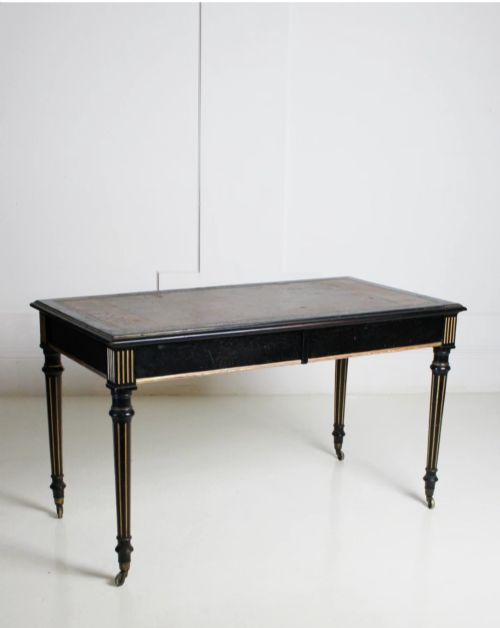
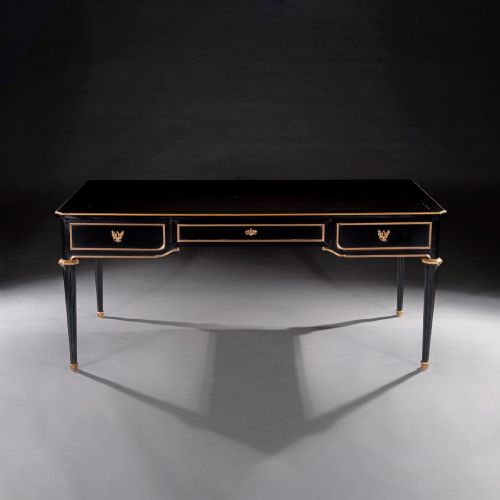
A black gilt desk combines dark ebonised or lacquered timber with metallic ornament to create a striking writing surface. When searching for a black gilt desk, buyers encounter forms ranging from nineteenth-century French bureau plat writing tables and Napoleon III bonheur-du-jour desks to earlier chinoiserie lacquered examples.
The materials recorded in these listings show a strong preference for ebonised wood and lacquer finished with gilt bronze or brass. Alongside formal writing tables, the evidence includes related library furniture and work tables sharing the same dark and gilded palette.
Origin and period heavily shape these pieces, with nineteenth-century French and English workshop traditions dominating the selection. Pieces span the Regency, Victorian, and Napoleon III eras, often incorporating chinoiserie motifs or classical revival styles.
Materials and technique
Construction relies on timber substrates finished with deep black ebonisation or layers of lacquer to achieve a reflective, dark ground. Artisans then applied gilt bronze mounts, ormolu, or painted gold decoration to accent the structural lines and decorative panels.
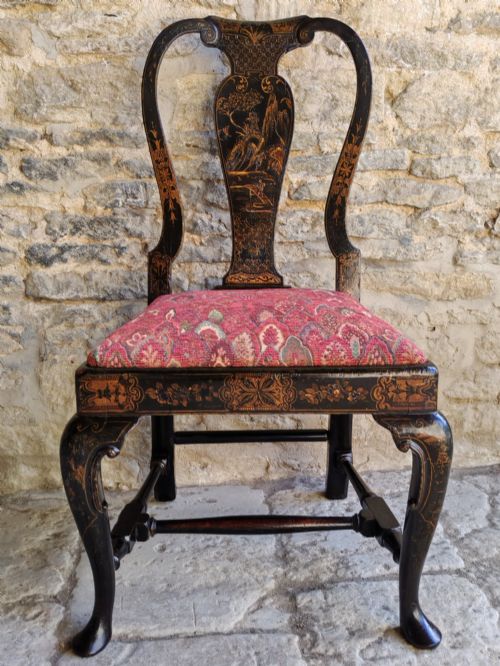
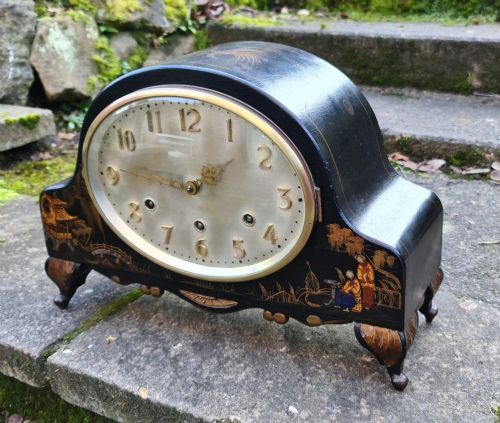
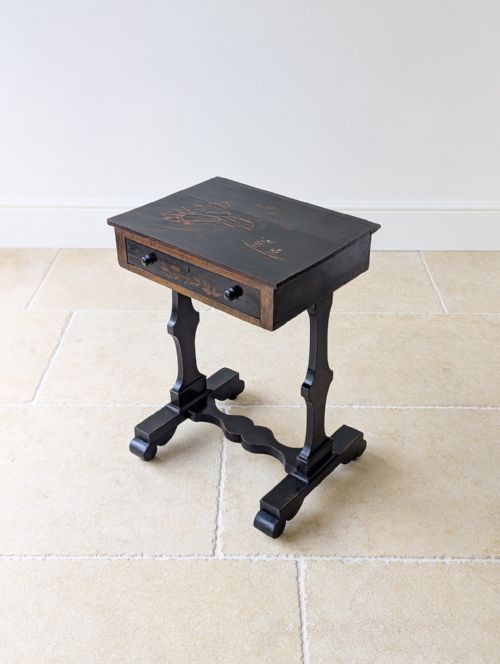
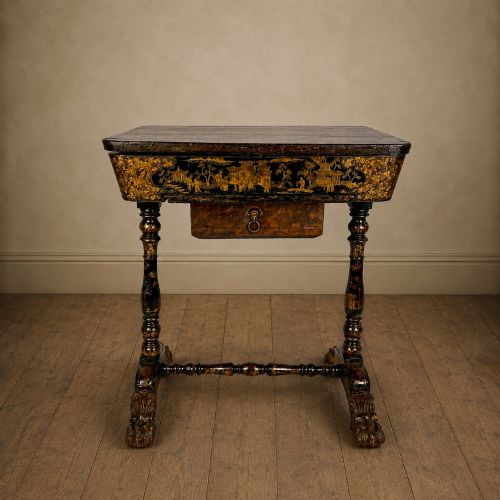
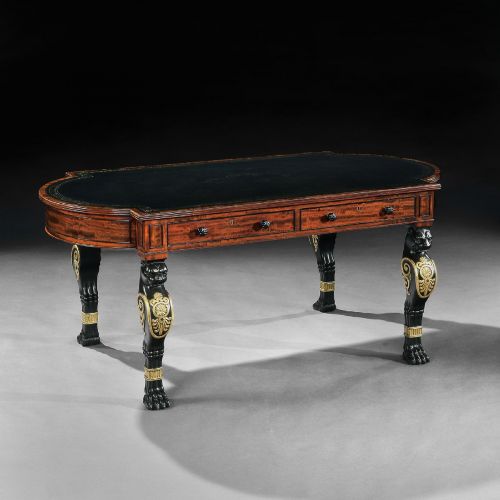
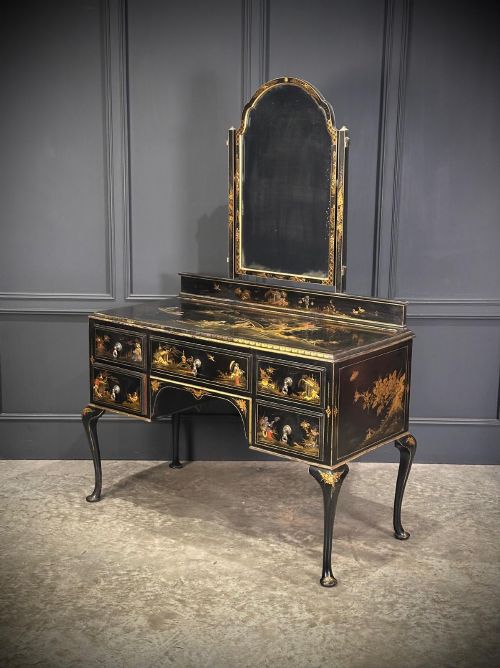
Surface ornamentation often draws on chinoiserie traditions, employing hand-painted gold motifs over dark lacquer to depict figures and landscapes. Metal elements such as brass handles, mounts, and lion's paw feet were cast and chased before being secured to the wooden frames.
Some nineteenth-century writing desks doubled as sewing tables, hiding silk compartments beneath their dark, gilded lids.
Quality differences
The refinement of the surface finish dictates much of the distinction between examples, particularly in the depth of the ebonisation and the clarity of the lacquer. Hand-applied gilding and the crispness of cast bronze or ormolu mounts show the level of artisan skill involved in the construction.
Structural integrity and the fidelity of period details separate standard production from exceptional pieces. Finer examples retain integrated leather writing surfaces, precise joinery, and well-preserved decorative schemes that reflect their specific stylistic origins, such as French Empire or Regency design.
Maison Millet·George Smith·Baetens London·Pierre-Augustin Caron de Beaumarchais·Sacre
The Black Gilt Desk Glossary
- Ebonised
- Wood treated to imitate ebony through staining or painting. This dark finish provides a high-contrast ground for gilt decoration.
- Gilt bronze
- Bronze metal coated with a thin layer of gold or gold leaf. It supplies bright metallic highlights against dark wooden surfaces.
- Bureau plat
- A flat-topped freestanding writing table. These pieces typically feature drawers beneath the writing surface and decorative bronze mounts.
- Bonheur-du-jour
- A small light lady's writing desk featuring an upper section with shelves or small drawers. This French form dates prominently to the nineteenth century.
Black Gilt Desk: Frequently Asked Questions
What is a black gilt desk?
A black gilt desk is a writing table finished in dark ebonised wood or black lacquer, accented with gold paint, brass, or gilt bronze mounts. These pieces draw on styles such as Regency, French Empire, and chinoiserie.
Such furniture was designed for formal studies, libraries, and drawing rooms. The dark and metallic palette offered a striking visual presence in elite nineteenth-century interiors.
How do I style a black gilt desk?
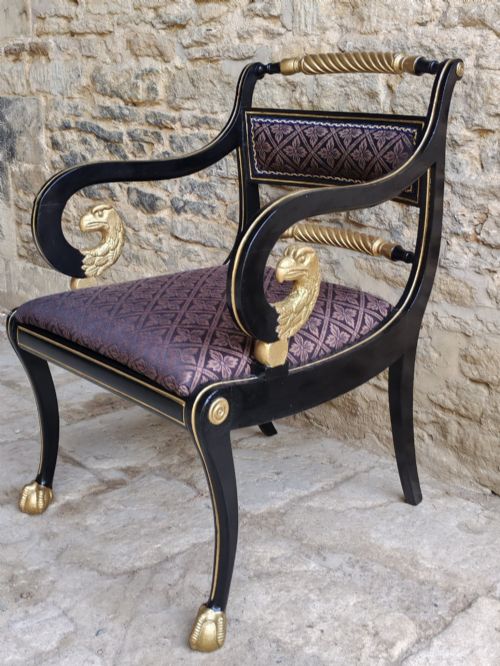
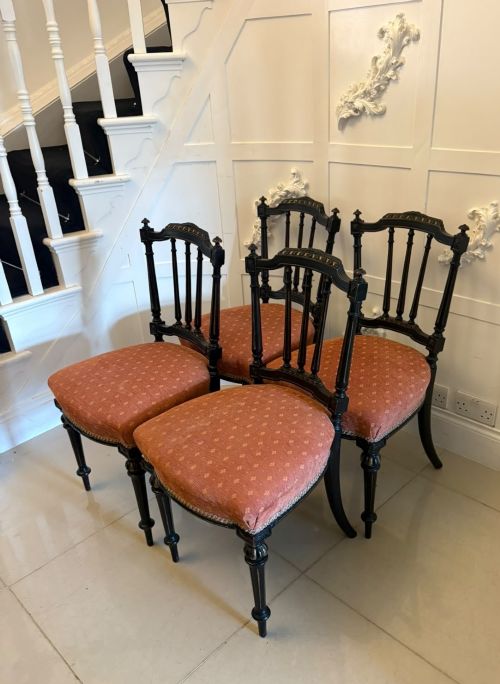
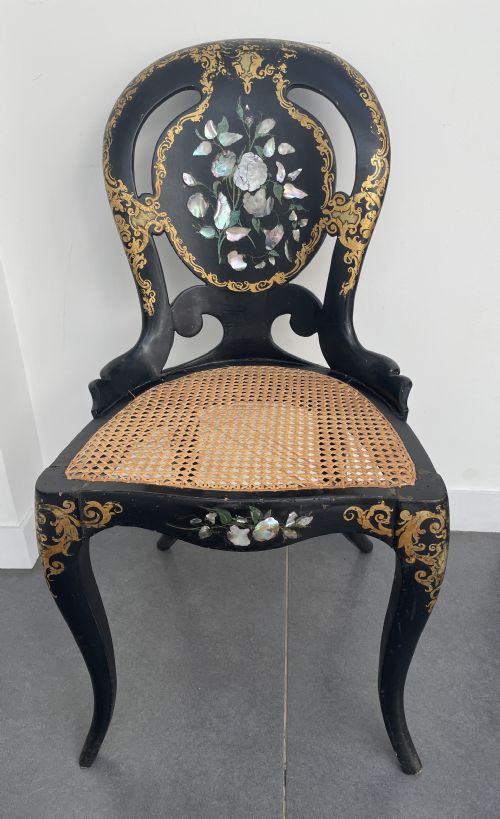
Place the desk as a freestanding centrepiece in a room to showcase its decorated sides and gilt mounts. Pair it with complementary seating like an antique ebonised library chair or armchair.
Keep surrounding lighting warm to reflect off the polished lacquer and metallic details. Avoid competing patterns nearby so the dark surface and gold highlights remain the focal point.
How do I identify the period?
Examine the underlying timber construction, the style of the cast bronze mounts, and the specific decorative motifs. Regency and French Empire pieces often display classical elements like column forms and paw feet, while Napoleon III and Victorian examples incorporate elaborate ebonising and lacquer.
Checking secondary woods used in the drawer linings and interior framing helps confirm the era of manufacture. Hardware styles and construction methods also align with nineteenth-century workshop practices.
Are these desks suitable for daily use?
These desks function well for everyday writing and computer work provided they are treated with care. Many feature integrated leather writing inserts that offer a durable surface for daily tasks.
Protect the lacquer and ebonised finish from direct moisture, heat, and excessive sunlight. Regular dusting with a soft cloth preserves the gilded details and polished timber.