
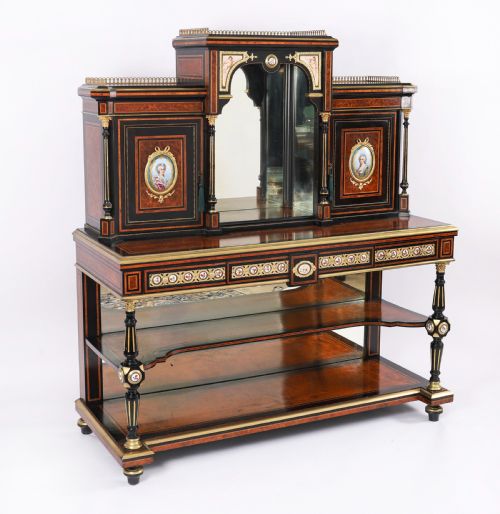


French Ebonised Writing Desk
A french ebonised writing desk combines dark wood with gilt mounts to create a striking surface for correspondence.
French Ebonised Writing Desk
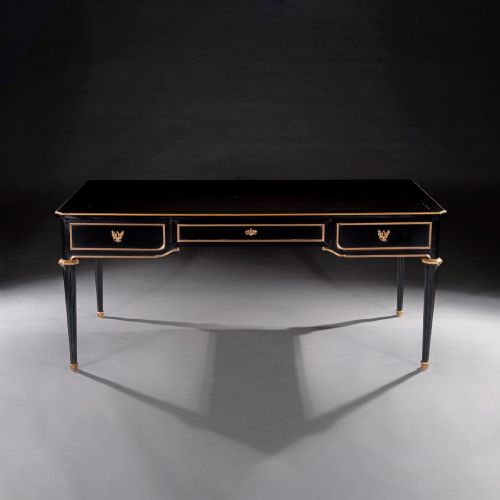
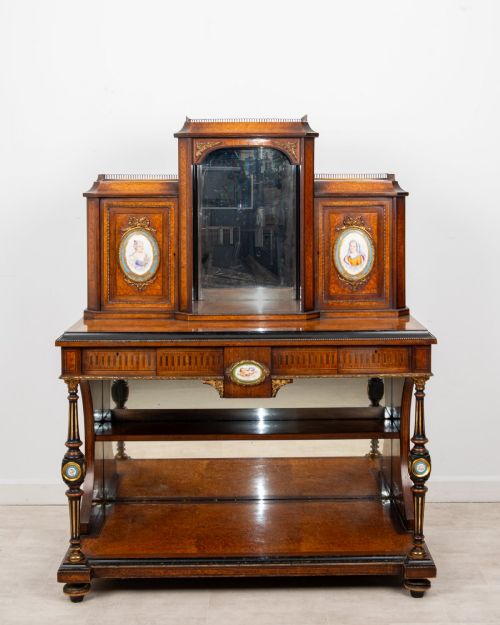
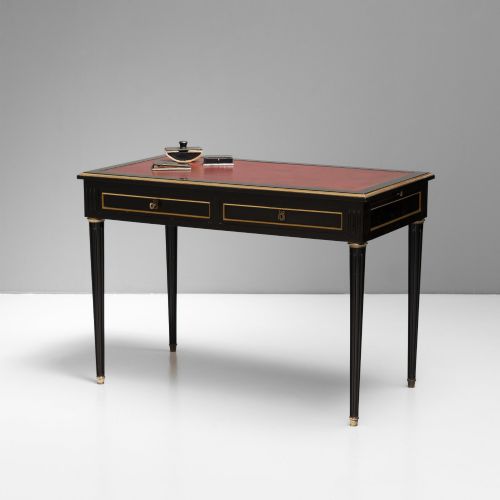
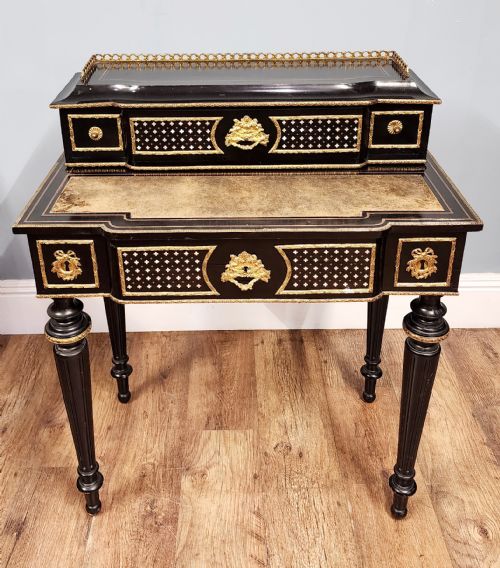
A french ebonised writing desk represents a sophisticated category of nineteenth-century furniture designed for study and letter writing. These pieces typically manifest as bureau plat writing tables or upright bonheur du jour cabinets featuring dedicated compartments.
The selection ranges from Victorian interpretations of French revival styles to pieces bearing direct nineteenth-century continental origins. Buyers encounter various formats, from freestanding centre tables to elaborate desks equipped with brass and tortoise-shell inlay.
Makers working within the Napoleon III period and later Victorian eras produced these items to serve both functional writing purposes and formal reception rooms. The forms rely heavily on historical revivals, principally Louis XV and Louis XVI aesthetics.
Materials and construction methods
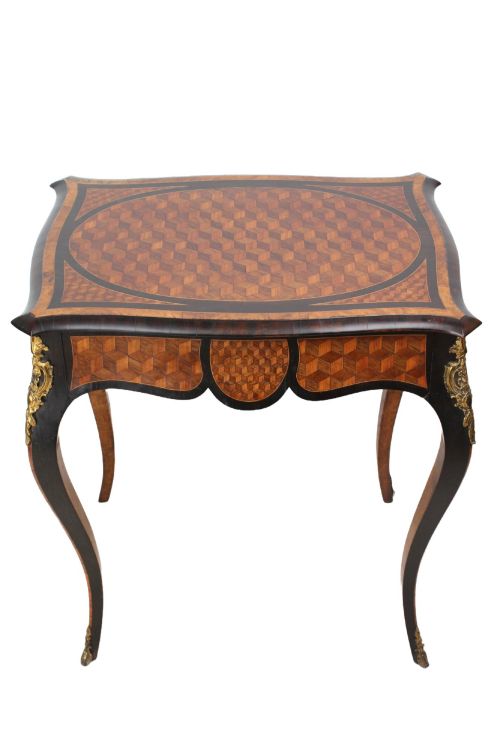
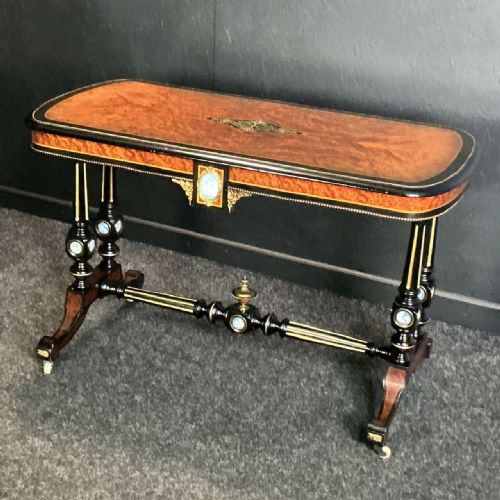
Makers built these desks upon structural timbers such as walnut or mahogany before applying an ebonised finish to achieve a deep black appearance. Artisans then integrated contrasting materials including amboyna wood, burr walnut, and exotic veneers.
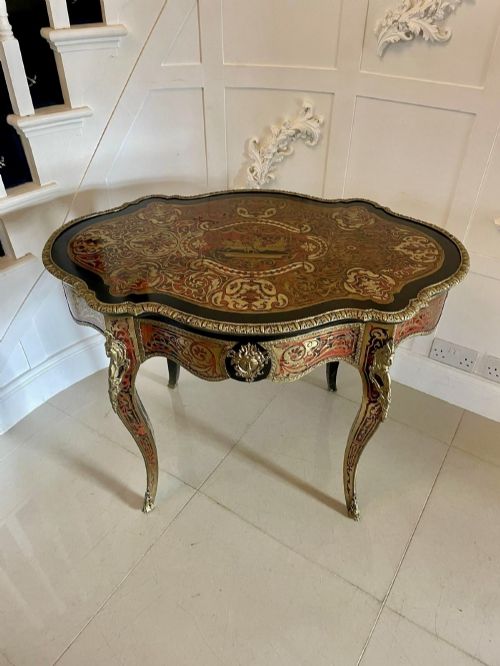
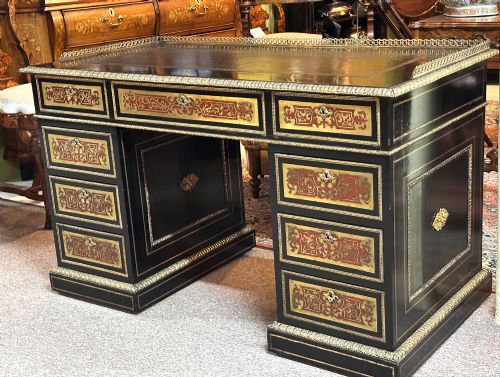
Metalwork played a defining role in the construction, utilising ormolu mounts, cast bronze, and inlaid brass strips known as boulle work. Surfaces frequently incorporated tooled leather writing inserts alongside porcelain plaques and occasionally pietra dura panels.
Some nineteenth-century writing desks conceal secret compartments behind sliding panels for storing private letters and hidden treasures.
Distinctions in craftsmanship
Quality reveals itself in the precision of the brass inlay and the crispness of the cast ormolu mounts fixed to the corners and legs. Superior examples display meticulous parquetry or marquetry patterns that align seamlessly across drawers and writing surfaces.
The integrity of the ebonised finish and the selection of secondary timbers inside the drawers separate standard workshop production from pieces made by premier cabinet makers. Maker signatures stamped into the bronze mounts or timber frames elevate the standing of a desk considerably.
JAS Shoolbred·Maison Millet·Paul Sormani·Diehl Paris·Mathieu Befort
The French Ebonised Writing Desk Glossary
- Ebonised
- Wood treated to imitate ebony through staining or painting. This dark finish provides a high-contrast background for gilt metal mounts.
- Ormolu
- Gilded bronze used for decorative mounts and feet. The technique involves applying gold amalgam to cast bronze.
- Bonheur du Jour
- A light lady's writing desk featuring an upper section with shelves or small drawers. These compact writing cabinets date predominantly from the nineteenth century.
- Boulle
- Marquetry technique incorporating brass and tortoiseshell. Developed in France, this method creates intricate metallic patterns against a dark ground.
- Bureau Plat
- A freestanding double-sided writing table with drawers in the frieze. These desks lack the superstructure found on bonheur du jour models.
French Ebonised Writing Desk: Frequently Asked Questions
What is a bonheur du jour?
A bonheur du jour is a small, light writing desk featuring an enclosed cabinet or tiered shelving upon the main writing surface. These desks appeared frequently during the nineteenth century in various revival styles.
They were originally intended for women to use for light correspondence and display in private chambers rather than grand libraries.
How do I identify boulle work?
Boulle work consists of intricate marquetry formed from sheets of tortoiseshell and brass cut together to create interlocking patterns. This decorative technique appears across many nineteenth-century French tables and desks.
The metal elements catch the light while the dark shell provides a rich, mottled background texture.
Where should I place a freestanding desk?
Freestanding tables and bureau plat desks are finished on all four sides so they can sit in the middle of a room rather than against a wall. This allows access to drawers from the front while displaying the decorative back panel.
Ensure the surrounding floor space accommodates chairs and allows clear movement around the piece.
How do I care for ebonised wood?
Ebonised surfaces require gentle dusting with a soft, dry cloth to prevent micro-abrasions on the dark finish. Avoid harsh chemical cleaners and wax formulations that build up a heavy residue over time.
Keep the timber away from direct sunlight and steady heat sources to prevent the wood from drying and cracking.