

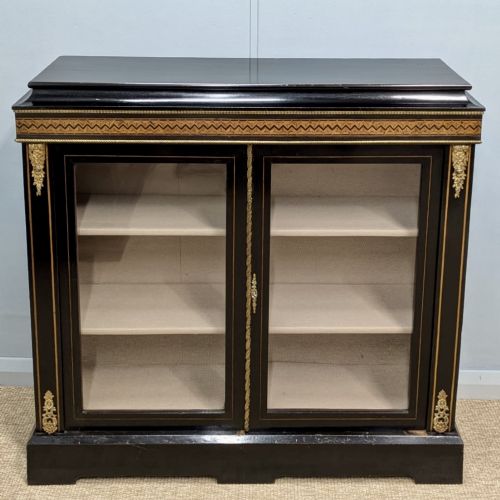
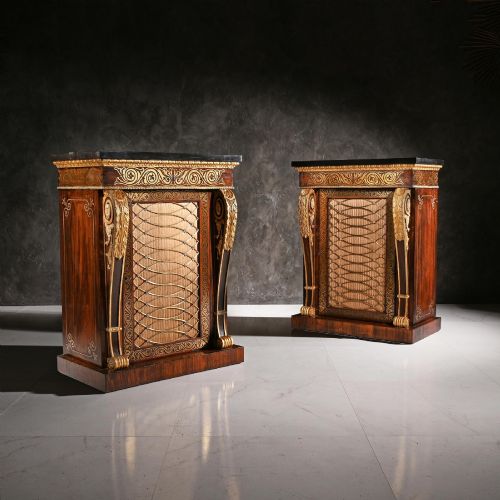
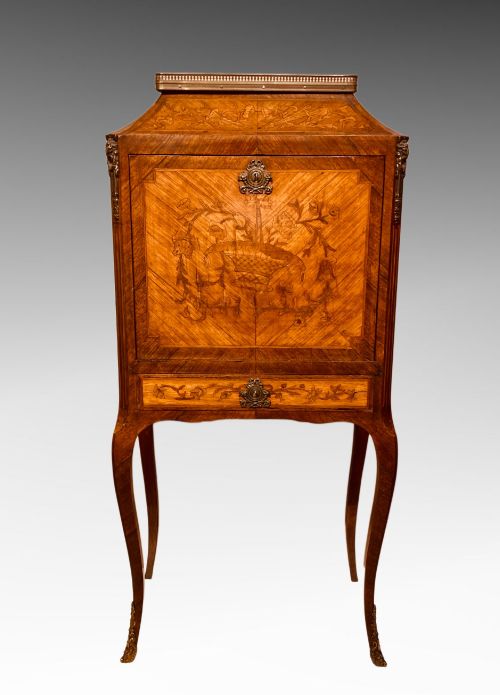
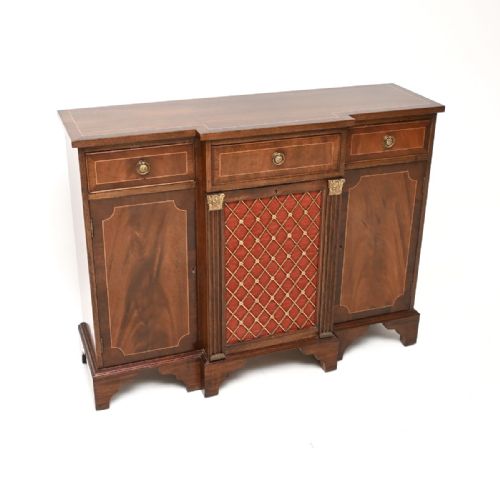
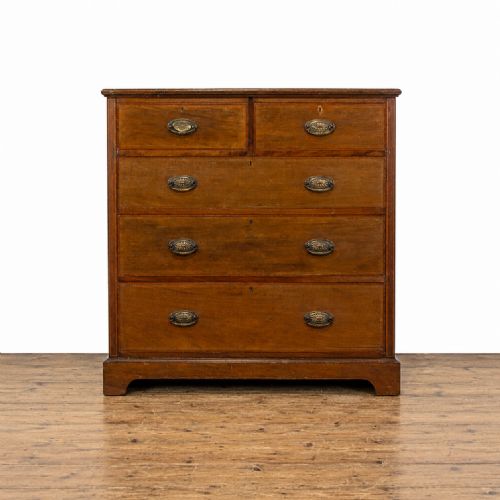
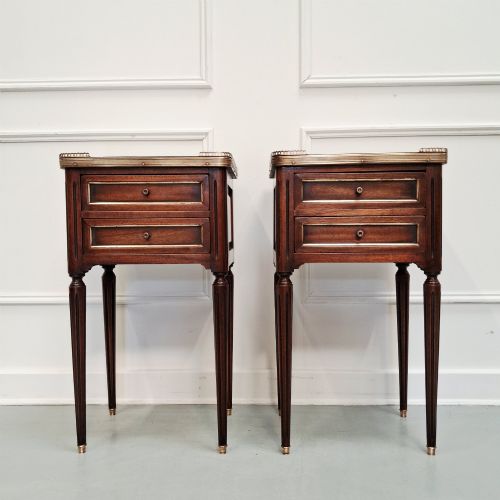
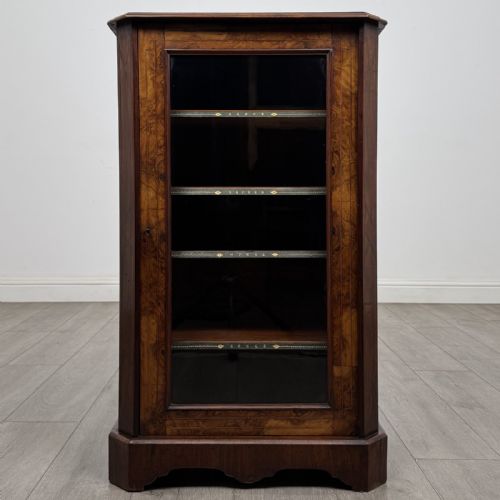
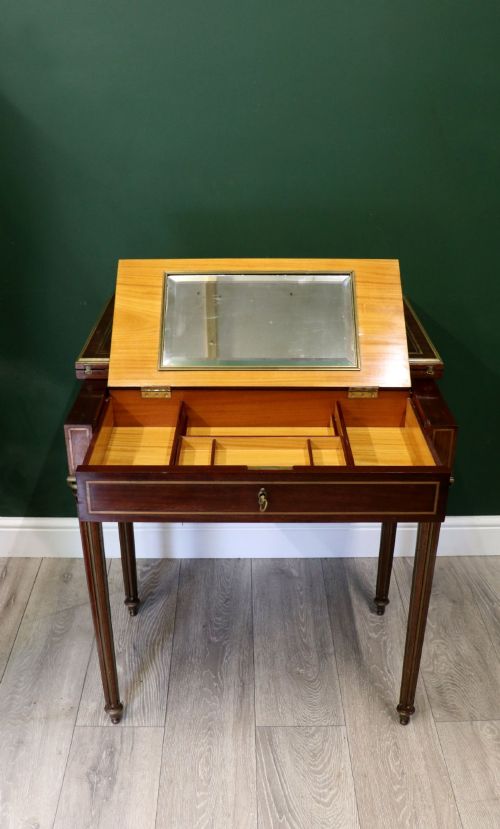

Brass Inlaid Cabinet
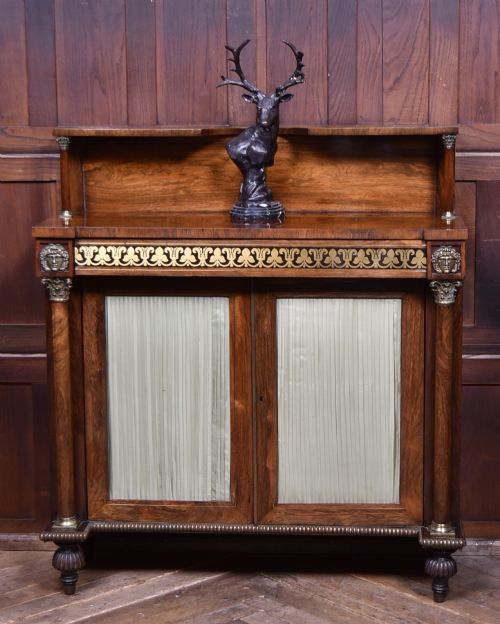
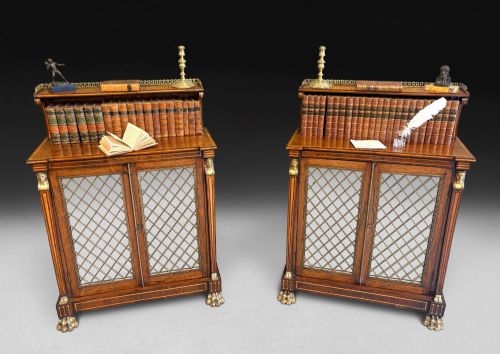
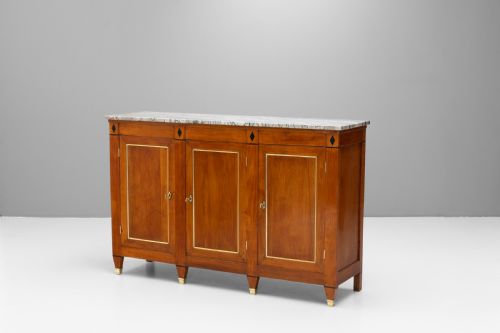
A brass inlaid cabinet brings refined linear contrast to a room through bright metal set into dark woods.
Brass Inlaid Cabinet
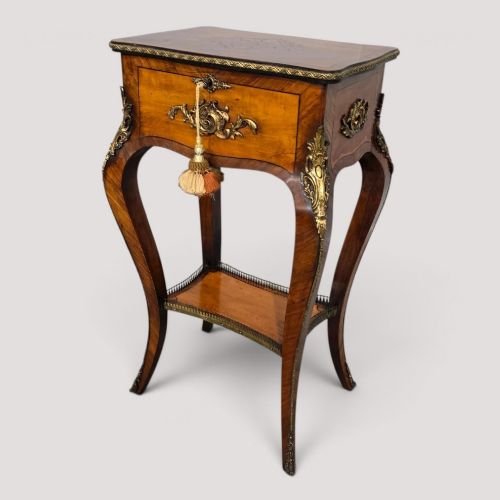
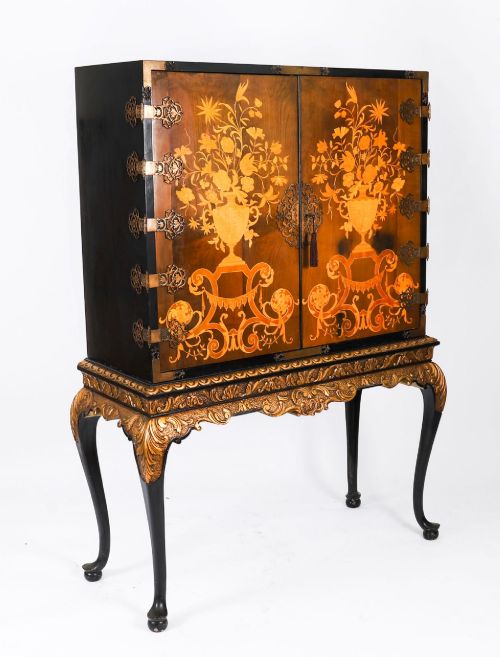
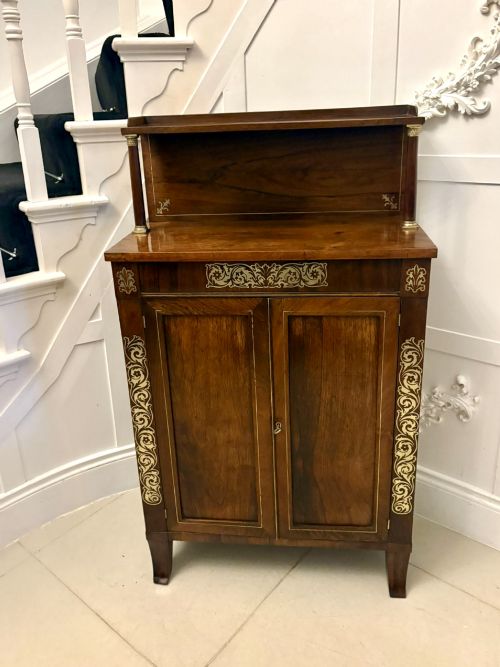
A brass inlaid cabinet is a piece of furniture defined by metal strings, brass lines, or elaborate marquetry set flush into timber surfaces. When searching for a brass inlaid cabinet, buyers encounter diverse forms ranging from compact pier cabinets and bedside units to large bookcases, chiffoniers, and sideboards.
The pieces appearing on this page span several centuries, with prominent representation from the Regency and Victorian periods. Rosewood and mahogany serve as the primary foundational timbers for these cabinets, frequently accompanied by ebonised wood or walnut.
Makers and designers from the Regency era through to the late Victorian period utilised this metalwork to highlight doors, friezes, and panel borders. Buyers will find variations including glazed display cases, open shelving, and closed storage designed for books, display, or domestic utility.
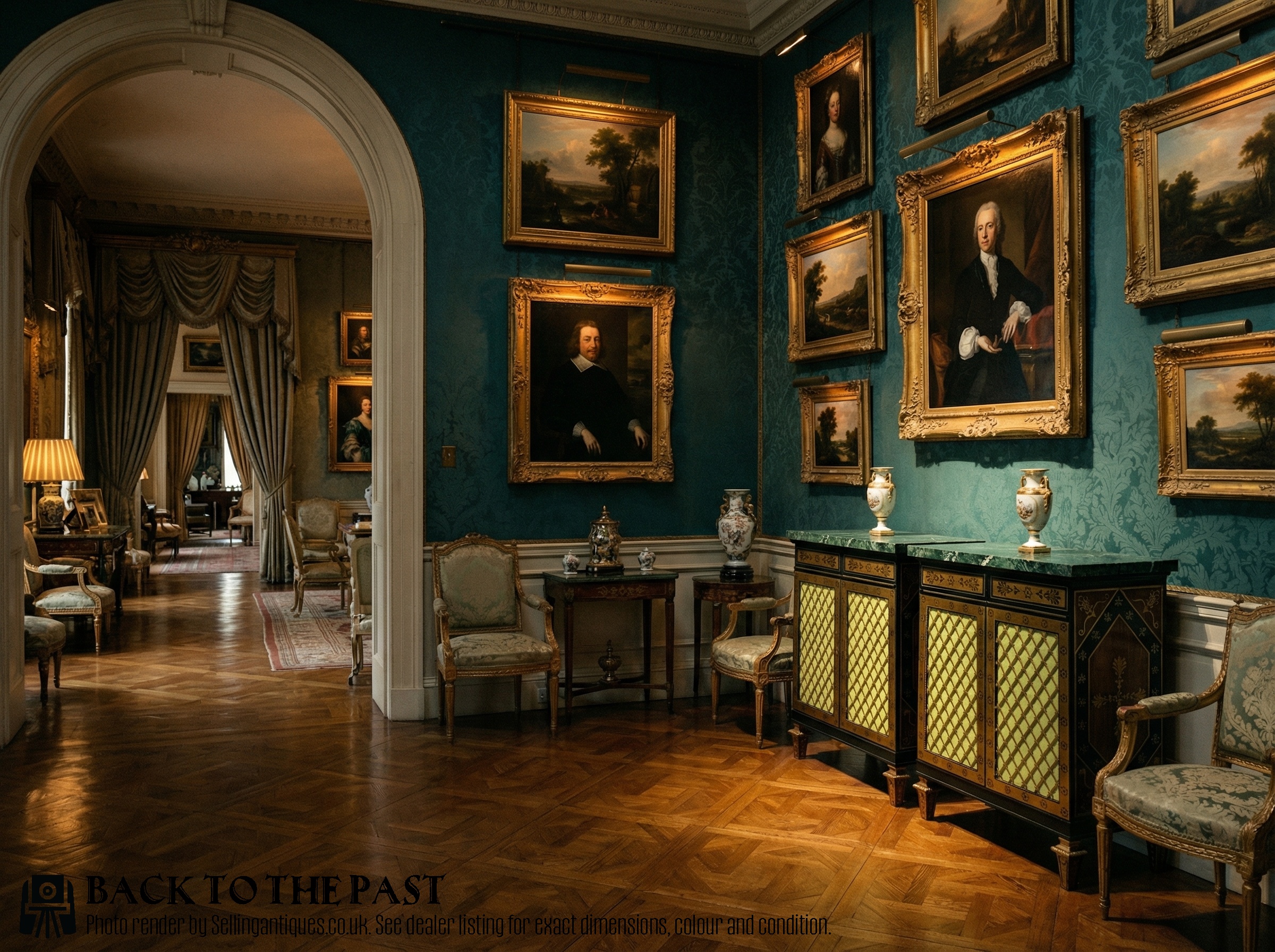
Materials and Construction Techniques
Craftsmen built these cabinets using dense cabinet timbers such as rosewood, mahogany, and walnut, often applying veneers over secondary woods to create stable panels. Ebonised finishes and pollard oak also appear, providing dark or figured backdrops designed to make metallic inlay stand out.
The brass inlay technique involved hand-cutting precise channels into the timber surface to receive thin strips or stamped sheets of brass. Artisans secured the metal with animal glue and pins, sometimes combining the brass work with contrasting ebony, pewter, or mother-of-pearl.
Additional ornamentation often included ormolu mounts, marble tops, and glazed doors framed by beaded mouldings. Cabinetmakers finished the timber surfaces with French polish to seal the wood and protect the flush-set metal decoration.
Brass Inlaid Cabinet Retail Price Guide 2026
Typical asking prices for brass inlaid cabinet among the pieces listed under this phrase on Sellingantiques today, from the lower quarter to the upper quarter. They describe what is for sale here now, not the wider market.
Listings demonstrate that rosewood and mahogany form the primary wood choices for brass inlaid cabinets from the nineteenth century.
Distinctions in Quality
Quality in these cabinets is determined by the precision of the metalwork and the grade of the primary timber. Superior examples feature tightly fitted brass lines with minimal filler, while lesser pieces show wider gaps around the metal insertions.
The choice and figuring of the timber foundation separate standard items from exceptional ones. Highly figured rosewood, burr walnut, and choice mahogany signify superior workshops, whereas plain veneers indicate standard commercial production.
Hewetsons London·Louis Constantin Le Gaigneur·Pitcher·Collinson and Lock
The Brass Inlaid Cabinet Glossary
- Pier cabinet
- A low cabinet designed to stand against the wall space between windows. These pieces often feature glazed doors and decorative brass mounts.
- Chiffonier
- A compact sideboard or low cupboard developed during the Regency period, commonly fitted with shelves or a raised superstructure. They frequently incorporate intricate brass stringing.
- Boulle work
- A style of marquetry using brass and tortoiseshell inlaid in contrasting patterns, named after the cabinetmaker André-Charles Boulle. Pieces utilising this technique often feature rich ebonised carcases.
- Marquetry
- The art of applying pieces of veneer to a structure to form decorative patterns and pictures. Craftsmen combined woods with brass and other metals to achieve complex pictorial designs.
- Stringing
- Thin strips of contrasting wood or metal let into the surface of furniture to form linear borders. This technique outlines drawers, doors, and tabletops.
Brass Inlaid Cabinet: Frequently Asked Questions
What is a brass inlaid cabinet used for?
These cabinets served multiple domestic functions depending on their specific form, ranging from the display of porcelain in a pier cabinet to book storage in a chiffonier.
Today, they function as focal storage pieces in living rooms, hallways, and dining spaces, offering display capacity alongside enclosed storage.
How do I date a brass inlaid cabinet?
Dating relies on timber selection, structural style, and the profile of the brass work. Regency examples frequently utilise rosewood with fine brass stringing, while Victorian iterations often feature ebonised wood or walnut with heavier mounts.
Examining secondary woods inside drawers and the construction of the carcase provides further confirmation of the period.
How do I care for brass inlay on wood?
Maintenance requires keeping the wood and metal clean using dry or slightly damp soft cloths without abrasive polishes. French polished surfaces respond best to traditional beeswax applied sparingly.
Avoid excessive moisture and direct sunlight to prevent the timber from shrinking and loosening the metal inlay over time.
What woods were used for these cabinets?
Cabinetmakers relied heavily on dense tropical hardwoods, with rosewood and mahogany appearing most frequently across the Regency and Victorian eras. Walnut, burr walnut, and ebonised woods were also utilised to provide contrasting dark grounds for the metalwork.
Secondary woods like oak or pine are typically found inside carcases and drawer linings.