





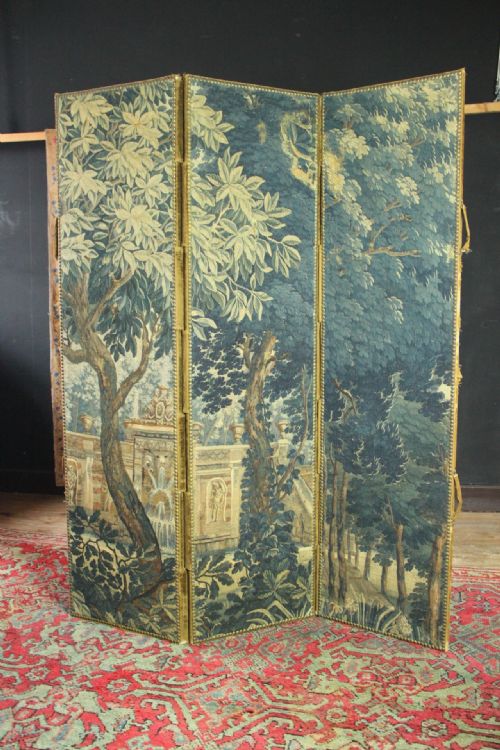

Blue Wool Woven Tapestry
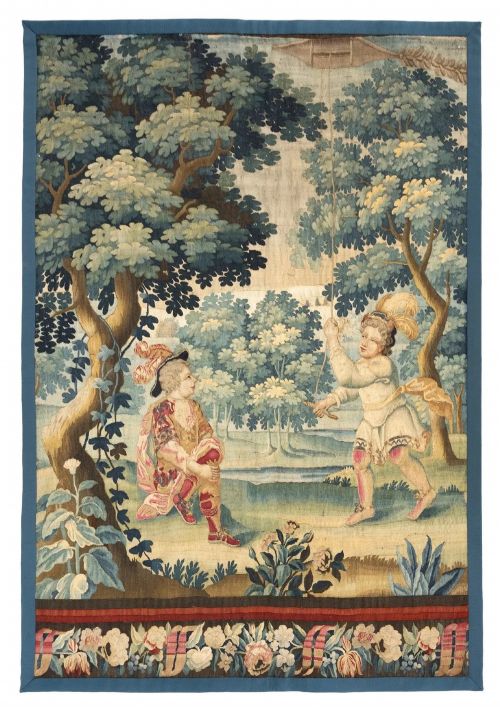
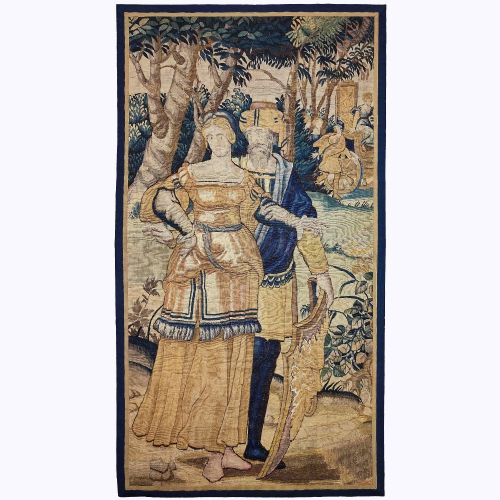
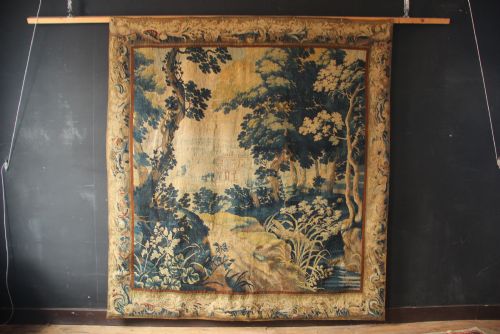
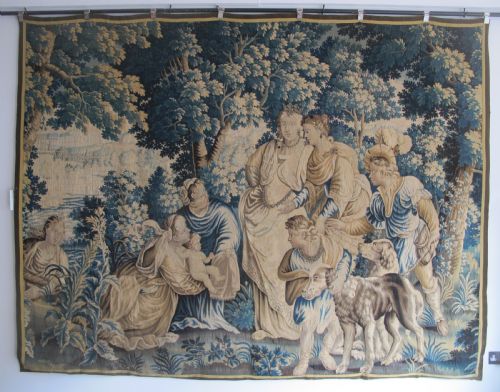
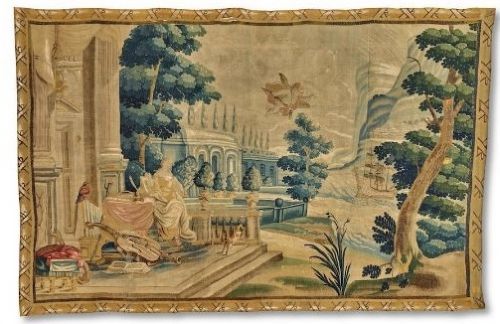
These large blue wool woven tapestry pieces range from grand seventeenth-century Flemish verdure panels to nineteenth-century tribal kilims.
Blue Wool Woven Tapestry
A blue wool woven tapestry brings centuries of textile artistry into a room, spanning wall hangings, screens, and floor coverings. The selection here leans heavily towards European verdure wall tapestries alongside tribal rugs and flatweaves.
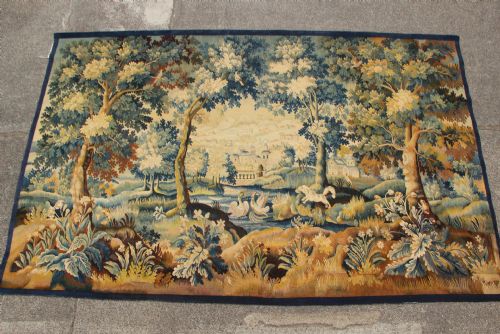
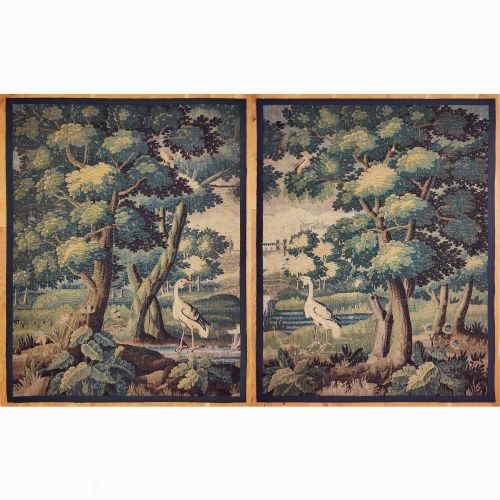
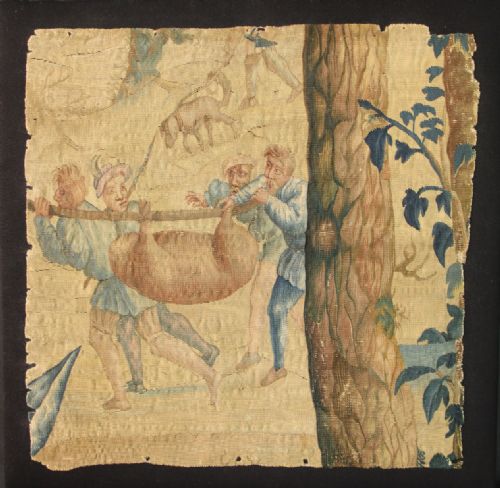
Buyers encounter everything from sixteenth-century Flemish fragments to late nineteenth-century Caucasian and Anatolian pieces. Verdure designs dominate the European items, depicting dense foliage and pastoral scenes predominantly rendered in blue and green wools.
Materials and construction
These textiles rely primarily on wool, silk, linen, and cotton yarns woven on manual looms. Natural dyes impart the characteristic muted tones found across the older European and tribal examples.
Weavers combined warp threads of linen or cotton with heavier wool and silk wefts to build dense, durable pictorial surfaces. Specialised techniques such as slit-weaving or soumak wrapping define the flatweaves and tribal bags.
Several pieces preserve quiet depictions of game parks and hidden woodlands where wool birds have perched undisturbed for centuries.
Assessing quality
Quality rests upon the fineness of the weave and the complexity of the pictorial composition. Dense, multi-tiered verdure scenes demand greater technical skill than repeating geometric tribal motifs.
The survival of natural dyes and the integrity of the original wool yarns determine the visual depth of a panel. Aubusson and Flemish works show superior pictorial shading when the dyework remains vibrant.
The Blue Wool Woven Tapestry Glossary
- Verdure
- A tapestry design dominated by lush foliage, trees, and landscape elements. These scenes often incorporate distant chateaux or game animals.
- Warp
- The stationary vertical or longitudinal threads stretched on a loom. Wefts are passed across these foundation threads to create the textile.
- Weft
- The transverse threads passed through the warp to form the pattern and fabric. In tapestries, discontinuous wefts build up the pictorial motifs.
- Kilim
- A flatwoven carpet or rug produced without a pile. These pieces rely on tightly packed weft threads concealing the warp entirely.
- Soumak
- A flatweaving technique producing a braided surface texture on the face of the textile. This method adds structural durability to tribal bags and panels.
Blue Wool Woven Tapestry: Frequently Asked Questions
How do I hang a heavy tapestry?
Large wall tapestries require a concealed wooden batten or a sturdy metal rod distributed across the upper weight-bearing margin. Sew a heavy-duty fabric sleeve to the reverse top edge to slide the support bar through safely.
Avoid hanging textiles directly from isolated nails or rings which concentrate tension on single threads. Distributing the weight evenly prevents distortion of the wool warp and weft over time.
How are these different from regular rugs?
Wall tapestries and pictorial panels function primarily as vertical decorative art rather than floor coverings. They employ discontinuous weft weaving techniques to create pictorial scenes instead of repeating pile knots.
While some flatwoven kilims and tribal textiles serve multiple functions as rugs or covers, European tapestries are specifically engineered for wall suspension or screens.
How do I identify a Flemish verdure?
Flemish verdure pieces typically feature dense woodland scenes filled with stylized leaves, ferns, and distant trees woven in muted blues and greens. Production centres like Audenarde often included small rivers or chateaux within the background.
Comparing the border styles, weave density, and wool characteristics against known sixteenth and seventeenth-century examples helps confirm the regional origin.