



Antique Hunting Tapestry
An antique hunting tapestry brings centuries of outdoor sport and forest pursuits straight onto the wall with rich woven texture.
Antique Hunting Tapestry
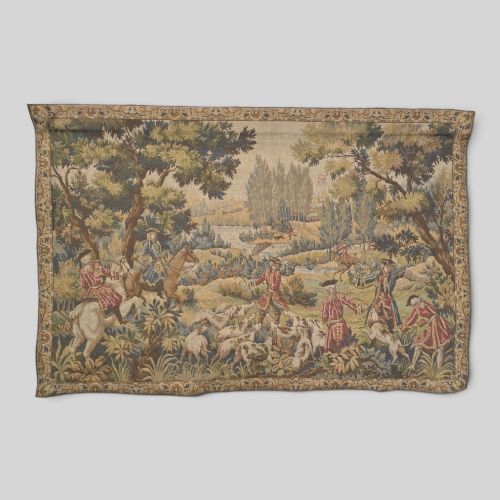
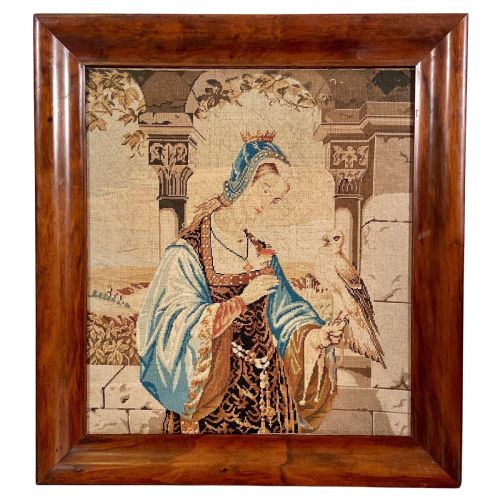
When you search for an antique hunting tapestry, you meet woven wall art and framed textile panels depicting classical figures, falconry, and game park scenes. These works capture the grand outdoor pursuits favoured by past nobility and country households.
The pieces on this page span from the seventeenth century up to the early twentieth century, including Flemish and French works alongside Victorian needlepoint panels and beadwork fragments. You also encounter walnut stools upholstered in matching tapestry seats.
Large French wall hangings and early Flemish panels represent the major woven formats, while smaller framed fragments preserve detailed needlework and beadwork scenes. Each piece serves as a direct window into historical textile artistry.
How they were made
These textiles utilise natural fibres such as wool, silk, cotton, and linen, woven or embroidered to build complex pictorial scenes. Glass beads appear in specific Victorian and seventeenth-century fragments to add luminous detail to the composition.
Wooden frames in gilt, gilt wood, and carved walnut support and house many of the panels and stools. The combination of sturdy timber frames and intricate textile work ensures the survival of these elaborate scenes.
Current listings feature items from the seventeenth century, the Victorian era, and nineteen-twenty, utilising wool, silk, and carved walnut.
What varies in quality
The distinction between ordinary and exceptional pieces lies in the complexity of the narrative and the fineness of the weave or needlework. Early Flemish examples display dense pictorial depth and sophisticated colour gradation across wool and silk threads.
The structural support also defines the piece, from simple stretched panels to elaborate carved walnut frames and X-frame window stools with detailed animal head motifs. Material preservation across the linen backing and silk highlights dictates the overall visual impact.
The Antique Hunting Tapestry Glossary
- Flemish Baroque
- A style originating in Flanders during the seventeenth century characterised by dramatic movement and rich, crowded pastoral compositions. These tapestries often depict expansive game parks and forest hunts.
- Tapestry Fragment
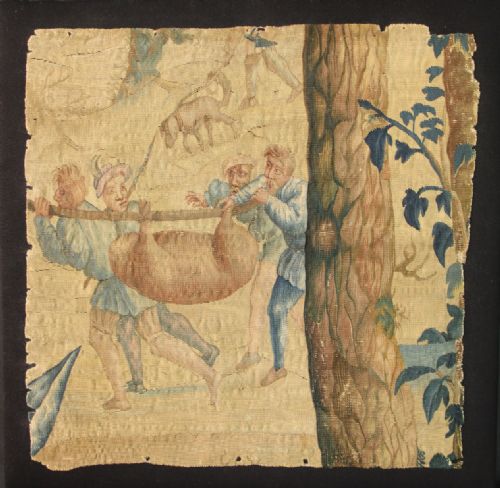
- A surviving portion of a larger woven wall hanging that has been isolated and usually framed as an independent artwork. These pieces rescue detailed figural or animal motifs from otherwise lost textiles.
- Needlepoint
- A type of embroidery stitched onto an open-weave canvas foundation to form dense pictorial surfaces. Early nineteenth-century panels utilise this technique to recreate classical portraits and hunting scenes.
- X Frame Stool
- A seating form featuring intersecting legs that create an X-shaped profile from the side elevation. Victorian examples often pair this carved walnut frame with hunting tapestry or needlework upholstery.
- Beadwork Fragment
- A decorative panel composed of small glass beads stitched together to form pictorial scenes. Seventeenth-century examples frequently portray royal hunting themes with remarkable tonal variation.
Antique Hunting Tapestry: Frequently Asked Questions
What is an antique hunting tapestry?
An antique hunting tapestry is a woven wall hanging or framed textile depicting traditional outdoor sports, game parks, and falconry scenes.
These pieces originate from periods ranging from the seventeenth century to the Victorian era and showcase skilled wool, silk, and needlepoint work.
How were hunting tapestries displayed?
Historical households hung large tapestries directly on stone or plaster walls to add insulation and decorative grandeur to state rooms.
Smaller panels and fragments today are typically framed behind glass as wall art, while related textiles were used to upholster walnut stools and furniture.
How do I date a tapestry?
Dating relies on stylistic clues, materials, and weaving techniques, comparing seventeenth-century Flemish compositions against later nineteenth-century French needlepoint and Victorian work.
Examining the underlying linen, silk threads, and surrounding wooden frames helps establish the precise era of production.
What is the difference between weaving and needlepoint?
Weaving constructs the image simultaneously with the fabric on a loom using warp and weft threads, as seen in Flemish wall hangings.
Needlepoint involves stitching yarn through an existing pre-made canvas mesh, a technique common in Victorian panels and smaller decorative fragments.