




17th Century Flemish Textile
A 17th century flemish textile brings centuries of woven mythology and verdure landscapes directly to your interior walls.
17th Century Flemish Textile
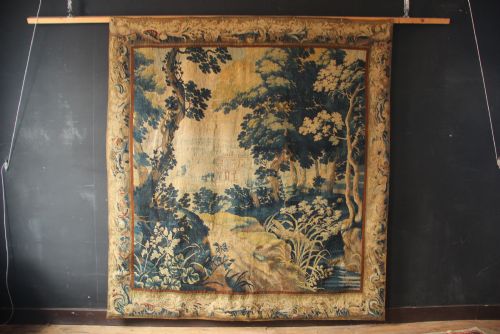
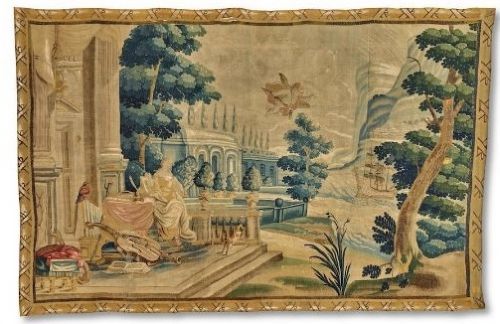
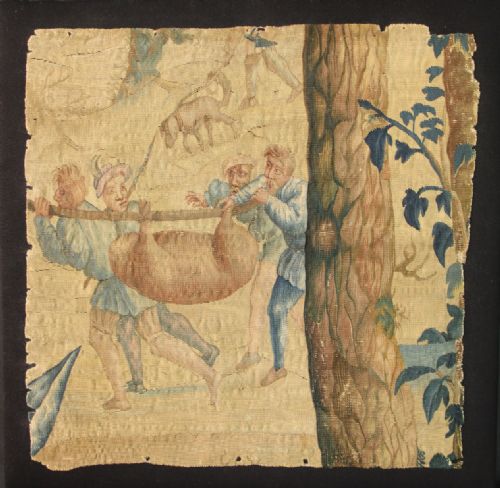
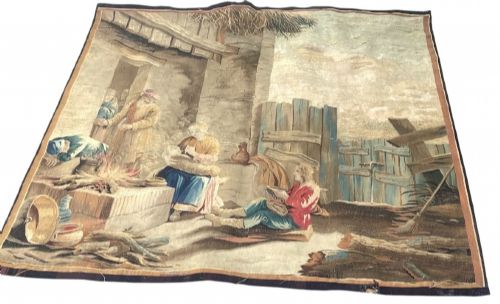
A 17th century flemish textile typically appears as a grand wall hanging, verdure tapestry, or smaller fragment mounted for display. These works capture pastoral scenes, game parks, and mythological narratives woven during the Baroque period.
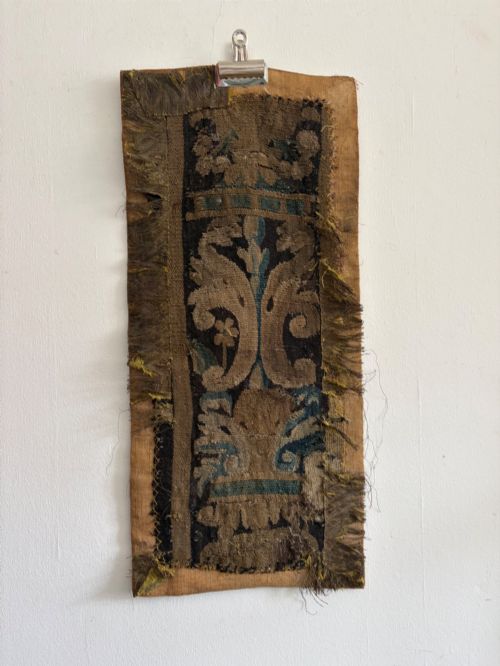
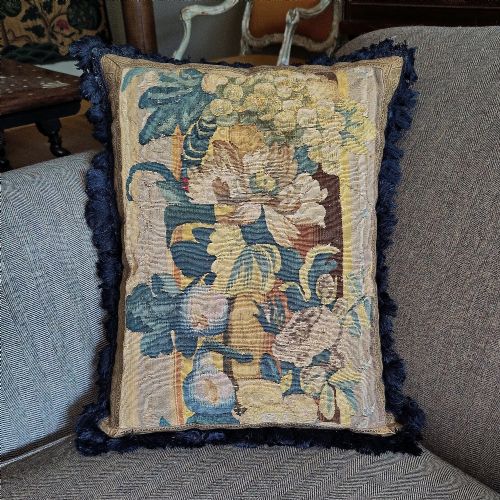
Buyers most frequently encounter verdure tapestries featuring dense foliage and landscapes, alongside smaller fragments and cushions fashioned from historic borders. Pieces range from large room-scale panels down to narrow borders and cushion covers.
Originating primarily from Flemish workshops, these textiles reflect the sophisticated weaving traditions of the seventeenth century. Surviving examples often show the transition from earlier styles into full Baroque expression.
How they were made
Weavers constructed these textiles using a combination of wool, silk, and linen yarns on vertical or horizontal looms. Silk threads provided highlights and luminous detail, while sturdy wool and linen formed the foundational structure.
Dyers utilised natural plant and insect dyes to achieve deep greens, browns, and earthy tones characteristic of verdure scenes. Over centuries, these organic colourants mellowed into the muted palettes seen today.
Current listings feature wool, silk, and linen across wall tapestries, verdure panels, and cushion covers dated to the seventeenth and eighteenth centuries.
What varies in quality
The density of the weave and the complexity of the pictorial composition distinguish finer examples from standard work. Superior pieces incorporate a higher proportion of silk to create depth and textural variation.
Scale and narrative ambition also separate grand mythologies and expansive game park scenes from repetitive verdure borders. The survival of original borders and extent of historic mounting affect the visual impact of each textile.
The 17th Century Flemish Textile Glossary
- Verdure tapestry
- A wall hanging dominated by lush foliage, trees, plants, and often birds or animals. These landscape scenes formed a major output of seventeenth century Flemish looms.
- Tapestry fragment
- A surviving section of a larger woven panel, often rescued from a damaged work and mounted onto linen for display. Fragments frequently comprise decorative borders or isolated figures.
- Baroque
- The dominant artistic style of the seventeenth century characterised by dramatic movement, rich detail, and grand scale. Flemish textile art absorbed these theatrical elements into its figurative and landscape compositions.
- Weft
- The transverse threads passed back and forth through the warp to create the patterned cloth. In these textiles, dyed wool and silk wefts build the pictorial image.
17th Century Flemish Textile: Frequently Asked Questions
How do I hang a large tapestry?
Large wall hangings require even weight distribution across a sturdy wooden batten or hidden metal bar. Professional conservators often stitch a linen support sleeve to the reverse edge for safe suspension.
Direct sunlight and heavy dampness must be avoided to protect delicate wool and silk fibres from degradation over time.
What is a verdure landscape?
A verdure landscape depicts dense forest foliage, verdant plants, and wooded glades populated by small animals or distant chateaux. These scenes focused on natural greenery rather than human figures.
The palette relies heavily on oxidized greens and browns that have shifted tonally over the centuries.
How do I identify a fragment?
Fragments show cut or trimmed edges that indicate they once formed part of a much larger narrative panel. Many smaller pieces consist solely of decorative borders or isolated vignettes.
Mounting onto linen backing helps stabilise these sections for modern wall display.