




Early Textile Wall Art
Early textile wall art brings centuries of woven and stitched history into a room, offering tactile warmth and narrative depth that flat paintings rarely match.
Early Textile Wall Art
Early textile wall art encompasses centuries of woven panels, embroidered samplers, and tapestries designed to hang on interior walls. These pieces bridge the gap between fine art and domestic craft, reflecting the aesthetic priorities of their makers across domestic and ceremonial contexts.
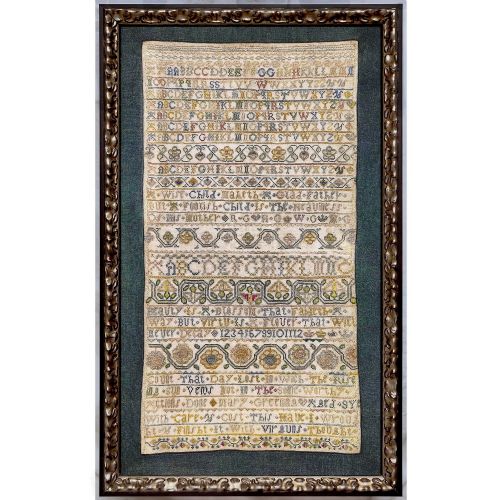
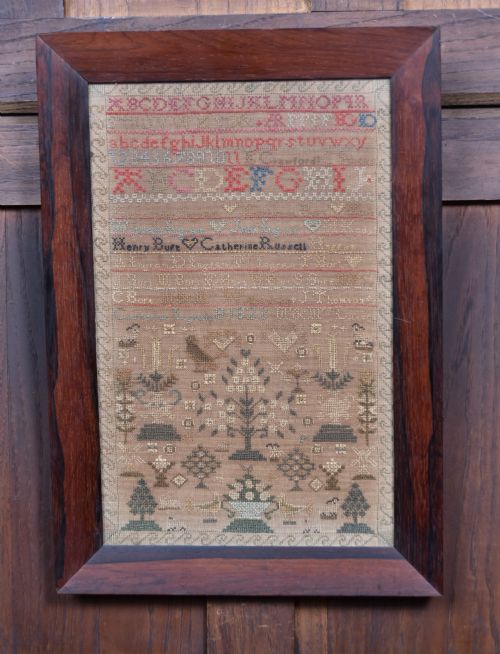
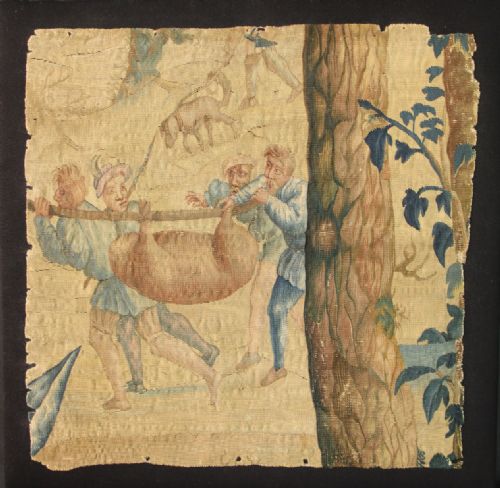
The selection ranges from grand seventeenth-century Flemish and North German tapestries depicting game parks to intimate nineteenth-century English and Scottish needlework samplers. Buyers frequently encounter framed needleworks, lace samplers, and printed fabrics dating from the seventeenth century through the early twentieth century.
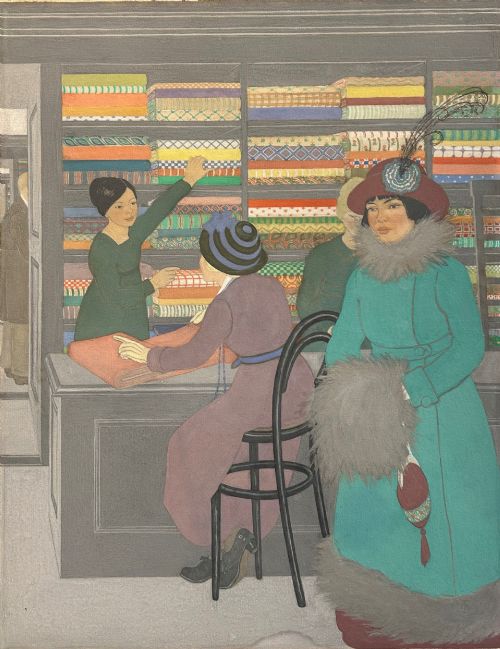
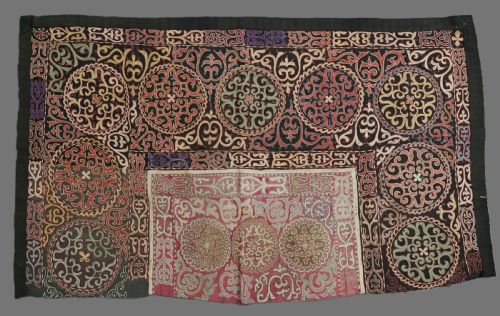
Origins vary widely across the inventory, spanning English band samplers, French Aubusson panels, Central Asian tribal embroideries, and Scandinavian textiles. Each piece records the regional materials and cultural motifs of its specific period, from Georgian map embroideries to Art Deco printed fabrics.
How they were made
Makers utilised natural animal and plant fibres, working primarily with wool, silk, linen, and cotton threads on appropriate foundation cloths. These textiles often incorporated specialised paper elements in samplers or relied on sturdy wooden and giltwood frames to support heavy tapestry fragments.
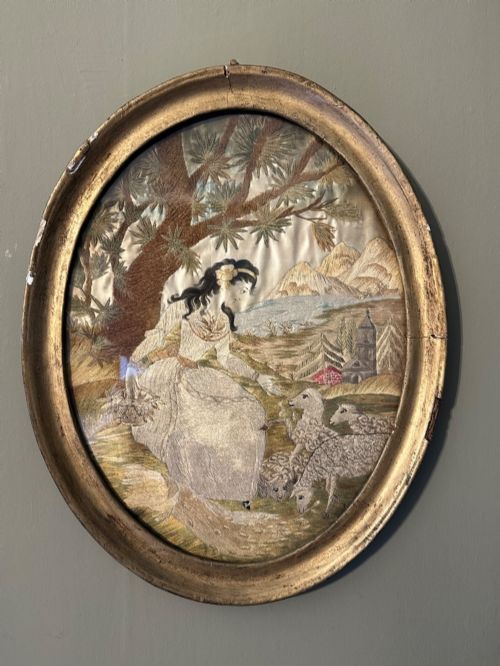
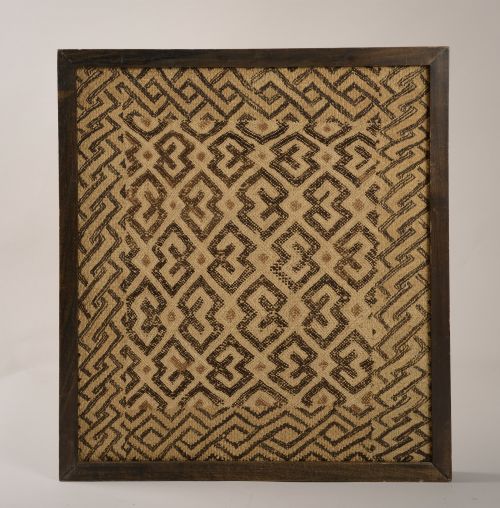
Techniques range from intricate needlepoint and crewel work embroidery to complex loom weaving seen in Flemish tapestries and Kuba cloth. Artisans employed counted-thread methods for samplers and free-form stitching for pictorial embroidered pictures, combining durability with decorative finesse.
Materials span natural fibres including silk, wool, linen, cotton, and paper across multiple centuries.
What varies in quality
The distinction between ordinary and exceptional pieces rests upon the finesse of the needlework and the complexity of the original design. Tighter stitching, superior draftsmanship in pictorial scenes, and the survival of vibrant natural dye colours elevate certain samplers and tapestries above standard examples.
Provenance and historical documentation also shape the standing of a textile. Pieces bearing the clear signature of a maker, such as a named schoolgirl or recognised regional workshop, demonstrate a documented lineage that enhances their historical significance.
The Early Textile Wall Art Glossary
- Sampler
- A piece of needlework produced as a demonstration or test of skill in various stitches. These frequently record the maker's name, the date, and educational exercises in lettering or motifs.
- Tapestry
- A form of textile art woven on a vertical loom rather than embroidered with a needle. Older examples typically depict figurative or landscape scenes designed to insulate stone walls.
- Crewel work
- A type of surface embroidery executed using fine wool yarn on a linen or cotton twill ground. It appears frequently in early pictorial panels and wall furnishings.
- Rya
- A traditional Scandinavian piled rug or wall hanging utilised for warmth. These textiles feature long, tactile wool knots arranged in distinctive patterns.
Early Textile Wall Art: Frequently Asked Questions
How do I hang textile wall art safely?
Heavy tapestries and framed embroideries require secure wall fixings distributed evenly across the weight of the piece. Using professional hanging hardware ensures the tension remains balanced without stressing the delicate antique fabric.
Keep textiles away from direct sunlight and moisture to prevent the natural fibres from fading and degrading over time. Gentle rotation and professional framing using conservation-grade materials protect the piece for decades.
What is the difference between a sampler and a tapestry?
A sampler is an embroidered exercise created with a needle to practice lettering, numbers, and decorative stitches, often signed by the maker. They reflect domestic education and personal milestones.
A tapestry is woven on a loom during the creation of the cloth itself, rather than stitched onto an existing ground. Tapestries are generally larger and designed for architectural wall decoration.
Both forms share a history of domestic or workshop production but employ fundamentally distinct methods of textile construction.
How do I date an antique textile?
Dating relies on examining the materials, stitching techniques, and stylistic motifs characteristic of specific historical periods. Samplers often include dates and maker names stitched directly into the composition.
Expert analysis compares the twist of the yarn, the type of natural dyes used, and the mounting style against known examples from the seventeenth through the twentieth centuries. Secondary evidence, such as framer labels, also helps narrow down the timeframe.