




Antique Tapestry Fragment
An antique tapestry fragment brings centuries of hand-woven texture and historic narrative into a modern interior.
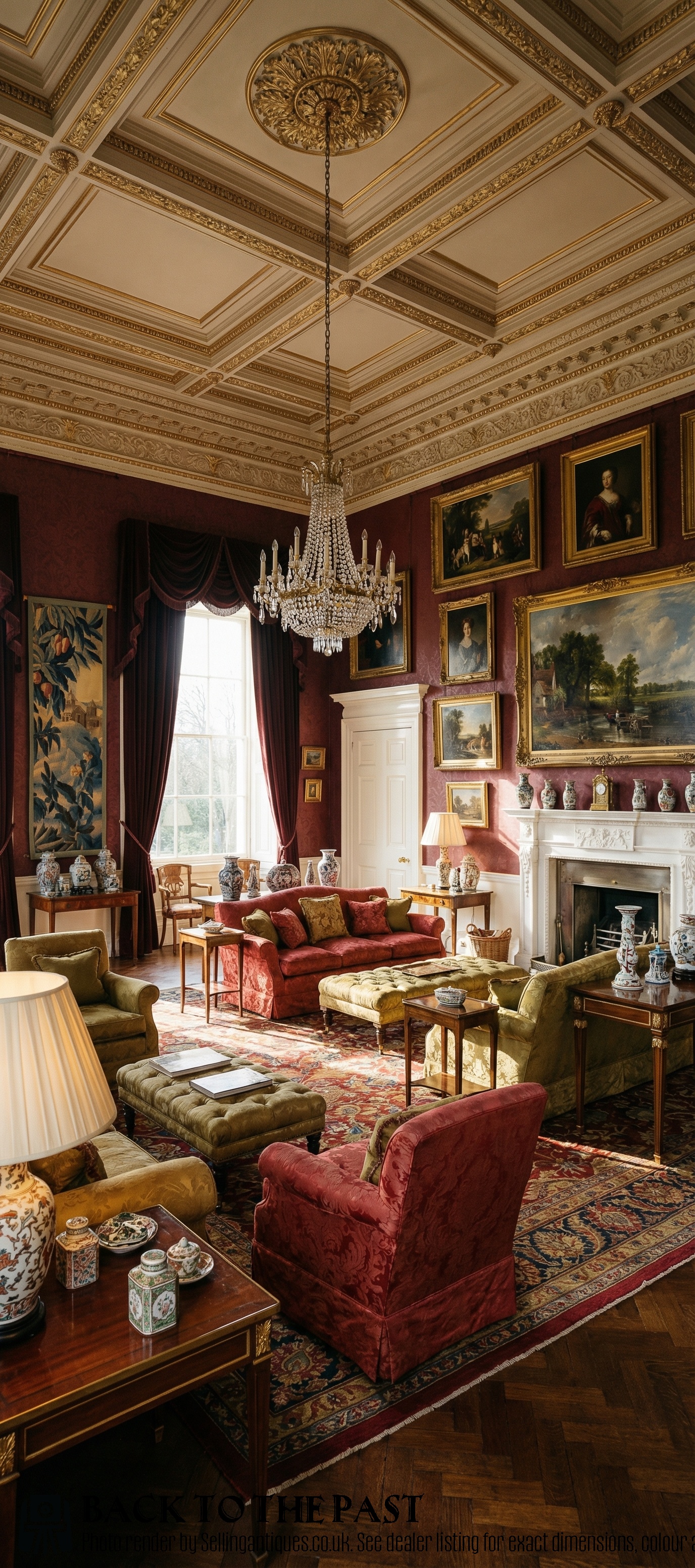
Antique Tapestry Fragment
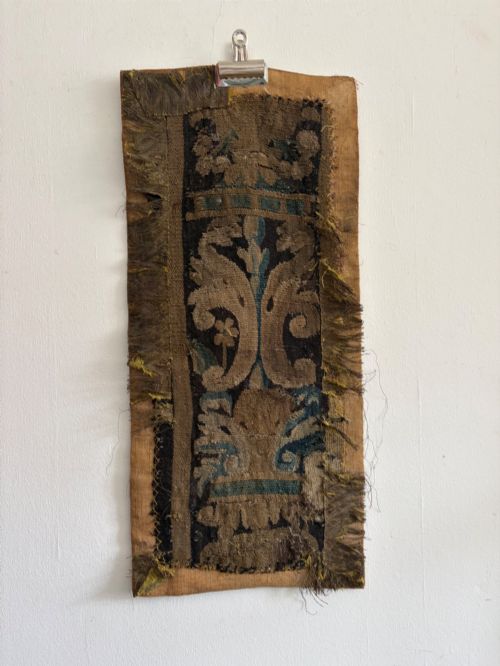
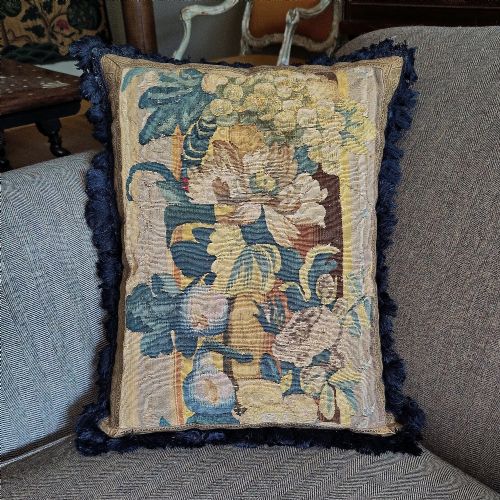
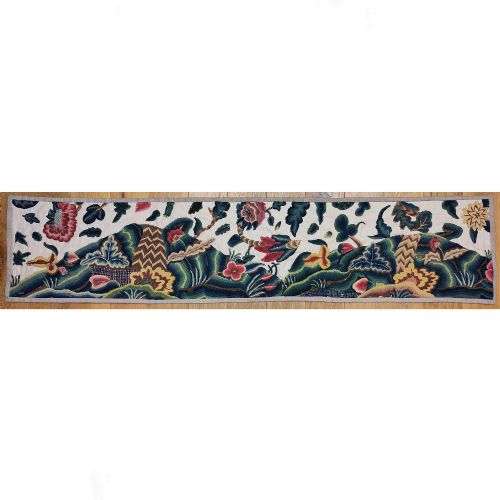
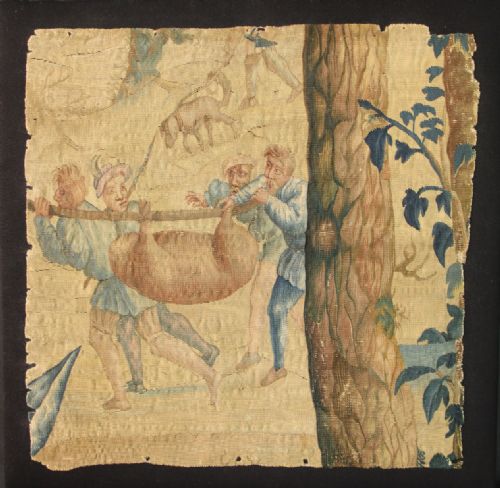
When you search for an antique tapestry fragment, you encounter surviving sections of larger historical textiles, often salvaged from damaged wall hangings or furnishings. These pieces primarily appear as framed panels, borders, cushion covers, or border sections originating from the seventeenth, eighteenth, and nineteenth centuries. Flemish verdure scenes, game parks, and needlework pictures dominate the forms available.
Buyers frequently find these textiles mounted on linen, preserved behind glass, or sewn into decorative cushions. The selection ranges from early Flemish baroque border remnants to French panels and tribal Caucasian weaves such as Sumac Khorjin and Tekke Turkmen Chuval faces. Each piece represents a repurposed fragment of a much larger narrative textile.
How they were made
Weavers constructed these textiles using hand-spun wool, silk, linen, and cotton fibres, often combining materials to achieve contrast in texture and depth. Artisans built up the imagery through intricate weave structures or needlework, occasionally incorporating glass beads into specific seventeenth-century pictorial scenes. Support materials such as canvas and wood framing provide structural integrity to the surviving sections.
Many items utilise traditional border designs and verdure foliage techniques developed in European workshops, particularly in Flanders. The physical construction relies on durable plant and animal fibres that have survived centuries through careful mounting and conservation work.
Current listings feature textiles spanning the seventeenth, eighteenth, and nineteenth centuries, utilising wool, silk, linen, cotton, wood, and glass beads.
What varies in quality
The distinction between tiers of quality rests upon the density of the weave, the complexity of the imagery, and the survival of the original dyestuffs. Fine examples display intricate pictorial detail, such as figures in game parks or royal hunting scenes, executed with precise control over wool and silk threads. Lesser examples show simpler repeating border patterns with greater wear and fibre loss.
Another measure of quality involves the integrity of the fragment's mounting and historical preservation. Pieces that retain their original structural borders and rich chromatic depth command greater interest than heavily worn or later re-stitched remnants.
The Antique Tapestry Fragment Glossary
- Verdure
- A type of tapestry featuring stylised foliage, trees, plants, and often birds or animals. These designs were popular in seventeenth and eighteenth-century Flemish and European weaving centres.
- Soumak
- A flat-weave textile technique involving wrapping weft threads over and under the warp threads to create a textured, durable surface. It is commonly found on Caucasian and tribal panels.
- Toile de Jouy
- A cotton or linen fabric printed with repetitive pictorial scenes, typically in a single colour on a light background. Eighteenth-century examples often depicted allegorical or historical events.
- Chuval
- A large face used on nomadic storage bags, woven by Turkmen tribes. These pieces typically feature distinct tribal medallions known as guls.
- Needlework
- Hand-stitched embroidery executed on a canvas or linen ground rather than created on a loom. Eighteenth-century English needlework pictures frequently portrayed pastoral or royal scenes.
Antique Tapestry Fragment: Frequently Asked Questions
How were tapestry fragments originally used?
Historic workshops produced large tapestries as insulated wall hangings for castles and chateaux, where they kept rooms warm and displayed wealth.
When these grand textiles wore out over centuries, owners salvaged surviving sections to make smaller decorative items like cushions, table coverings, or framed wall art.
How do I care for an antique textile fragment?
Keep textile panels away from direct sunlight to prevent the fading of natural wool and silk dyes. Gentle vacuuming through a mesh screen can remove dust without damaging fragile fibres.
Ensure the piece is securely mounted on neutral linen or framed behind conservation glass if displayed on a wall.
How can I tell a seventeenth-century piece from a nineteenth-century one?
Seventeenth and early eighteenth-century pieces often feature Flemish verdure designs, baroque styling, and hand-spun wools with rich, muted vegetal dyes. Later nineteenth-century panels tend to show tighter, more uniform machine or hand-weaving techniques with different colour palettes.
Examining the reverse side and the nature of the fibre spin helps clarify the period of origin.
Are these fragments taken from complete artworks?
Many fragments originate from large wall hangings that suffered extensive damage, rot, or fire over centuries. Restorers cut away the ruined sections to salvage the healthy woven areas, turning discarded remnants into collectible panels and cushions.