


Renaissance Wall Hanging
A renaissance wall hanging brings centuries of textile artistry and carved weight into a room, offering grand scale and historic presence.
Renaissance Wall Hanging
A renaissance wall hanging encompasses woven tapestries, embroidered silk panels, and carved wooden architectural frames designed to dress large interior surfaces. Buyers encounter woven wall coverings from the sixteenth century alongside nineteenth-century revivals inspired by earlier European court styles.
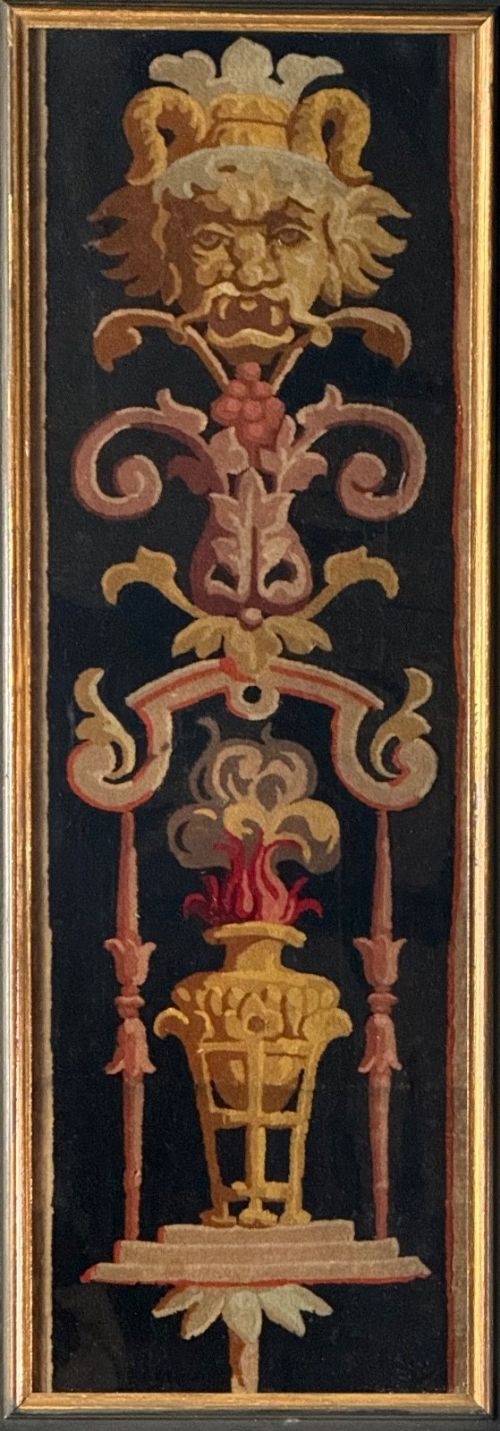
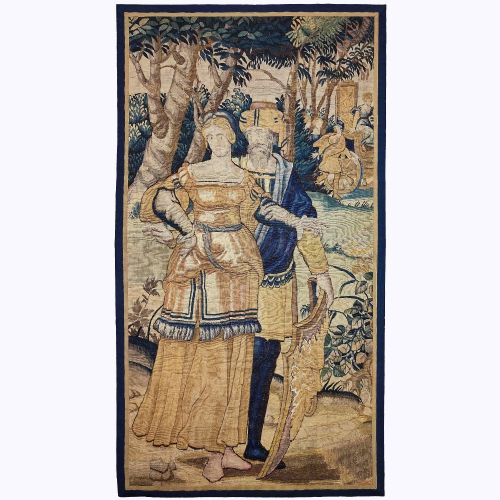
The selection ranges from large pictorial Flemish tapestries depicting figurative scenes to smaller needlepoint fragments and carved oak panels. Many pieces reflect Revival movements from the Victorian era that sought to recreate sixteenth- and seventeenth-century grandeur.
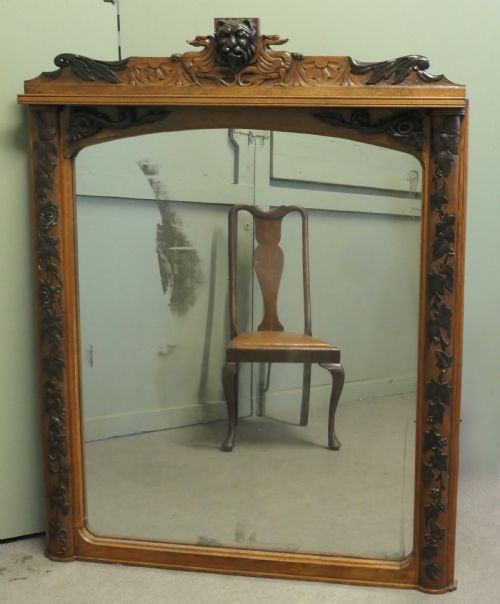
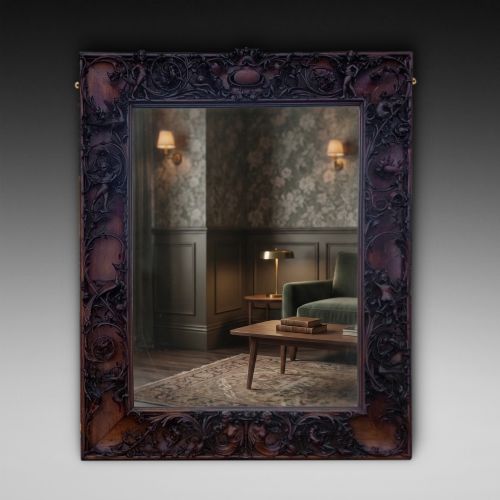
Woven wool and silk panels dominate the textile offerings, while carved walnut, oak, and beech form the structural wall mirrors and plaques. Buyers frequently select these works to anchor a room with distinct period character and historic narrative.
Materials and construction
The textiles rely on hand-woven wool, silk, and metal threads, often combined in intricate tapestry techniques that produce dense pictorial surfaces. Embroidered panels utilise fine silk velvet grounds stitched with metallic details to create texture and depth.
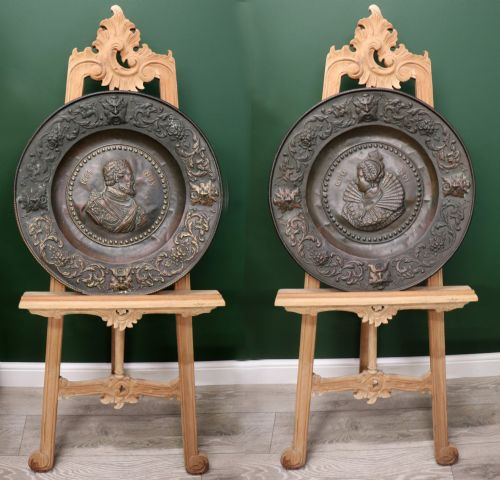
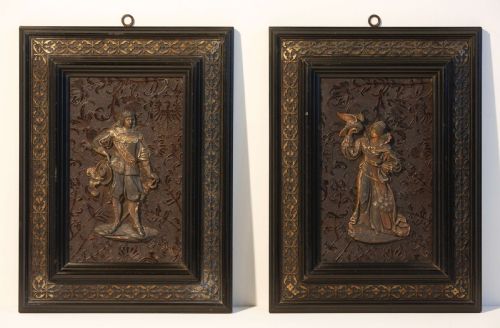
Wooden frames and hanging panels employ heavy oak, walnut, and beech, shaped through deep carving and architectural joinery. Metal elements incorporate cast bronze, copper, and gilded bronze relief plaques to add metallic contrast against dark timber.
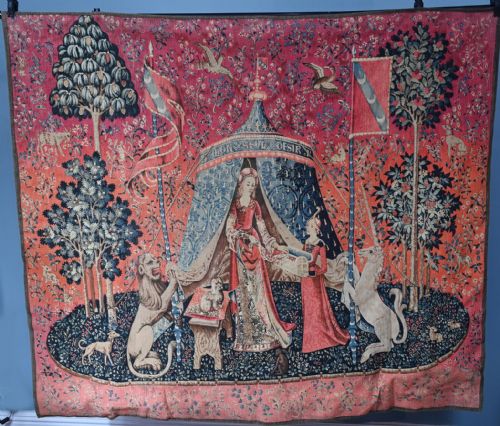
Several sixteenth-century pieces feature unicorns quietly grazing among mille-fleurs fields, maintaining an ancient woodland scene inside your home.
Evaluating craftsmanship
Quality rests upon the density of the weave in textiles and the depth of relief in carved woodwork. Finer tapestries employ tightly spun wool and silk yarns that hold crisp figurative details and subtle colour transitions across large expanses.
In wooden mirrors and panels, superior examples display crisp hand-carving with well-defined proportions and authentic period patination on the timber. Lesser pieces show softer casting or mechanical surface finishes that lack the historical weight of genuine older works.
The Renaissance Wall Hanging Glossary
- Tapestry
- A heavy hand-woven textile featuring pictorial designs created by interlocking coloured woof threads through a warp. These panels served as insulation and decoration in grand European interiors.
- Mille-fleurs
- A style of medieval and renaissance tapestry background filled with a dense field of small flowers and plants. This French term translates literally to thousand flowers.
- Revival
- A nineteenth-century artistic movement that consciously copied earlier historical styles such as the Renaissance and Gothic periods. Revival pieces reinterpreted sixteenth-century aesthetics using Victorian manufacturing methods.
- Needlepoint
- A form of canvas work embroidery stitched by hand using wool or silk threads to cover an open-weave ground. Early examples display dense pictorial scenes worked in tent stitch.
- Pilaster
- A rectangular architectural column projecting from a wall surface, often carved with classical motifs. They frequently frame mirrors and fabric panels in seventeenth-century interior schemes.
Renaissance Wall Hanging: Frequently Asked Questions
How do I hang a heavy tapestry?
Large textile panels require a weight-distributing support system such as a concealed wooden batten or a series of stitched hanging loops along the top edge. Avoid hanging heavy wool or silk pieces directly from isolated points to prevent distortion of the weave.
Ensure the fixing method distributes the load evenly across a secure wall stud or masonry anchor. Proper mounting protects the historic fibres from undue tension over time.
Are these tapestries original sixteenth-century pieces?
The inventory includes both authentic sixteenth- and seventeenth-century European weavings and later nineteenth-century revival interpretations. Examining the yarn composition, dye types, and backings helps clarify the exact period of production.
Consulting the listed century for each individual piece provides the primary guide to its age. Both early textiles and later revival works offer distinct historical qualities for interior display.
What is a Flemish tapestry?
Flemish tapestries originate from historical weaving workshops in Flanders, a region encompassing parts of modern Belgium and France. These workshops set the European standard for pictorial weaving during the Renaissance.
Known for complex allegorical scenes and rich materials, these panels were commissioned by courts across Europe. Surviving fragments retain the distinct artistic style of northern weaving centres.