



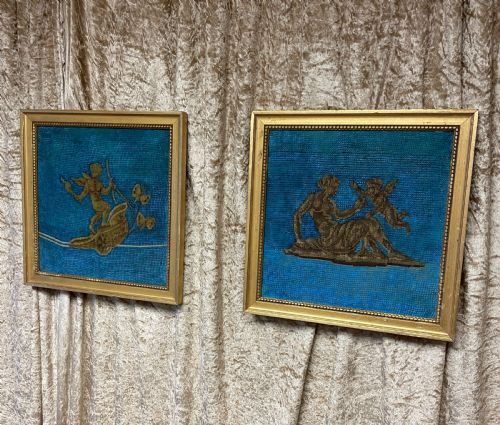


Gold Thread Textile Panel
A gold thread textile panel brings woven history into a room, combining metallic lustre with centuries of textile skill.
Gold Thread Textile Panel
A gold thread textile panel is a fragment or finished hanging that displays meticulous metal embroidery upon a textile base. These works take several historical forms, ranging from framed fragments and hand towel end panels to large wall hangings and detailed silkwork pictures.
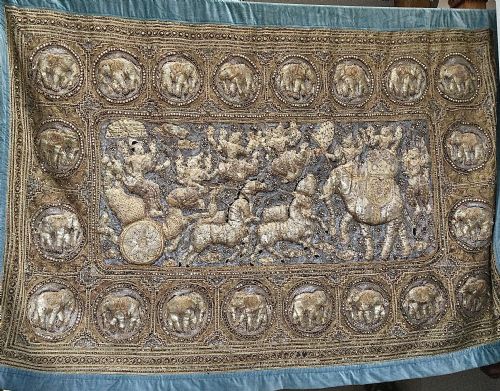
The pieces on this page span diverse stylistic traditions, including Ottoman, Indian, Georgian, Jacobean, and Greek folk art. Buyers encounter everything from early seventeenth-century English coifs and stumpwork depicting historical figures to nineteenth-century Burmese and Anglo-Indian works.
Many examples are mounted or framed for modern display, preserving delicate materials while allowing the intricate needlework to function as wall art. The variety of forms ensures that each panel offers a distinct glimpse into traditional textile production across different cultures.
How they were made
The creation of these panels relies on combining a supportive fabric base with fine metallic threads and supporting materials. Artisans utilised silk, velvet, linen, and glass beads alongside metal threads and sequins to build texture and visual depth.
Needlework techniques vary widely across the origins represented, encompassing raised stumpwork, detailed embroidery, and relief hangings. The integration of metal thread requires precise hand manipulation to secure the metallic elements firmly to the textile foundation without damaging the underlying silk or velvet.
Gold Thread Textile Panel Retail Price Guide 2026
Typical asking prices for gold thread textile panel among the pieces listed under this phrase on Sellingantiques today, from the lower quarter to the upper quarter. They describe what is for sale here now, not the wider market.
Listings feature textile panels spanning from the seventeenth century through to the 1930s, incorporating silk, velvet, linen, and metallic thread.
What varies in quality
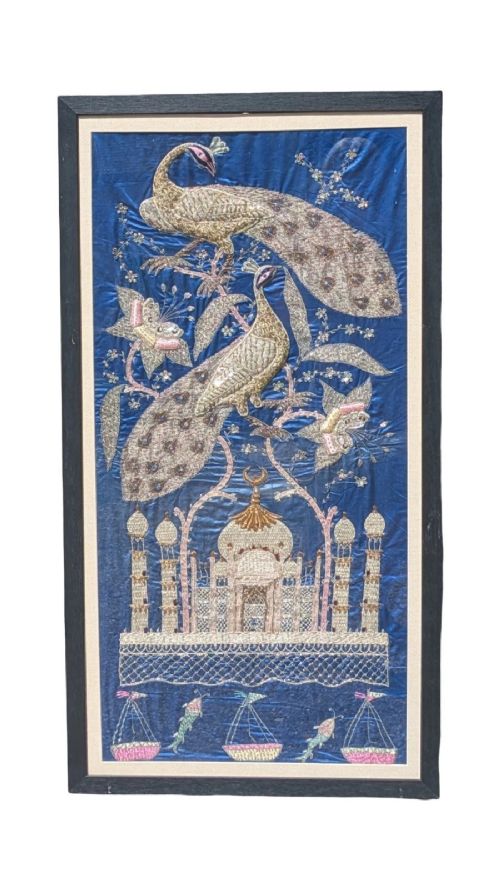
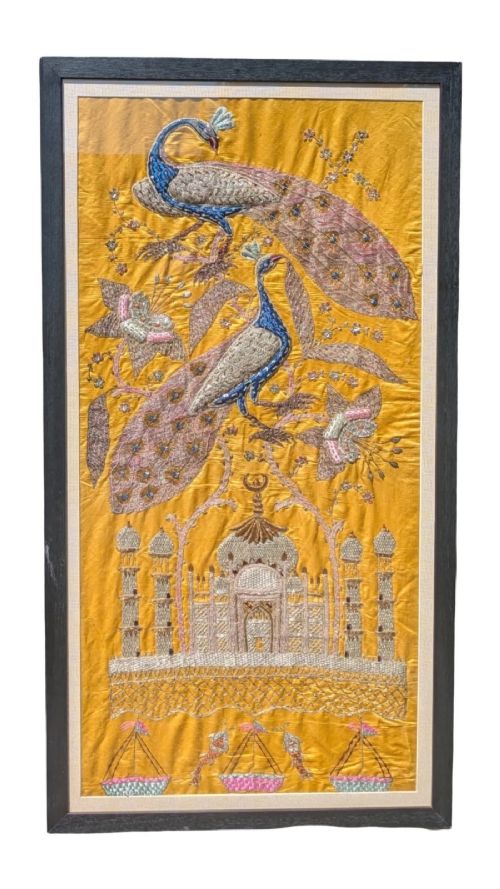
The distinction between standard and exceptional panels rests upon the complexity of the design and the preservation of the materials. Works depicting elaborate figural scenes, such as historical figures or architectural landmarks like the Taj Mahal, demonstrate advanced technical skill.
Condition and integrity dictate the standing of a piece, particularly how well the metal threads retain their lustre and how securely the silk or velvet ground holds the embroidery. Original framing or mounting also influences the overall presentation of the textile.
The Gold Thread Textile Panel Glossary
- Stumpwork
- A style of raised embroidery popular in the seventeenth century that uses padded foundations to create three-dimensional figures and elements. This technique often depicts historical or biblical scenes with remarkable relief.
- Coif
- A close-fitting cap worn in early periods, frequently decorated with intricate embroidery and metal threadwork. Surviving examples are often framed as textile panels.
- Metal Thread
- Thin wire or metal-wrapped fibre used in traditional embroidery to add reflective detail and rich linear patterns. It provides the defining lustre in these textile panels.
- Silkwork
- Embroidery executed primarily in silk threads, often combined with metallic elements to create pictorial or commemorative scenes. These works capture fine tonal gradations in historical portraiture and landscape.
- Velvet
- A woven tufted fabric with a dense pile that provides a luxurious background for metallic embroidery. Ottoman and European pieces frequently utilise velvet to enhance the brilliance of gold thread.
Gold Thread Textile Panel: Frequently Asked Questions
How should I hang a textile panel?
These panels require professional framing behind conservation glass to protect delicate silk and metal threads from dust and atmospheric damage. Direct sunlight must be avoided to prevent the fading of natural dyes and textiles.
Wall placement should be in rooms with stable humidity levels to preserve the integrity of both the fabric ground and the metallic elements. Proper mounting ensures the weight of the textile is supported evenly across the frame.
How do I identify seventeenth-century embroidery?
Seventeenth-century pieces often feature specific techniques like raised stumpwork or distinct motifs associated with Jacobean design and historical subjects. The materials typically show the characteristic ageing of early silk and hand-spun metal threads.
Examining the reverse of the panel, where accessible, reveals the hand-spun nature of the threads and the irregular stitches typical of early needlework. Comparative study of known period fragments helps confirm the origin.
What is the difference between Ottoman and Indian panels?
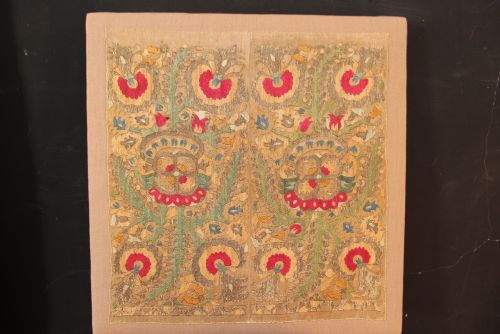
Ottoman panels frequently utilise rich velvet grounds paired with heavy metal-thread couching in floral or geometric arrangements. These pieces reflect courtly aesthetics from Turkish workshops.
Indian panels often display intricate pictorial silk embroidery, incorporating architectural landmarks like the Taj Mahal alongside detailed fauna. The colour palettes and figurative styles point distinctly towards South Asian traditions.
Are these pieces cleaned or restored?
Professional conservation cleaning is undertaken very cautiously, as historic metal threads and fragile silks react poorly to standard cleaning methods. Most panels are preserved in their existing state to maintain historical authenticity.
Restoration is generally limited to securing loose threads or improving the structural support within a frame. Buyers should expect the patina of age on all historic textiles.