




Blue Stoneware Vessel
A blue stoneware vessel is a dense, salt-glazed or ceramic container that brings rich cobalt tones and historic heft to a room.
Blue Stoneware Vessel
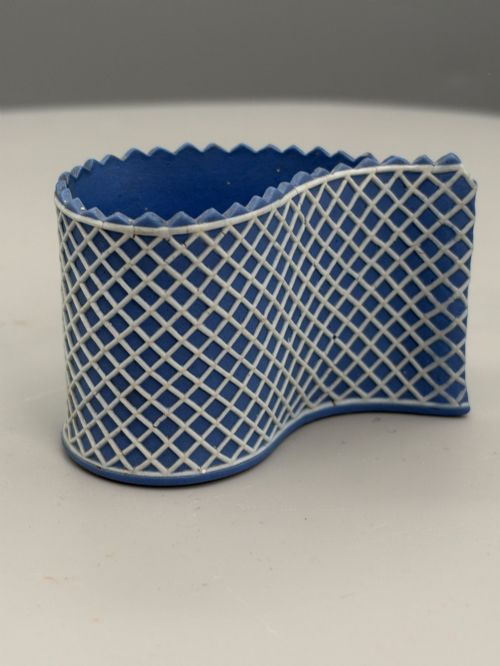
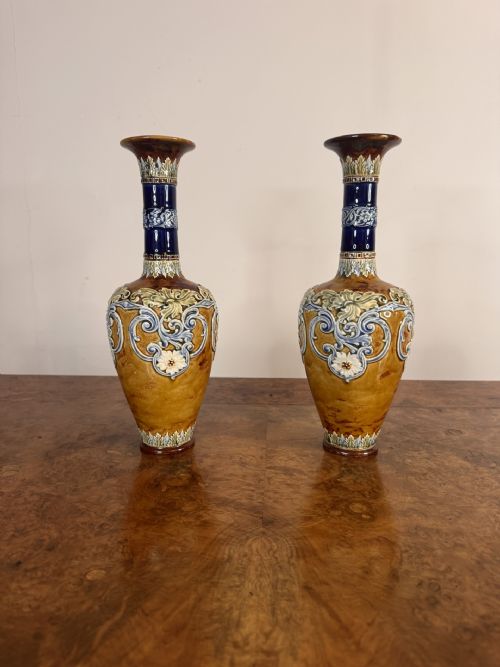
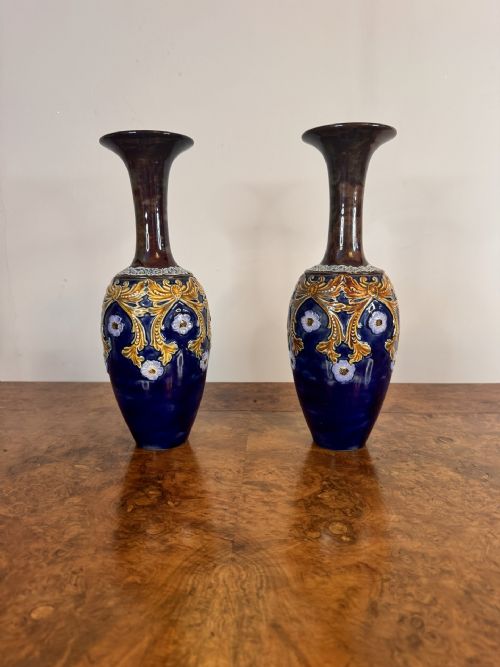
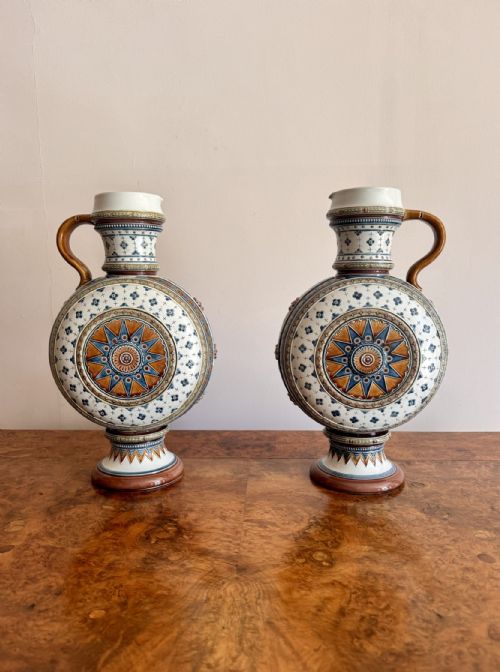
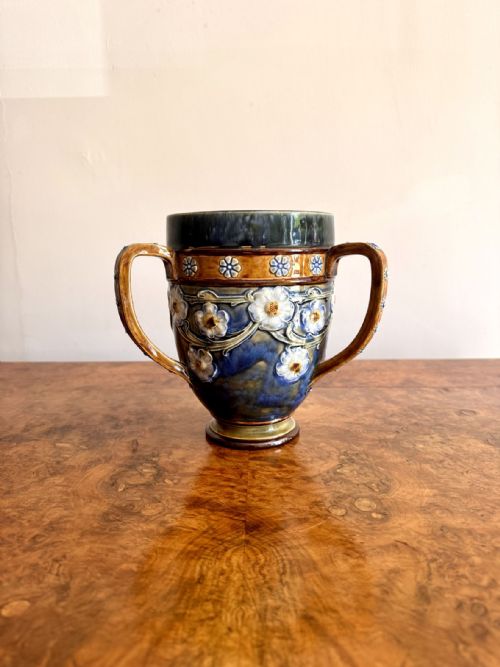
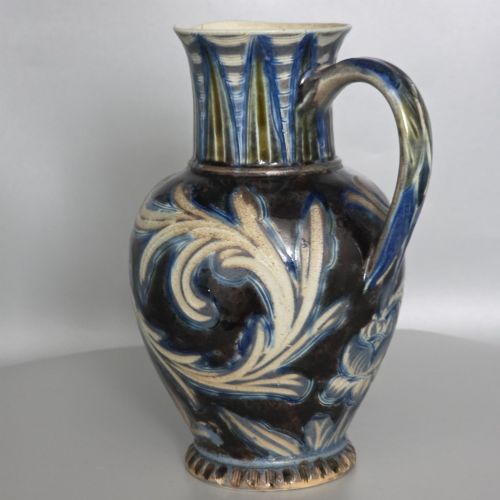
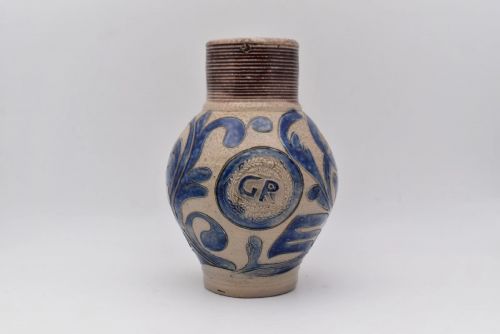
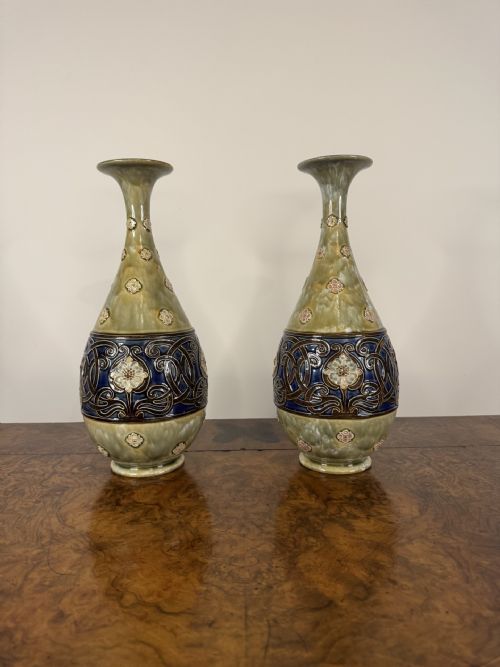
A blue stoneware vessel encompasses a diverse range of items including vases, jugs, jardiniere planters, and loving cups originating from various historical periods. The selections available here are heavily weighted towards Victorian and Arts and Crafts productions, particularly from British potteries.
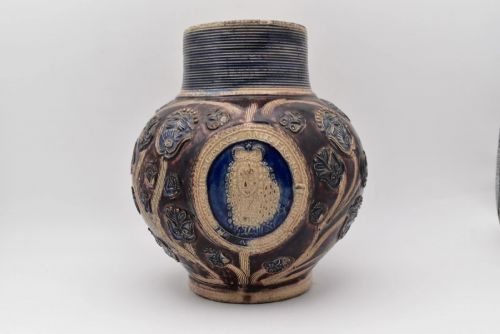
Buyers will frequently encounter pieces bearing the marks of Doulton Lambeth alongside continental Westerwald jugs from the seventeenth and eighteenth centuries. These objects range from modest table beakers to large decorative ewers and baluster vases.
The forms extend from simple domestic tankards to elaborate art pottery featuring incised patterns and applied enamel floral decoration. Each piece displays the characteristic vitrified body and salt glaze typical of heavy stoneware manufacture.
Materials and methods of construction
These vessels are constructed from dense, impermeable ceramic clay fired at high temperatures until the material vitrifies. Artisans then applied salt during the kiln firing to produce a pitted, orange-peel texture on the surface.
Cobalt oxide provided the distinctive blue coloration, often painted under the glaze or brushed onto incised designs before firing. Specialised techniques such as Slater's patent involved pressing lace or fabric into the damp clay to create textured backgrounds beneath enamel highlights.
Blue Stoneware Vessel Retail Price Guide 2026
Typical asking prices for blue stoneware vessel among the pieces listed under this phrase on Sellingantiques today, from the lower quarter to the upper quarter. They describe what is for sale here now, not the wider market.
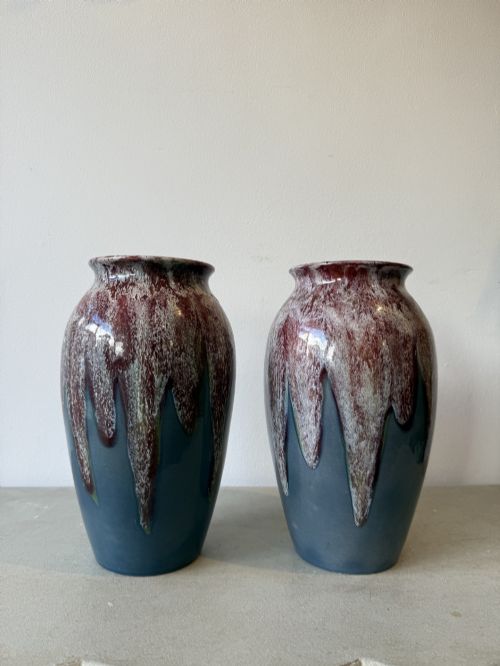
Current listings feature stoneware vessels spanning from the seventeenth century through to the Art Nouveau and Arts and Crafts periods, utilising salt glaze, enamel, and oxblood finishes.
Judging quality in stoneware
Quality rests upon the crispness of the incised or moulded decoration and the control demonstrated during the high-temperature firing. Pieces that display confident hand-carved detailing by named artists command greater attention than standard factory output.
The depth and consistency of the cobalt blue glaze significantly influence the visual impact of the piece. Well-balanced proportions and undamaged applied elements like silver mounts or handles elevate the standing of an individual vessel.
Royal Doulton·Doulton Lambeth·Villeroy and Boch·Fulham Pottery·William Adams and Sons
The Blue Stoneware Vessel Glossary
- Stoneware
- A robust pottery type fired at high temperatures until semi-vitrified and waterproof. It does not require a glaze to hold liquids.
- Salt glaze
- A glossy, slightly textured finish created by throwing common salt into the kiln during high-temperature firing. The sodium reacts with the silica in the clay body.
- Westerwald
- A German ceramic region historically famous for salt-glazed stoneware jugs decorated with cobalt blue incisions. These pieces often feature royal ciphers or heraldic motifs.
- Baluster
- A vase or jug shape characterised by a rounded body that tapers toward the top, resembling a traditional architectural baluster.
- Jasperware
- A fine-grained, unglazed vitrified stoneware pioneered in the eighteenth century, commonly featuring white clay reliefs applied against a blue background.
Blue Stoneware Vessel: Frequently Asked Questions
What is salt-glazed stoneware?
Salt-glazed stoneware is a type of pottery created by introducing common salt into the kiln at peak temperature. The salt vaporises and reacts with the clay to form a durable, glossy surface with a distinctive orange-peel texture.
This vitrified finish made the vessels entirely impermeable to liquids, explaining their widespread historical use for storage jugs, tankards, and utility vessels.
How do I care for antique stoneware?
Antique stoneware is robust due to its high-firing temperature, but it still requires gentle maintenance. Clean pieces using warm water and a soft cloth, avoiding harsh chemical detergents that might harm older surface glazes or enamel details.
Keep the vessels away from rapid temperature fluctuations and ensure silver mounts, where present, are polished with appropriate non-abrasive cleaners.
Where were Westerwald jugs made?
Westerwald jugs originate from the Westerwald region in Germany, which became a prominent centre for salt-glazed stoneware production during the seventeenth and eighteenth centuries. These vessels are easily recognised by their grey body and vibrant cobalt blue incised patterns.
They frequently display historical ciphers, such as those for William III or George Rex, reflecting their export to British markets during those periods.