


18th Century Stoneware
These robust 18th century stoneware vessels range from Westerwald jugs to salt-glazed chargers, offering durable utility and historic character for your collection.
18th Century Stoneware
When you search for 18th century stoneware, you encounter utilitarian and decorative vessels formed from dense, vitrified clay fired at high temperatures. The selection frequently includes German salt-glazed Westerwald jugs and tankards alongside English salt-glazed chargers and Chinese Yixing tea wares.
The objects span practical forms such as wine bottles, flagons, ale pitchers, and large serving platters alongside decorative bowls and teapots. Pieces from the Georgian era and German Baroque traditions sit alongside Qing Dynasty Chinese exports, reflecting a diverse global repertoire of fired clay bodies.
How these ceramics were made
Potters utilised heavy clay bodies finished with distinctive salt glazes applied by throwing salt into the kiln during firing, creating characteristic orange-peel textures. Cobalt blue pigments frequently decorate the surfaces of German vessels, while other works rely on the natural dark tones of unglazed terracotta or black basalt.
Many items incorporate applied moulded reliefs, royal ciphers, mask decorations, or silver-plated lids, while others feature intricate crackle glazes or delicate enamelling. Kiln techniques varied by region, producing vitrified wares impervious to liquids without requiring interior lead glazing.
Listings feature salt glaze, clay, ceramic, pewter, and cobalt materials spanning the 17th, 18th, and 19th centuries.
What varies in quality
The crispness of the moulded relief work and the depth of the cobalt blue or salt glaze application separate standard utilitarian wares from finer examples. Sharpness in royal ciphers, masks, and incised details indicates superior craftsmanship during the throwing and modelling stages.
Integrity of the dense clay body and the condition of applied handles, loop mounts, and metal lids heavily influence the overall standard. Pieces retaining strong original polychrome highlights or clean salt-glaze textures represent the higher tier of survival.
Wedgwood
The 18th Century Stoneware Glossary
- Salt glaze
- A glassy, pebbled texture created by throwing common salt into the kiln at the peak temperature. The sodium reacts with the silica in the clay body to form a durable coating.
- Westerwald
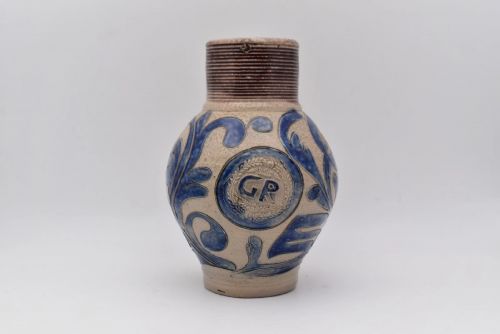
- A historic German ceramic region known for producing grey stoneware decorated with cobalt blue incisions and impressed medallions. These vessels were widely exported across Europe.
- Basalt
- A fine-grained, dense black stoneware perfected by English potteries during the Georgian period. It mimics the appearance of natural basalt rock and requires no surface glaze.
- Flagons
- Large, heavy-bodied drinking vessels fitted with a handle and occasionally a lid, designed for holding ale, wine, or oil. They represent the robust utilitarian side of period ceramics.
- Chargers
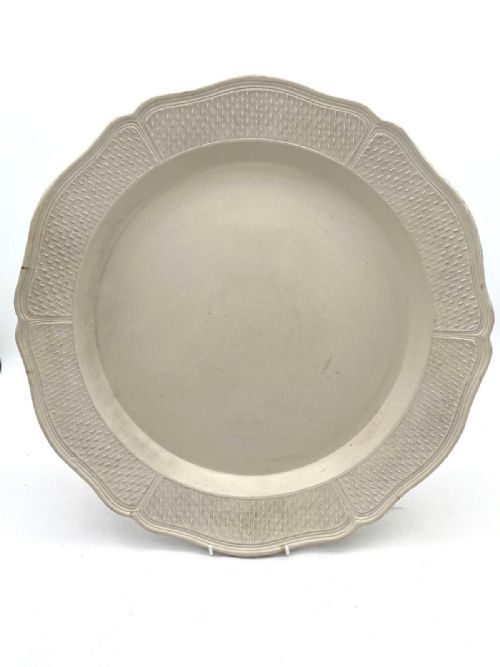
- Large decorative or serving platters fired in kilns to hold substantial joints of meat or display fruit. Their broad rims often showcased elaborate moulded or salt-glazed patterns.
18th Century Stoneware: Frequently Asked Questions
How do I clean 18th century stoneware?
Wash these dense ceramic pieces gently using warm water and a mild, non-abrasive soap with a soft sponge.
Avoid soaking items with metal lids or porous unglazed areas, and dry them thoroughly with a soft cloth.
Can I use these teapots and jugs?
While the vitrified clay bodies remain strong and waterproof, historical wear makes modern culinary use inadvisable.
Thermal shock from hot liquids can stress fragile historic material, so these pieces are best preserved for display.
How do I distinguish German from English salt glaze?
German Westerwald pieces typically feature grey bodies with cobalt blue highlights and impressed medallion stamps.
English salt-glazed items, such as large chargers and pitchers, generally display a whiter, finer clay body with an orange-peel texture.
What is a GR royal cipher?
The GR stamp stands for Georgius Rex, denoting King George, used on German stoneware exported to Britain.
These ciphers date the vessels to the reigns of the Hanoverian monarchs during the Georgian period.