


Georgian Ceramic Tableware
Georgian ceramic tableware brings functional elegance to the table, uniting period porcelain and earthenware in designs intended for daily dining and formal dessert courses.
How they were made
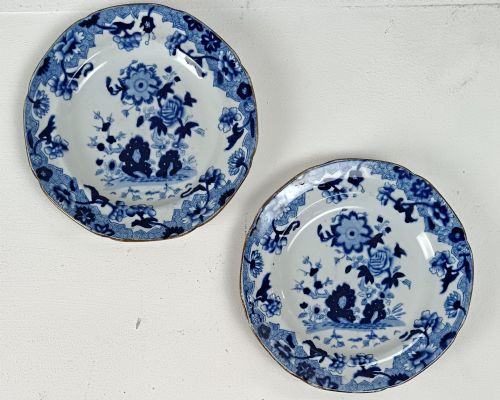
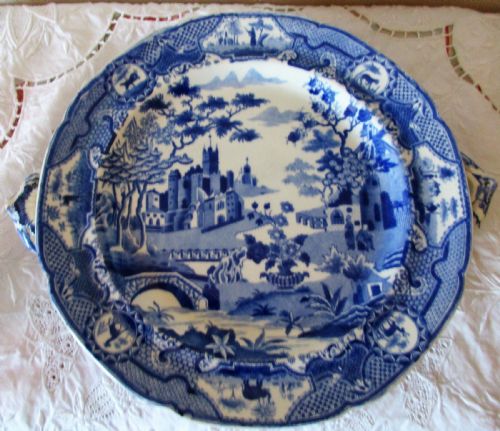
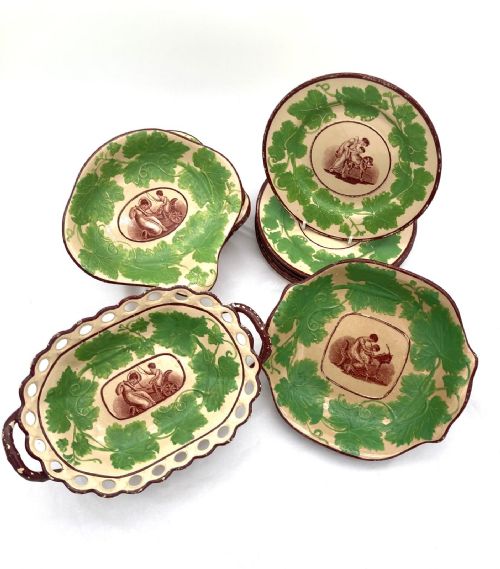
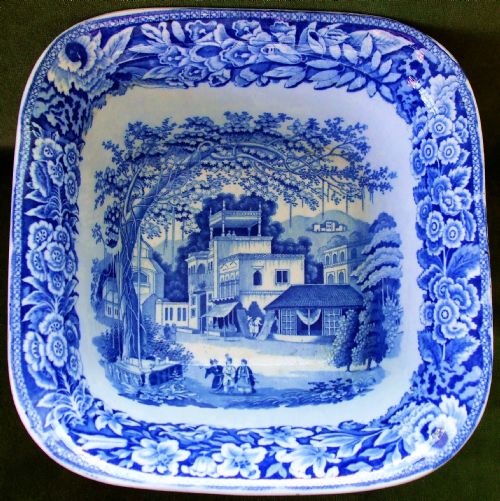
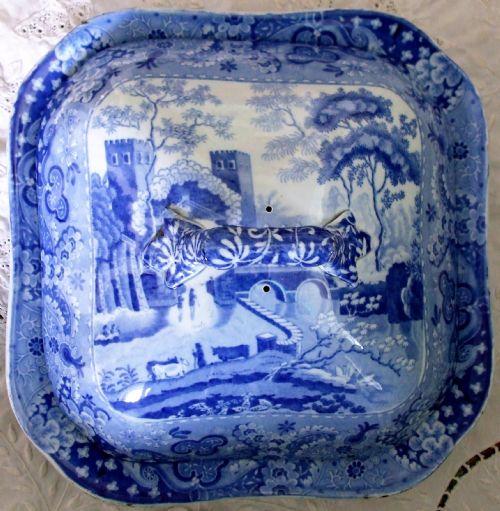
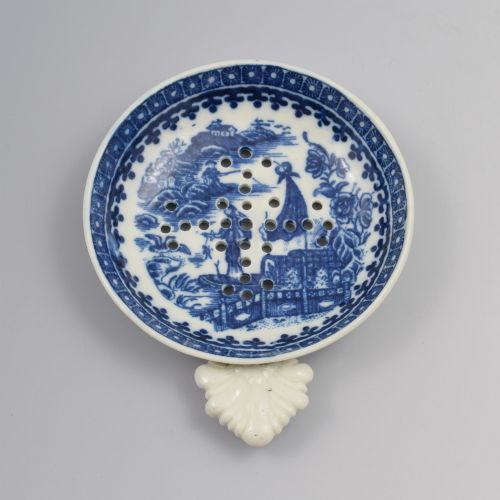
Potters shaped bodies from soft-paste porcelain, earthenware, and ironstone, applying glazes and enamel colours before firing in kilns. Many pieces received transfer-printed designs, transferring complex blue and white pictorial scenes from copper plates onto the ceramic surface.
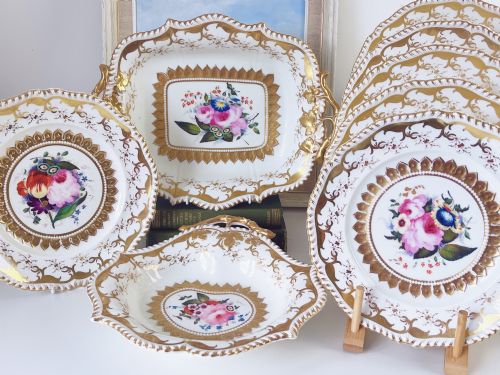
Makers applied handpainted details in polychrome enamels and gold leaf over glazes to elevate functional plates, jugs, and tureens. Felspar porcelain and bone china formulations provided increased durability for intensive dining service use.
What varies in quality
Quality separates standard utilitarian wares from ambitious cabinet pieces through the precision of the handpainted decoration, the crispness of transfer-printed pictorial scenes, and the sophistication of the ceramic paste.
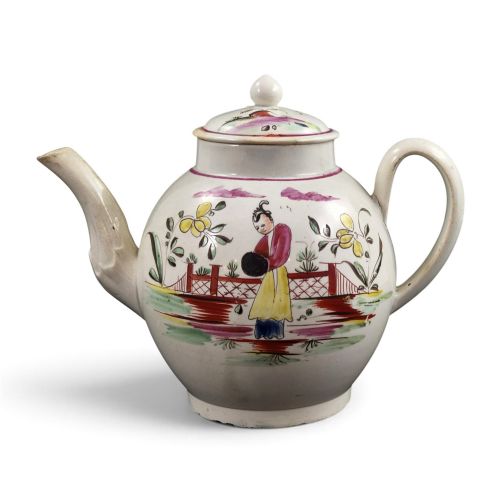
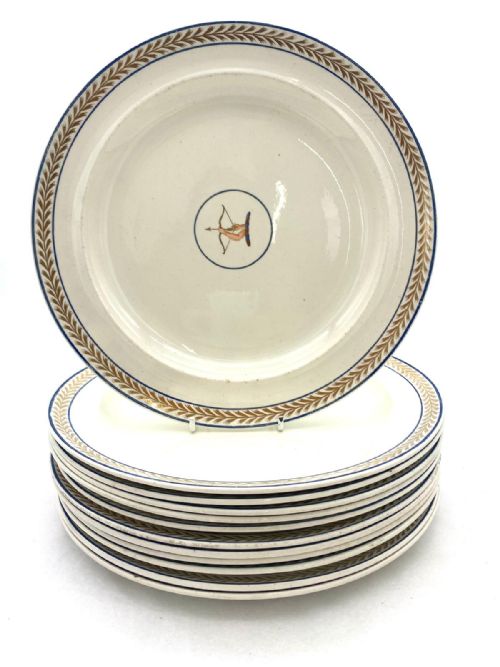
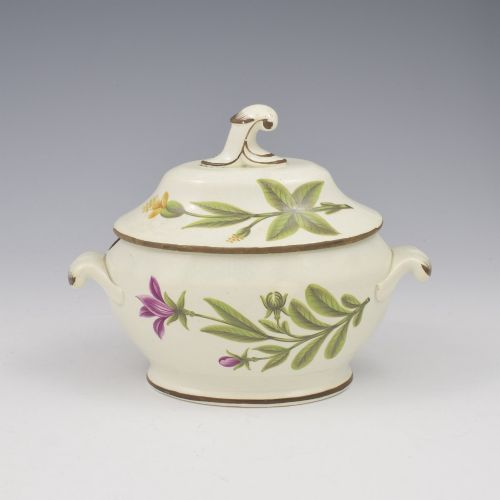
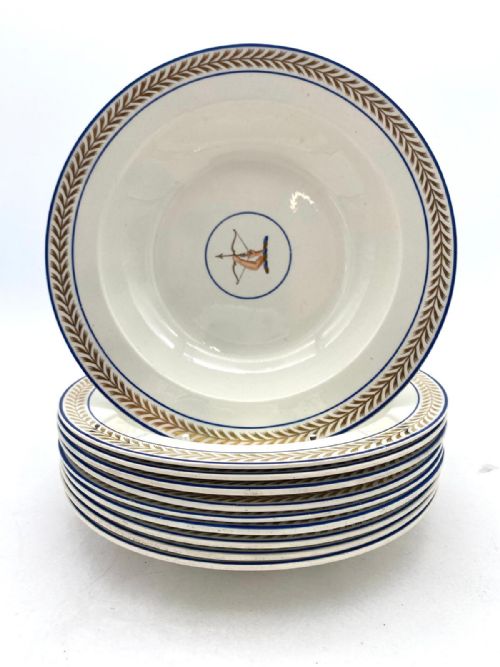
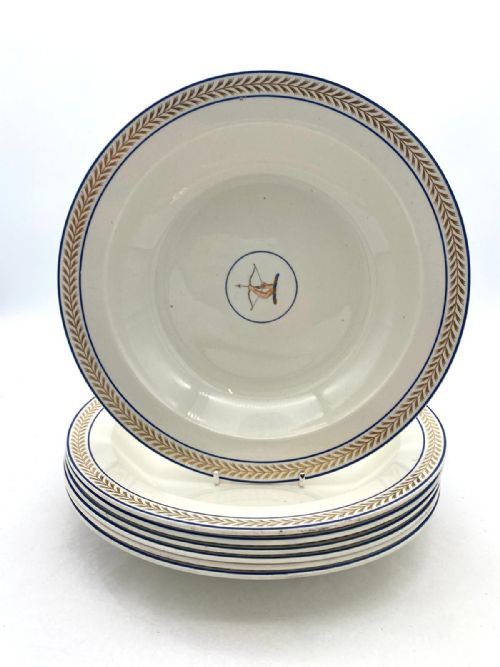
Armorial crests, gilt handles, and detailed botanical or Chinoiserie handpainting executed by named factories indicate elevated manufacture and higher artistic intent within a service.
Certain early nineteenth-century plates cheerfully depict the "Crazy Cow" and "Bengal Tiger" alongside traditional floral and architectural scenes.
Grainger Lee and Co·Wedgwood·Spode·J and R Riley·J and R Clews·Caughley·Bow·Worcester·Coalport·Chamberlain Worcester·Minton·Flight Barr and Barr·Mason·William Adams·Old Derby
The Georgian Ceramic Tableware Glossary
- Creamware
- A refined light-coloured earthenware developed in the eighteenth century. Its pale cream hue served as a versatile canvas for armorial decorations and transfer printing.
- Pearlware
- An earthenware body featuring a subtle bluish glaze pooled in crevices. It was introduced to mimic the whiteness of Chinese porcelain.
- Ironstone
- A dense, durable ceramic material patented in the nineteenth century. It combined earthenware and feldspathic materials to withstand heavy table use.
- Transfer-printed
- A decoration technique using engraved copper plates to transfer ink impressions onto ceramic surfaces. This method allowed consistent reproduction of intricate pictorial scenes.
- Sauce tureen
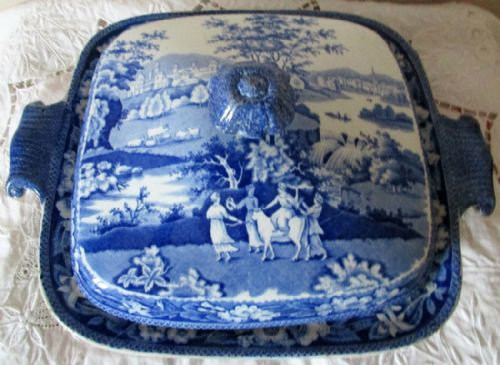
- A covered vessel designed for serving sauces at the dining table. These matched larger dinner services and frequently rested upon fixed or separate stands.
Georgian Ceramic Tableware: Frequently Asked Questions
What is creamware?
Creamware is a refined earthenware body developed during the eighteenth century, valued for its warm pale tone. It became the foundation for many armorial dinner plates and functional vessels.
Potters adapted creamware for soup bowls, pudding bowls, and tea services, providing a durable alternative to imported porcelain.
How do I identify porcelain from earthenware?
Porcelain is typically vitrified, translucent, and thin in section, whereas earthenware is opaque and possesses a more porous body structure. Ironstone sits between them as a heavy, dense material.
Examination of the foot ring and unglazed areas helps reveal the underlying ceramic composition of plates and tureens.
Were these pieces used for daily dining?
Many items, including dinner plates, soup bowls, and hot-water plates, were manufactured for active dining use. Robust ironstone and creamware sustained everyday household service.
More delicate porcelain dessert services and armorial jugs were reserved for formal entertaining and display.
What does transfer-printed mean?
Transfer printing is a decorating method where an engraved copper plate transfers an inked pattern onto tissue paper, which is then pressed onto the ceramic. This technique created uniform pictorial scenes.
Blue and white landscapes, castle motifs, and exotic street scenes appeared widely across pottery plates and vegetable tureens using this process.